 how-to
How Do You Design a Peptide-Based Drug Delivery System?
Last Updated: November 4, 2026
Quick Summary
Designing peptide drug delivery starts with the cargo, since the molecule you deliver dictates the peptide sequence, linker chemistry, particle architecture, and stability profile. Match the carrier chemistry to the cargo's physical limits, then tune charge, hydrophobicity, and conformation together before committing to synthesis.
- Write down cargo molecular weight, release profile, target tissue, and acceptable immunogenicity before designing.
- Keep cell-penetrating peptides short, often under 30 residues, to limit immunogenicity.
- Endosomal escape is the most common failure point in peptide drug delivery.
- Engineer a single free cysteine at the C-terminus so maleimide coupling has one productive site.
- Target 1 to 4 payloads per peptide and verify the ratio by mass spectrometry or UV-Vis.
Table of Contents
- Start With the Cargo: What Are You Delivering?
- Peptide Drug Design: Sequence, Charge, and Conformation
- Peptide-Based Nanoparticles: Assembling the Carrier
- Cell-Penetrating Peptides for Drug Delivery: Getting Inside the Cell
- Peptide Delivery System Stability: Predicting and Preventing Breakdown
- Bioconjugation and Targeting: Attaching Ligands Without Losing Activity
- Validation, Scale-Up, and the Hurdles Between Bench and Clinic
- Sourcing Research-Grade Peptides for Your Design Work
- Frequently Asked Questions
Start With the Cargo: What Are You Delivering?
Designing a peptide-based drug delivery system starts with the cargo, not the carrier.
This guide walks through a common design workflow, from cargo selection to sourcing, showing how to design peptide-based drug delivery systems that hold up under real experimental conditions.
Small-molecule payloads, nucleic acids, and protein cargoes each impose different constraints: a hydrophobic small molecule needs shielding from aqueous degradation, a nucleic acid needs positive charge for stable complexation, and a protein cargo needs gentle handling to preserve conformational stability.
Peptide drug delivery succeeds when the carrier chemistry matches the cargo's physical limits. Start by writing down four things:
- Molecular weight and hydrophobicity of the cargo
- Required release profile (burst, sustained, or triggered)
- Target tissue and route of administration
Peptide Drug Design: Sequence, Charge, and Conformation
Peptide drug design is the process of selecting an amino acid sequence that balances binding activity, proteolytic stability, and manufacturability.
Hydrophobicity sets the balance between membrane affinity and aggregation risk; too hydrophobic a peptide clumps in solution before it reaches a cell.
Conformational stability decides how long the peptide survives in circulation. Flexible linear chains get chewed up by proteases fast.
A common mistake is optimizing one property in isolation.
Choosing Between Linear and Cyclic Peptides
Linear peptides are cheaper and simpler to synthesize, but they degrade faster and bind with lower affinity. Cyclic peptides cost more and take longer to produce, yet they offer real advantages:
- Better proteolytic stability from constrained backbone geometry
- Higher binding affinity through reduced entropic penalty
- Improved conformational stability in serum
Peptide-Based Nanoparticles: Assembling the Carrier
Peptide-based nanoparticles are self-assembling carriers built from peptide building blocks, often combined with lipids or polymers.
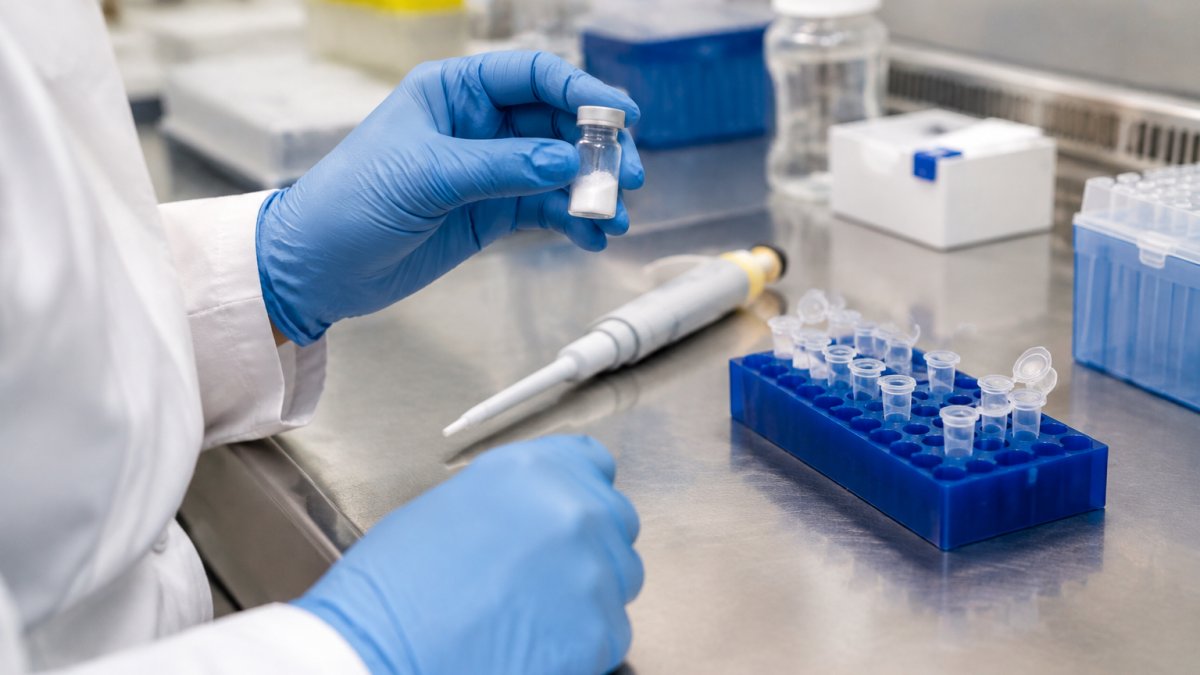
Assembly usually follows one of three routes:
- Self-assembly from amphiphilic peptide sequences that form micelles or vesicles in aqueous buffer
- Layer-by-layer deposition onto a template, giving tight control over shell thickness
- Emulsion or nanoprecipitation methods that trap cargo during particle formation
Each route trades control against simplicity. Self-assembly is the easiest to reproduce. Layer-by-layer gives the finest control but takes more steps.
Watch out: particle size drifts when ionic strength or pH shifts between batches. Fix your buffer conditions before you scale a batch, or your biodistribution data will not repeat.
Cell-Penetrating Peptides for Drug Delivery: Getting Inside the Cell
Cell-penetrating peptides for drug delivery are short cationic or amphipathic sequences that cross the plasma membrane and carry cargo with them. They solve the entry problem that stops most large payloads cold.
Uptake usually happens through receptor-mediated endocytosis, though direct translocation plays a role for some sequences. The mechanism matters because it determines where your cargo ends up inside the cell.
Design considerations for cell-penetrating sequences:
- Keep length short, often under 30 residues, to limit immunogenicity
- Balance arginine content against cytotoxicity
- Test uptake in the cell line you actually plan to use
Endosomal Escape: The Step Most Designs Get Wrong
Endosomal escape is the process by which a carrier breaks out of the endosome before lysosomal degradation destroys the cargo. It is the single most common failure point in peptide drug delivery.
Many designs show excellent cellular uptake and then deliver nothing, because the cargo never leaves the endosome. Common fixes include:
- pH-responsive peptides that change conformation in the acidic endosome
- Fusogenic sequences that disrupt the endosomal membrane
- Membrane-disruptive domains tuned to avoid cytotoxicity
Peptide Delivery System Stability: Predicting and Preventing Breakdown
Peptide delivery system stability is the ability of the carrier to resist proteolytic degradation, aggregation, and premature cargo release before it reaches the target.
Understanding research grade peptide purity standards helps here, since impurity profiles can shift degradation kinetics in ways that are hard to trace later.
The main threats to stability:
- Proteolytic degradation from serum proteases
- Aggregation driven by hydrophobic patches
- Premature release when the linker is too labile
Run accelerated stability studies early. A design that cannot survive a week in buffer will not survive circulation.
Bioconjugation and Targeting: Attaching Ligands Without Losing Activity
Bioconjugation is the chemistry of attaching ligands, drugs, or imaging tags to a peptide carrier without destroying its function. Done poorly, it wrecks binding affinity; done well, it turns a generic carrier into a targeted therapy.
The two dominant strategies are:
- Lysine or cysteine coupling for straightforward, well-understood chemistry
- Click chemistry for site-specific attachment with tight control over stoichiometry
Site-specific conjugation usually beats random coupling, which can block the ligand-receptor interaction site or bury a critical residue. A common pattern is to engineer a single free cysteine at the C-terminus and keep every other cysteine paired in a disulfide, so the maleimide reaction has exactly one productive site.
Choosing the Reactive Handle
The reactive group you pick sets the conjugation chemistry, the linker options, and the purification burden:
- Primary amines (lysine, N-terminus) react with NHS esters and isothiocyanates. Chemistry is simple and reagents are cheap, but most peptides carry several lysines, so you get a distribution of conjugation ratios rather than a single species.
- Thiols (cysteine) react with maleimides, iodoacetamides, and pyridyl disulfides. Maleimide-thiol coupling is fast and selective in mildly acidic to neutral buffer, which is why it dominates site-specific work. Keep the reaction near pH 6.5-7.5; above pH 8 the maleimide hydrolyzes and the thiol can react with itself.
- Azides and strained alkynes support copper-free click chemistry (SPAAC) or copper-catalyzed click (CuAAC), giving bioorthogonal, near-quantitative attachment, but the azide or alkyne must be built into the peptide during synthesis, which adds cost and lead time.
Linker Selection Drives Release Behavior
The linker, not the ligand, decides when the payload comes off:
- Stable linkers (amide, thioether, maleimide) keep the payload attached until the carrier is degraded; use these when the target is the cell surface or when extracellular release causes off-target toxicity.
- Cleavable linkers release cargo on a trigger: disulfides cleave in the reducing cytosol, hydrazones and oximes hydrolyze at endosomal pH, and protease-cleavable sequences (such as Val-Cit) are cut by cathepsins after internalization.
- Self-immolative spacers (para-aminobenzyl alcohol, PAB) sit between the cleavable bond and the drug so cleavage releases the free payload rather than an inactive drug-linker fragment.
Watch out: a linker that is too labile releases cargo in circulation before the carrier reaches the target, which shows up as systemic toxicity in vivo even when the in vitro binding assay looks clean.
Controlling Stoichiometry and Avoiding Cross-Linking
Conjugation ratio is a design variable, not an afterthought:
- Target a defined drug-to-carrier ratio (often 1-4 payloads per peptide for targeted carriers) and verify it by mass spectrometry or UV-Vis, not by assuming complete conversion.
- Run the reaction with the ligand in modest molar excess (commonly 1.2-2 equivalents) to limit over-conjugation, then purify by size-exclusion or reversed-phase HPLC.
- Quench unreacted maleimide with free cysteine or glutathione before purification.
Tumor Targeting Ligands
For tumor targeting, ligands such as RGD sequences or folate groups improve accumulation in target tissue. The gain in biodistribution only shows up if the ligand stays active after conjugation, so always run a binding assay on the conjugate, not just the free peptide. Common ligand classes and their trade-offs:
- RGD peptides bind integrins overexpressed on tumor vasculature. They are short, easy to synthesize, and well tolerated, but affinity is modest and they compete with endogenous ligands.
- Folate targets the folate receptor, overexpressed on several tumor types. It is small, non-immunogenic, and cheap, but receptor expression varies widely between patients.
- Antibody fragments and affibodies give high affinity and specificity, but they are large, expensive, and sensitive to conjugation conditions.
A common pattern is to attach the targeting ligand at the distal end of a PEG or glycine spacer so it projects away from the carrier surface and remains accessible to the receptor. Without a spacer, steric crowding at the particle surface can cut apparent affinity by an order of magnitude.
A Practical Conjugation Workflow
- Confirm the peptide has exactly one free thiol (or one azide) by mass spectrometry before you start.
- Buffer-exchange into degassed phosphate buffer at pH 7.0-7.4; avoid Tris and other primary amines that compete with the reaction.
- Add the maleimide- or NHS-functionalized ligand at 1.2-2 equivalents and react at room temperature for 1-2 hours, protected from light.
- Quench, then purify and confirm the conjugate by mass spectrometry and a functional binding assay.
- Measure the drug-to-carrier ratio on the purified conjugate and record it as a release specification.
The reactive handle you choose sets the conjugation chemistry, linker options, and purification burden.
| Reactive handle | Reacts with | Key trade-off |
|---|---|---|
| Primary amines (lysine, N-terminus) | NHS esters and isothiocyanates | Simple and cheap, but several lysines give mixed conjugation ratios |
| Thiols (cysteine) | Maleimides, iodoacetamides, pyridyl disulfides | Fast and selective; keep reaction near pH 6.5-7.5 |
| Azides and strained alkynes | Copper-free (SPAAC) or copper-catalyzed (CuAAC) click | Bioorthogonal and near-quantitative, but adds synthesis cost and lead time |
| Aldehydes and ketones | Oxime or hydrazone ligation | Enables pH-labile linkage that releases cargo in the acidic endosome |
Validation, Scale-Up, and the Hurdles Between Bench and Clinic
Validation moves a design from "it worked once" to "it works reliably," meaning reproducible synthesis, consistent particle size, and documented analytical data at every batch. Scale-up and regulatory translation are where most academic designs stall.
Here is a practical validation checklist:
- Confirm peptide identity by mass spectrometry
- Verify purity by HPLC on every lot
- Measure particle size and polydispersity across three batches
From Lab Scale to Manufacturing Scale
Scale-up introduces new problems. Mixing changes, particle size drifts, and yield drops as batch size grows. The specific failure modes are predictable:
- Synthesis yield falls with sequence length and complexity. Solid-phase peptide synthesis (SPPS) typically delivers high crude yields for sequences under about 20 residues, but yield drops sharply as length and hydrophobic content increase. Long or aggregation-prone sequences may need fragment condensation or native chemical ligation, both of which add steps and cost.
- Purification becomes the bottleneck. Reversed-phase HPLC that works on a milligram scale may not resolve closely related impurities on a kilogram scale. Process chromatography method development is a separate project from the research synthesis.
- Particle formation changes with mixing. Self-assembled nanoparticles depend on mixing rate, ionic strength, and temperature. A batch made in a 1 mL tube and a batch made in a 1 L reactor can differ in size and polydispersity even with identical formulation. Fix the mixing parameters and buffer conditions before you scale, or your biodistribution data will not repeat.
Planning custom synthesis turnaround times early keeps scale-up from becoming a bottleneck. Build the timeline into your project plan rather than discovering it mid-study.
The Regulatory Path: What the FDA Actually Expects
The FDA does not approve a peptide or a nanoparticle in isolation; it approves a product with a defined chemistry, manufacturing, and controls (CMC) package. The practical implications for a delivery-system design are:
- Chemistry, manufacturing, and controls (CMC): you need a documented, reproducible process with defined critical quality attributes, identity, purity, potency, particle size, polydispersity, and sterility, and release specifications for each.
- Investigational New Drug (IND) application: before human trials, you file an IND that includes pharmacology and toxicology data, the CMC section, and a clinical protocol. The CMC section is usually the slowest part to assemble for a novel carrier.
- Good Laboratory Practice (GLP) toxicology: animal safety studies intended to support an IND must be run under GLP, which means a contract research organization, a study protocol, and an audit trail, not an academic lab.
A common pattern is that academic groups generate excellent efficacy data in mice but cannot answer basic CMC questions, what is the batch record, what is the release specification, what is the stability-indicating assay, when a partner or investor asks. Building that documentation from the first batch, rather than reconstructing it later, is the single highest-leverage habit for translation.
A Realistic Translation Timeline
The bench-to-clinic path for a novel peptide delivery system typically runs several years, and it depends on the specific program. Timelines for process development, toxicology and regulatory review vary widely, so confirm estimates against current FDA guidance and your own program plan. Budgeting for that timeline at the design stage, rather than after the efficacy paper is published, determines whether a program is fundable.
What to Lock Down Before You Scale
- Fix the formulation and mixing parameters and record them as a process description.
- Identify the critical quality attributes and the assays that measure them.
- Establish a stability-indicating method and run accelerated stability on at least three batches.
Sourcing Research-Grade Peptides for Your Design Work
Every design decision above depends on one unglamorous foundation: the peptide you start with has to be what the certificate says it is. A carrier built on an under-characterized peptide produces data nobody can trust.
At Globo Research Peptides, we supply research-grade peptides with verified ≥99% HPLC purity and a full Certificate of Analysis for every batch. You can browse the research peptide catalog to see available compounds, or read our guide on how to buy verified research grade peptides if you are comparing suppliers. Every lot ships with downloadable Certificates of Analysis showing purity results and lot numbers.
A few sourcing habits that save time later:
- Match COA documentation to the exact lot you receive
- Confirm third-party testing before you commit to a supplier
- Ask about special-order options for unusual sequences
Designing a peptide-based delivery system is a chain of decisions where one weak link sinks the whole study. Get the cargo profile right, tune your sequence against charge and stability, and source from a supplier whose documentation you can defend in a review.
Frequently Asked Questions
What are the main types of peptide-based drug delivery systems?
Most designs fall into four groups: peptide-drug conjugates that link cargo directly to the peptide, self-assembling peptide nanoparticles, peptide-coated nanocarriers such as liposomes or polymeric particles, and cell-penetrating peptide complexes that carry cargo across membranes. Each platform trades off loading capacity, circulation time, and manufacturing complexity differently. Conjugates offer precise stoichiometry but limited payload; nanoparticles carry more cargo but add assembly steps and batch variability you must control during scale-up.
How can peptide delivery system stability be improved without losing activity?
Start by identifying the cleavage sites. Substituting L-amino acids with D-forms at known protease hotspots, cyclizing the backbone, or capping the termini are the standard first moves. PEGylation and fatty acid acylation extend circulation time but can reduce receptor binding, so test both properties together. Lyophilization with appropriate cryoprotectants improves shelf stability, and storing working aliquots at -20°C or below limits freeze-thaw damage. Confirm every modification with proteolytic stability assays before committing to a lead candidate.
How do cell-penetrating peptides for drug delivery actually get cargo into cells?
Uptake depends on the peptide class. Cationic sequences such as polyarginine interact with negatively charged membrane components and trigger endocytosis, while amphipathic sequences can insert into the bilayer directly. Endosomal escape is the bottleneck: cargo that enters via endocytosis can be trapped and degraded in lysosomes. Adding a fusogenic or pH-sensitive segment, or designing the peptide to disrupt the endosomal membrane, improves cytosolic delivery. Measure escape with functional readouts, not just cellular uptake fluorescence.
What should I check on a Certificate of Analysis before starting a peptide design project?
Look for HPLC purity percentage, the chromatography method used, mass spectrometry confirmation of molecular weight, and the water content or counterion form. For delivery work, batch-to-batch consistency matters more than a single high purity number, so request COAs from several lots. If your design depends on a specific modification such as a conjugated fluorophore or cyclization, confirm the certificate documents that modification explicitly. Incomplete documentation can invalidate a study after weeks of work.