 listicle
Buy Verified Research Grade Peptides: 2026 Sourcing Guide
Table of Contents
- How to Buy Verified Research Grade Peptides Without Getting Burned
- Quick Comparison: Top Suppliers for Research Grade Peptides
- Globo Research Peptides: Full Documentation on Every Batch
- Peptide Certificate of Analysis Requirements: What Your COA Must Show
- How to Verify Peptide Purity: HPLC and LC-MS Explained
- Peptide Supplier Vetting Checklist: 7 Questions to Ask Before Ordering
- Which Supplier Matches Your Lab's Needs?
- Final Verdict on Buying Verified Research Grade Peptides
- Frequently Asked Questions
Last Updated: September 4, 2026
How to Buy Verified Research Grade Peptides Without Getting Burned
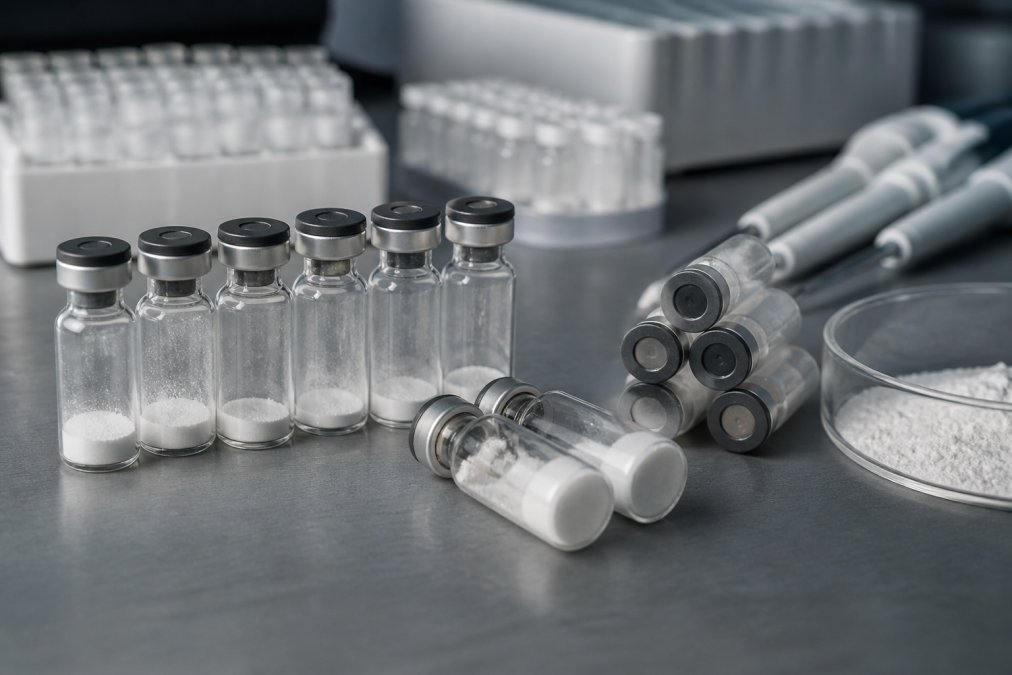
The market for research grade peptides is crowded, and the difference between a reliable supplier and a costly mistake often comes down to documentation you never see until it is too late. A Certificate of Analysis that lists a purity percentage without naming the analytical method used is not verification; it is a marketing slide. Whether you are stocking a university lab or sourcing for a CRO, the goal is to buy verified research grade peptides with confidence, which means knowing exactly what to demand before you commit funds.
At Globo Research Peptides, we have spent years building a sourcing model around transparency, and this guide breaks down the verification steps that protect your study timelines and your budget. We will cover what a legitimate COA must contain, how to interpret HPLC and LC-MS data, and the seven questions every lab should ask a new supplier. The peptide supplier vetting checklist below alone will save you from the most common procurement headaches.
A quick note on the landscape: most suppliers offer similar catalogs, but their quality systems diverge sharply. The FDA guidance on current good manufacturing practice sets the baseline for how pharmaceutical-grade materials should be handled, and research suppliers who align with those principles tend to produce more consistent batches. Below, we will show you exactly how to separate vendors who test from vendors who merely claim to.
Quick Comparison: Top Suppliers for Research Grade Peptides
When you buy verified research grade peptides, the supplier's testing protocol matters as much as the peptide sequence itself. Here is how the leading options stack up based on publicly stated quality practices and catalog depth.
| Supplier | Purity Claim | Documentation | Best For | Standout Feature |
|---|---|---|---|---|
| Globo Research Peptides | ≥99% HPLC | Full COA per batch | Labs needing verified documentation | Special-order fulfillment for unique compounds |
| Northline Labs | ≥99% | Third-party COA per batch | Academic researchers | Expedited domestic shipping |
| Koi Peptides | ≥99% HPLC | LC-MS per production lot | Analytical verification focus | Lot-specific testing consistency |
| Verified Peptides | Not specified | Not specified | Budget-conscious research | Volume-based pricing options |
| Bachem | Industry standard | Full documentation | Institutional procurement | Global manufacturing leadership |
The table above condenses what matters most, but the details behind each entry reveal the real differences. USP guidance on peptide reference standards underscores that identity and purity verification require specific analytical techniques, not just a single number on a page. For most labs, the deciding factor comes down to whether the supplier can provide batch-specific data on demand, not just a generic PDF.
Globo Research Peptides: Full Documentation on Every Batch
Our top pick for most research applications is Globo Research Peptides because the quality system is built around the documents your lab actually needs for compliance and reproducibility. Every batch ships with a full Certificate of Analysis, and the purity is verified at ≥99% using HPLC, a method that separates and quantifies each component in the peptide sample. This is not a summary sheet; it is the raw analytical output that your quality assurance team can file alongside the study data.
What sets Globo Research Peptides apart is the special-order fulfillment program. If your lab works on neuropeptide receptor binding or pharmacokinetic profiling, you likely need compounds that are not on every supplier's shelf. The special-order program handles unique products without forcing you to wait weeks for custom synthesis, and the in-stock inventory covers the most common research sequences for immediate dispatch.
Third-party testing adds another layer of confidence. The samples are sent to accredited laboratories for independent verification, which means the COA you receive is not generated in-house by the same team that produced the batch. For labs that have been burned by incomplete documentation in the past, this separation of duties is the difference between a smooth study and a six-month delay.
Peptide Certificate of Analysis Requirements: What Your COA Must Show
A legitimate peptide certificate of analysis requirements checklist starts with the analytical methods used, not just the final purity number. High-performance liquid chromatography (HPLC) should be listed with the specific column type, mobile phase, and detection wavelength, because those parameters determine whether the purity measurement is meaningful. Mass spectrometry data, typically LC-MS, confirms the molecular weight and verifies that the peptide sequence matches the intended product.
The COA must also include batch-specific information: the lot number, the date of analysis, and the signature of the responsible analyst. A COA that references a different lot number than the vial you received is worthless. Look for the percentage purity calculated by area normalization, and check whether the document reports related substances or impurities, not just the main peak.
The FDA guidance on analytical procedures and methods validation emphasizes that analytical methods must be validated for their intended use, and the same logic applies to peptide COAs. If the document does not specify the method parameters, you cannot replicate the analysis in your own lab, which means you cannot verify the claim. For research protocols that require reproducibility, this documentation gap is a dealbreaker.
How to Verify Peptide Purity: HPLC and LC-MS Explained
How to verify peptide purity is a question best answered by understanding the two analytical workhorses of the industry. HPLC separates the components of a peptide sample based on their interaction with a stationary phase, producing a chromatogram where each peak represents a different compound. The purity percentage is calculated by comparing the area of the main peptide peak to the total area of all peaks, which gives you a quantitative measure of how much of the sample is actually your target peptide.
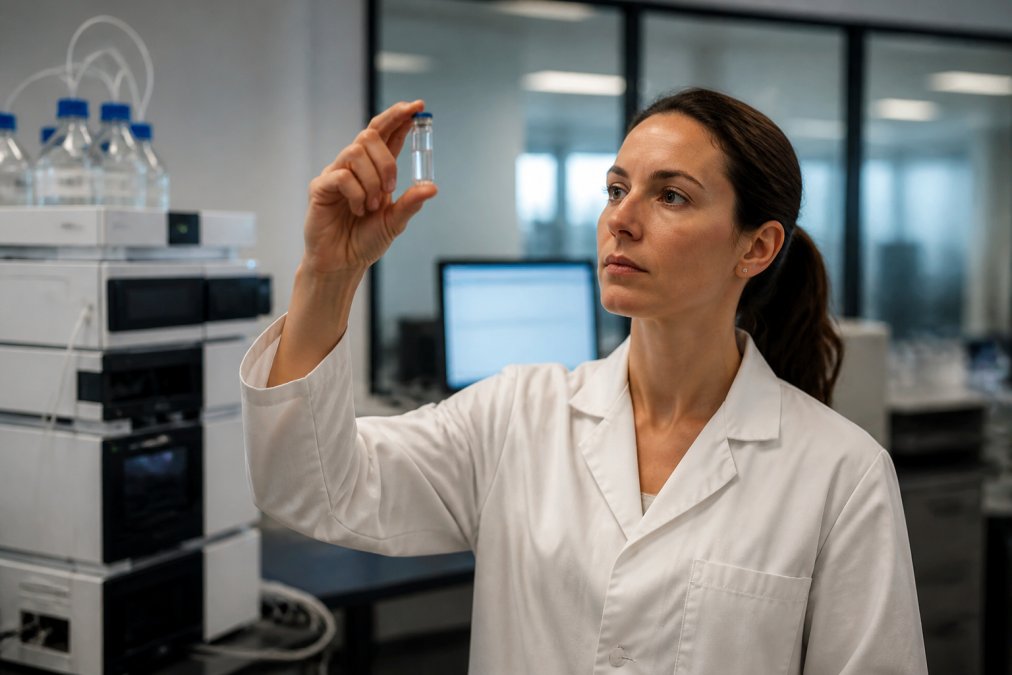
LC-MS adds a second dimension by measuring the mass-to-charge ratio of the peptide ions, which confirms the molecular weight and provides identity verification. A sample can show high HPLC purity but still contain the wrong peptide if the synthesis produced a deletion sequence or an incomplete chain. LC-MS catches those errors by confirming that the molecular weight matches the theoretical value for your target sequence.
For routine verification, request both the HPLC chromatogram and the LC-MS spectrum from your supplier. Compare the observed molecular weight to the calculated value for your peptide, and check that the HPLC trace shows a single dominant peak with no significant shoulders or satellite peaks. This two-method approach is the industry standard for a reason: it catches both quantity and identity issues.
Peptide Supplier Vetting Checklist: 7 Questions to Ask Before Ordering
Before you commit to a supplier, run them through this peptide supplier vetting checklist. The answers will tell you more about their quality system than any marketing page.
- Can you provide the COA for the specific lot number I am ordering, not a representative example?
- Which analytical methods were used for purity and identity verification, and what were the instrument parameters?
- Is the testing performed in-house or by an independent third-party laboratory?
- What is your policy if the documentation does not match the batch that arrives?
- Do you stock the compound I need, or will it require custom synthesis, and what is the actual turnaround time?
- What are your minimum order quantities, and can I order small quantities for pilot studies?
- How do you handle stability testing and storage recommendations for lyophilized peptides?
Suppliers who hesitate on question one or three are waving a red flag. A legitimate operation has the lot-specific data on file and can share it before you pay. Suppliers who only test after synthesis, or who rely solely on in-house analysis without any independent check, leave you exposed to batch-to-batch variability that can compromise your research protocols.
Which Supplier Matches Your Lab's Needs?
The right supplier depends on your lab's specific workflow, and the choice often comes down to scale and documentation requirements. For academic laboratories running fundamental studies, the priority is usually verified purity and clear documentation at a reasonable cost. Northline Labs and Koi Peptides both maintain ≥99% purity standards with third-party COAs, making them solid choices for standard research sequences.
For large-scale projects or bulk procurement, Bachem operates as a global manufacturing leader with an extensive catalog of amino acid derivatives, but the institutional focus means smaller labs may find the procurement process heavy. Other providers offer a dedicated bulk and wholesale portal, which suits CROs and pharmaceutical R&D departments managing high-volume acquisition. The tradeoff is that bulk-focused suppliers often have less flexibility for small, exploratory orders.
Budget-conscious researchers might lean toward Verified Peptides, which offers volume-based pricing and frequent discounts, but the inventory availability fluctuates. The NIH guidelines on research reagent quality remind us that reagent quality directly impacts experimental reproducibility, so the cheapest option is not always the most cost-effective when you factor in failed experiments and repeated runs.
Final Verdict on Buying Verified Research Grade Peptides
The takeaway from this sourcing guide is that verified documentation is the only reliable currency in the research peptide market. Labs that skip the verification step expose themselves to contaminated batches, incorrect sequences, and wasted grant money. The suppliers that publish lot-specific COAs with named analytical methods, and back those documents with third-party testing, are the ones worth your budget.
For most research applications, Globo Research Peptides offers the strongest combination of verified ≥99% HPLC purity, full COA documentation on every batch, and a special-order program that covers obscure compounds without endless wait times. The in-stock inventory supports immediate dispatch, and the transparent quality standards give your compliance team what they need for audit trails.
Frequently Asked Questions
What documentation should accompany verified research-grade peptides?
Every batch of research grade peptides should ship with a Certificate of Analysis (COA) from an independent laboratory. The COA must show the tested purity percentage, the analytical method used (typically HPLC or LC-MS), the batch or lot number, and the date of testing. It should also confirm the molecular weight matches the target peptide sequence. Without this documentation, you cannot confirm what you received matches the supplier's claims.
How do I verify the purity of peptides from a supplier?
Request the Certificate of Analysis before you order and confirm the batch number on the COA matches the batch number on the vial when it arrives. The COA should report purity from high-performance liquid chromatography (HPLC) and mass spectrometry analysis. A reputable supplier will publish COAs on their website or provide them on request. If a supplier hesitates or provides vague documentation, treat that as a red flag.
Why is a Certificate of Analysis critical when buying peptides?
A Certificate of Analysis is your only independent proof that a product contains what the label claims. It documents purity, identity verification, and contaminant screening for a specific batch. Without a COA, you are trusting the supplier's word. For research applications, using an unverified compound can invalidate your results and waste weeks of work. The COA is the difference between a verified research product and an unknown substance.
What is the difference between research-grade and pharmaceutical-grade peptides?
Research-grade peptides are manufactured for laboratory use only, not for human consumption. They are not subject to FDA approval processes for pharmaceuticals. Pharmaceutical-grade products must meet stricter regulatory standards for clinical use. However, reputable research suppliers still manufacture under cGMP guidelines and verify purity above 99% through third-party testing. Always confirm the product is labeled 'for research use only' and never use research compounds in humans or animals.
Sourcing peptides for your lab does not have to be a gamble. Globo Research Peptides delivers the documentation and purity standards that keep your research protocols on track, with rigorous third-party testing and batch-specific COAs for every order. Order now and give your next study the verified foundation it deserves.
Frequently Asked Questions
Q: What documentation should accompany verified research-grade peptides?
A: Every batch of research grade peptides should ship with a Certificate of Analysis (COA) from an independent laboratory. The COA must show the tested purity percentage, the analytical method used (typically HPLC or LC-MS), the batch or lot number, and the date of testing. It should also confirm the molecular weight matches the target peptide sequence. Without this documentation, you cannot confirm what you received matches the supplier's claims.
Q: How do I verify the purity of peptides from a supplier?
A: Request the Certificate of Analysis before you order and confirm the batch number on the COA matches the batch number on the vial when it arrives. The COA should report purity from high-performance liquid chromatography (HPLC) and mass spectrometry analysis. A reputable supplier will publish COAs on their website or provide them on request. If a supplier hesitates or provides vague documentation, treat that as a red flag.
Q: Why is a Certificate of Analysis critical when buying peptides?
A: A Certificate of Analysis is your only independent proof that a product contains what the label claims. It documents purity, identity verification, and contaminant screening for a specific batch. Without a COA, you are trusting the supplier's word. For research applications, using an unverified compound can invalidate your results and waste weeks of work. The COA is the difference between a verified research product and an unknown substance.
Q: What is the difference between research-grade and pharmaceutical-grade peptides?
A: Research-grade peptides are manufactured for laboratory use only, not for human consumption. They are not subject to FDA approval processes for pharmaceuticals. Pharmaceutical-grade products must meet stricter regulatory standards for clinical use. However, reputable research suppliers still manufacture under cGMP guidelines and verify purity above 99% through third-party testing. Always confirm the product is labeled 'for research use only' and never use research compounds in humans or animals.