 how-to
Why Peptide Batch Documentation Matters
Table of Contents
- What Peptide Batch Documentation Identifies
- Understanding the Peptide Certificate of Analysis
- How to Verify Peptide Sequence Accuracy After Purchase
- Peptide Batch Traceability: Connecting Vial to Manufacturing Records
- Building a Research Peptide Documentation Checklist
- Handling Documentation Discrepancies and Mismatches
- Why Batch Documentation Protects Your Research
- Frequently Asked Questions
Last Updated: October 19, 2026
What Peptide Batch Documentation Identifies
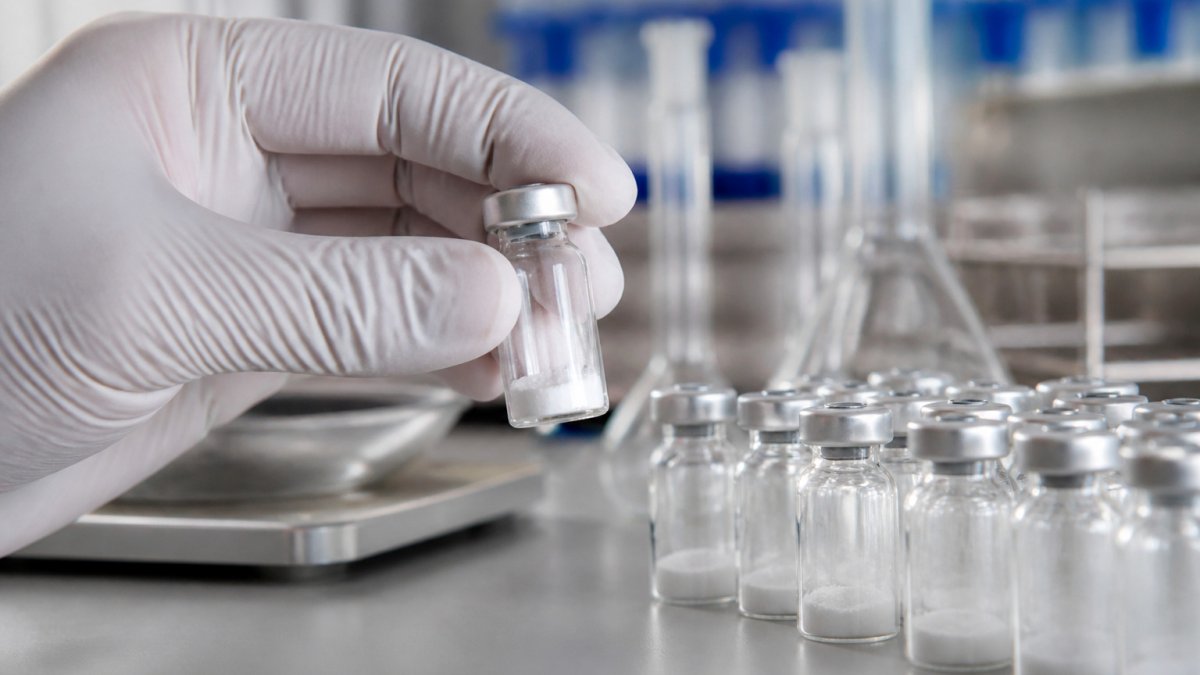
Peptide batch documentation identifies the exact production run, manufacturing conditions, and quality specifications of every vial you receive, connecting your material directly to the lab where it was synthesized, tested, and verified.
Batch documentation answers critical questions: What purity did this batch achieve? When was it manufactured? Which methods confirmed its identity? These answers determine whether your compound meets your study's requirements.
At Globo Research Peptides, we provide complete batch documentation for every peptide, including the batch number, manufacturing date, purity verification, and full Certificate of Analysis. The batch number links your vial to production records, quality assurance data, and testing results.
Documentation also protects your research timeline. If results seem off, batch records help you determine whether the issue stems from your methodology or from the compound itself. This distinction saves weeks of troubleshooting.
Understanding the Peptide Certificate of Analysis
A Certificate of Analysis (COA) reports testing results for your peptide batch: what tests were run, what the results were, and whether the batch met specifications. The more useful skill is reading the methods and units well enough to know what the numbers actually establish, and what they do not.
What a COA Contains
The COA lists the batch number and manufacturing date, reports purity as a percentage (e.g., ≥99% HPLC purity), and identifies the testing methods used, typically HPLC (High-Performance Liquid Chromatography).
It also includes the mass of material received, storage instructions, molecular weight confirmation via mass spectrometry, and sometimes water content and residual solvent data.
A complete COA references the testing laboratory and includes analysis dates, creating an audit trail showing exactly when your batch was tested and by whom.
How to Read Test Methods and Units
The method column tells you more than the result column. HPLC purity is reported as a percentage of the total chromatographic peak area at a specified wavelength, usually 214 nm or 220 nm for peptides.
Mass spectrometry confirms molecular weight. A close match supports identity but does not distinguish sequence isomers or confirm the full amino acid sequence, which typically requires peptide mapping or tandem mass spectrometry (MS/MS), techniques many standard COAs omit (pubmed.ncbi.nlm.nih.gov).
Water content is usually reported by Karl Fischer titration as a percentage. Residual solvents may be reported in parts per million against limits set in public pharmacopeial guidance. Counter-ion and acetate content, when reported, affect how you calculate the actual peptide mass in a vial, relevant when you prepare stock solutions by mass.
What a COA Does Not Guarantee
A COA confirms what was tested, not what you received. It proves a batch met specifications at the time of testing, but does not guarantee your vial remained stable during shipping or storage.
A COA also does not verify that contents match the vial label. It is only as reliable as the chain of custody between the testing lab and your door; labeling errors during packaging will not be caught.
A COA reflects only the tests performed. If your research requires specific impurity data or degradation profiling not included in standard testing, the COA will not provide it.
How to Verify Peptide Sequence Accuracy After Purchase
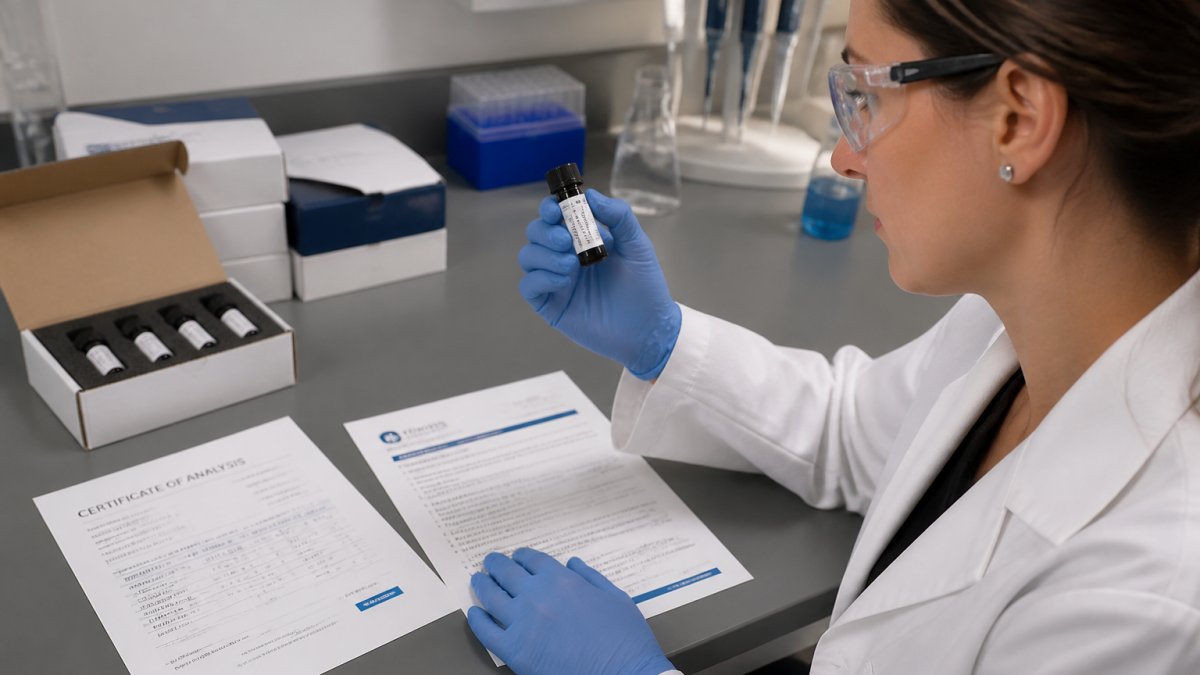
Verifying sequence accuracy starts with comparing what arrived to what you ordered.
Next, check the peptide sequence printed on the label. Compare it character by character to your original purchase order. Sequence errors are rare but catastrophic for research.
If your COA contains only summary results, request the raw HPLC chromatogram and mass spectrometry data. These show actual test output, not just pass/fail, revealing whether the batch was borderline or comfortably within specifications.
If your research involves receptor binding studies or pharmacokinetic profiling, verify that the testing methods match your requirements. Standard HPLC purity testing may not detect all relevant impurities for your specific application.
Document your verification process, records showing you checked the batch number, sequence, and COA protect your research credibility if questions arise later.
Peptide Batch Traceability: Connecting Vial to Manufacturing Records
Batch traceability means you can trace your vial back through the entire production chain. Start with the batch number on your vial.
Production records document the equipment, operators, and raw materials used, environmental conditions like temperature and humidity, and any deviations or adjustments made during synthesis.
Quality assurance records show which analyst performed each test, what equipment was used, and when testing occurred, including whether a failed batch was reworked, rejected, or investigated further.
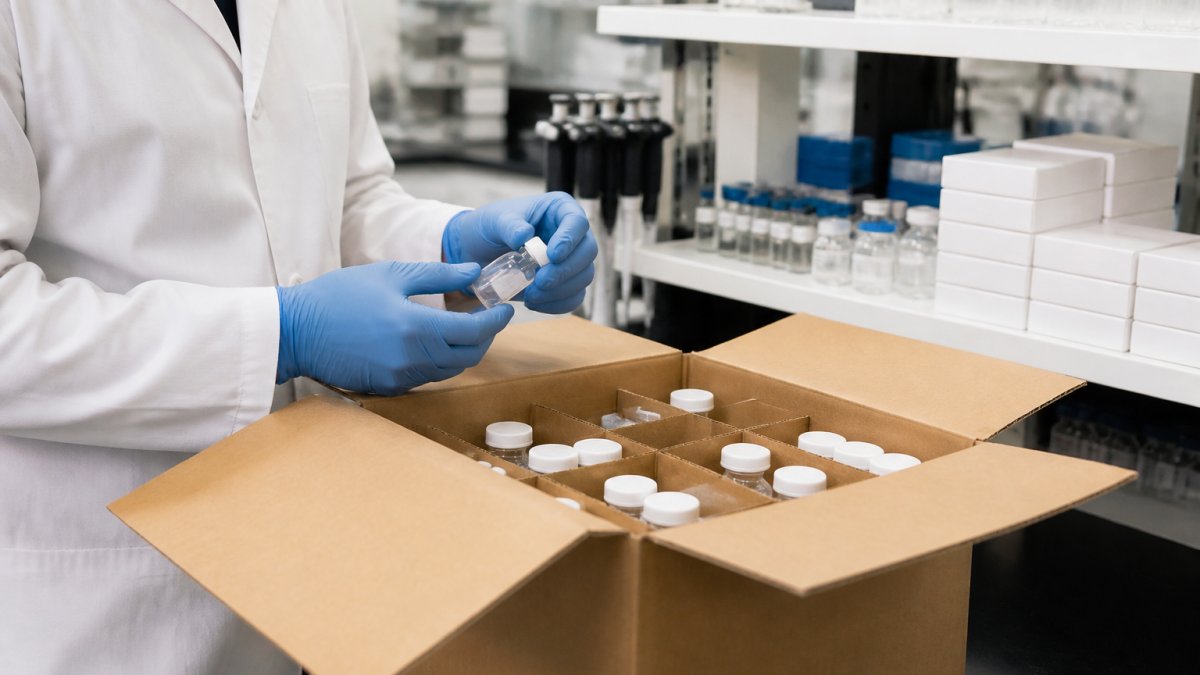
Storage and shipping records show how your batch was handled after manufacturing, confirming temperature control was maintained and the batch was not exposed to degrading conditions.
The batch number on your vial should let you access all of these records through your supplier.
This level of traceability is essential for research that may be published or reviewed by regulatory bodies. Complete documentation demonstrates scientific rigor and supports reproducibility.
Building a Research Peptide Documentation Checklist
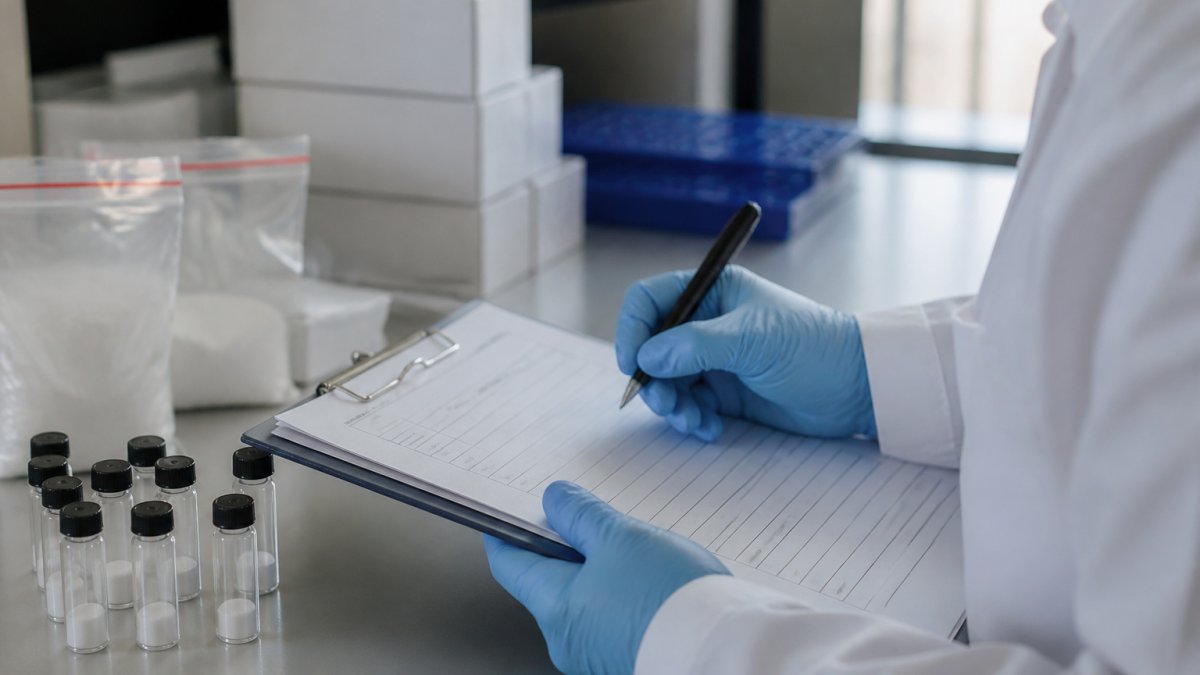
A documentation checklist ensures you capture all relevant information before using your peptide. This checklist becomes part of your research record.
Documentation Steps Before Use
Record the batch number and manufacturing date, verify they match your purchase order and COA, check the expiration date and storage requirements, and document the receipt date and your name.
Inspect the vial physically, appearance, color, clarity, powder versus solution, and compare it to your purchase specifications, documenting any discrepancies immediately.
Record the peptide sequence and molecular weight from the label. Verify these against your order. Check the purity percentage reported on the COA. Document the testing method used (HPLC, mass spectrometry, etc.).
Create a simple table to track this information:
| Item | Expected | Received | Match? |
|---|---|---|---|
| Batch Number | [Your order] | [Label] | Yes/No |
| Sequence | [Your order] | [Label] | Yes/No |
| Purity | [Your spec] | [COA] | Yes/No |
| Manufacturing Date | [Your spec] | [COA] | Yes/No |
| Storage Condition | [Your spec] | [Label] | Yes/No |
Record Retention and Audit Readiness
Keep all documentation, purchase order, packing slip, COA, and verification checklist, in a single physical or digital file for the duration of your project, and at least one year after publication.
Maintain a lab notebook entry that references the batch number and documents when you opened the vial and began using the peptide. Note any observations about stability or performance. If you prepare stock solutions, document the concentration and date prepared.
If your research involves multiple batches of the same peptide, keep separate records for each so you can identify whether result variations correlate with batch differences, powerful for troubleshooting and documenting reproducibility.
Keep records in a location where they cannot be lost or damaged. Digital backups are essential. Many research institutions require that you maintain records according to specific protocols, check your institution's documentation guidelines.
Handling Documentation Discrepancies and Mismatches
Discrepancies between your order and what arrived require immediate attention. The useful part is not the warning, it is the workflow. Treat every mismatch as a documented event with a decision, an owner, and a resolution date.
A Practical Escalation Workflow
- Quarantine first. Move the vial to a labeled, segregated location and mark it "Do Not Use, Documentation Hold." Do not open, reconstitute, or aliquot material under review.
- Capture the evidence. Photograph the vial label, the packing slip, and the COA side by side. Record the batch number, lot, sequence, purity, and dates exactly as printed. Note the date and time you received the shipment.
- Classify the discrepancy. Identity mismatches (wrong sequence, wrong batch number) are stop-work events. Specification mismatches (purity below your requirement) are judgment calls. Administrative mismatches (typo in a date, missing page) are usually resolvable by clarification.
- Contact the supplier in writing. State the batch number, the specific field that does not match, and what you need: a corrected COA, a replacement batch, or a written explanation. Keep the thread.
- Set a resolution window. A common pattern is to allow a short window for clarification before escalating to a return or replacement request. Document the deadline.
- Record the outcome. Whether resolved or not, file the correspondence with the batch record so the decision is reconstructable later.
Matching Identifiers, Dates, and Quantities
Cross-check four fields before you accept a shipment: batch number on the vial versus the COA versus the packing slip; manufacturing and testing dates (a testing date before the manufacturing date is a red flag); the stated mass or fill quantity versus what you ordered; and the storage condition on the label versus the COA. Any one of these failing is a follow-up item. Two or more failing on the same shipment is a pattern worth escalating beyond a single customer-service exchange.
When to Request Clarification Versus Quarantine
Request clarification when the discrepancy is documentary and the material's identity is not in question, a missing page, a transposed digit in a date, a COA that references a different testing lab name than expected. Quarantine when identity, quantity, or storage integrity is in doubt.
If testing methods on the COA do not match your requirements, request additional testing before using the batch. Your supplier may be able to perform supplemental analysis. This costs time but prevents research failure downstream.
Document every discrepancy and every supplier communication about it, keeping copies of emails and call notes to protect you if the issue affects your results.
If your supplier cannot resolve the discrepancy satisfactorily, consider whether you need to repeat your work with a different batch or supplier. This is frustrating but better than publishing results based on questionable material.
Why Batch Documentation Protects Your Research
Batch documentation is your insurance policy for research integrity, proving your material met specifications when you used it and supporting reproducibility and credibility.
When you publish, peer reviewers will ask about your materials and methods.
For research supporting product development or clinical applications, regulatory bodies expect complete traceability and quality documentation; incomplete records can delay approval or raise red flags.
For contract research organizations and pharmaceutical R&D teams, batch documentation is mandatory, clients expect full transparency about materials used in their projects.
At Globo Research Peptides, we understand that your research depends on material quality and documentation reliability.
Batch documentation transforms a vial of peptide into a verified research asset, connecting your compound to its manufacturing history, testing results, and quality specifications.
Frequently Asked Questions
What information should a peptide batch record include?
A complete peptide batch record must include the batch number, peptide sequence or identity, production date, expiration date, purity percentage (typically ≥99% HPLC), storage conditions, and testing methods used. It should also document the manufacturing conditions, any quality control testing performed, and the supplier or manufacturer name. This information allows you to trace the material back to its production run and verify that the vial matches the documented specifications.
What is a peptide Certificate of Analysis, and what does it verify?
A Certificate of Analysis (COA) is a third-party or manufacturer-issued document that confirms the purity, identity, and key properties of a specific peptide batch. It typically verifies purity through HPLC testing and may include mass spectrometry or other analytical results. However, a COA does not guarantee that the peptide will perform as expected in your specific application, it confirms the material's chemical composition and purity at the time of testing, not its suitability for your research.
How can researchers match a peptide vial to its batch documentation?
Start by checking that the batch number on the vial label matches the batch number on the Certificate of Analysis and batch record. Verify the peptide sequence or product name, storage conditions, and expiration date all align across the label and documentation. Cross-reference the vial's appearance (color, volume) with what the batch record describes. If any detail does not match, contact your supplier immediately before using the material. This step-by-step verification prevents using incorrect or compromised material in your experiments.
Why is batch traceability important in peptide research?
Batch traceability allows you to map every vial back to its specific production run, manufacturing conditions, and quality testing. If your research results are questioned or you need to troubleshoot unexpected outcomes, traceability lets you confirm whether the peptide material was the source of variation. It also supports regulatory compliance, enables you to compare batch-to-batch consistency, and helps you identify whether issues stem from the material or your experimental protocol. For reproducible, defensible research, traceability is essential.