 how-to
Endotoxin Testing in Synthetic Peptides: Why It Matters
Table of Contents
- Why Endotoxin Testing Is Non-Negotiable for Synthetic Peptides
- How Bacterial Contamination and LPS End Up in Peptide Preparations
- The LAL Test for Endotoxin: How It Works and Where It Fails
- Recombinant Factor C Endotoxin Test: A Modern Alternative
- Endotoxin Units per Milligram: Reading and Acting on Your Results
- Peptide Purity vs Endotoxin: Why 99% Pure Does Not Mean Safe
- A Step-by-Step Endotoxin Testing Workflow for Your Lab
- Frequently Asked Questions
Last Updated: October 13, 2026
Why Endotoxin Testing Is Non-Negotiable for Synthetic Peptides
Endotoxin testing is the process of detecting and measuring lipopolysaccharide (LPS) in a peptide sample before that sample touches living cells. Skip it, and your clean-looking vial can silently wreck an experiment.
A peptide can pass every visual check and still carry bacterial debris from synthesis, purification, or handling.
That debris triggers immune and stress responses in cell culture. The result? Data you cannot trust.
Here is what most guides get wrong: they treat endotoxin as a footnote to purity. It is not a footnote.
This guide walks through where contamination comes from, how the two main test methods work, how to read your numbers, and how to build a testing workflow that holds up.
How Bacterial Contamination and LPS End Up in Peptide Preparations
Lipopolysaccharide is a molecule found in the outer membrane of gram-negative bacteria. It sheds constantly as bacteria grow and die, and it survives most standard purification steps.
Peptide synthesis itself is chemical, not biological. So how does bacterial material get in?
The answer is almost always downstream. Common entry points include:
- Water and buffer systems that are not endotoxin-controlled
- Reusable glassware rinsed in contaminated water
- Column resins and filtration media used past their cycle limits
- Powder handling in open benches instead of a hood
- Storage vials that were not depyrogenated
Lyophilized peptides are not automatically safe. Freeze-drying removes water, not pyrogens.
The LAL Test for Endotoxin: How It Works and Where It Fails
The LAL test for endotoxin uses a reagent derived from horseshoe crab blood that clots in the presence of LPS. It is the long-standing standard, and it comes in three main formats:
- Gel-clot: simple pass/fail, read by eye
- Turbidimetric: measures clotting speed
- Chromogenic: measures color development, most quantitative
The FDA guidance on bacterial endotoxins and LAL testing describes how these methods are used for product release testing.
The enzymatic cascade behind the clot
LAL is not a single reaction. It is a cascade. LPS activates factor C, which activates factor B, which activates a proclotting enzyme, which converts coagulogen into coagulin, the visible clot. Each format reads a different point in that chain:
- Gel-clot reads the endpoint: clot or no clot. It is qualitative and typically has a limit of detection around 0.03 EU/mL under standard conditions.
- Turbidimetric reads the rate of turbidity increase as coagulin forms, giving a quantitative result across roughly 0.01-10 EU/mL depending on the kit.
- Chromogenic uses a chromogenic substrate that releases a colored product (measured at 405 nm), giving the widest quantitative range and the best precision at low levels.
Where LAL actually fails on peptide samples
First, it reacts to beta-glucans as well as LPS. Beta-glucans come from fungal sources and can inflate your result. Second, the reagent supply depends on a wild animal population, which creates cost and availability pressure. Third, the assay is sensitive to pH, temperature, and how the sample was handled.
A common mistake is running LAL on an unbuffered peptide solution. If the pH drifts outside the assay range, you get a false low or a false high.
Beyond pH, three other failure modes show up repeatedly with peptides:
- Inhibition: the peptide binds or sequesters LPS, so the assay under-reports. This is common with cationic peptides that interact with the negatively charged LPS core.
- Enhancement: the peptide matrix accelerates the cascade, so the assay over-reports. This is common with peptides that carry residual detergent or chaotropic salts from purification.
- Adsorption: dilute peptide solutions can lose LPS to plastic surfaces, lowering the measured value below the true concentration.
What to do before you trust an LAL number
Run a spike recovery on the actual peptide matrix. Add a known amount of standard to a sample aliquot and confirm you recover it within the assay's validated range. If recovery falls outside that range, the result is not valid, regardless of what the plate reader says.
If your peptide inhibits or enhances the assay, dilution is the first tool. Dilute until the matrix effect disappears, then back-calculate. If dilution pushes you below the limit of detection, you need a different method, which is where recombinant factor C comes in.
Recombinant Factor C Endotoxin Test: A Modern Alternative
The recombinant factor C endotoxin test uses a lab-made enzyme instead of animal-derived reagent. It works on the same principle: factor C activates in the presence of LPS, and the reaction produces a measurable signal.
Why does this matter for peptide work?
- No horseshoe crab harvest required
- Lower risk of beta-glucan cross-reactivity in many formats
- Consistent lot-to-lot performance since the enzyme is recombinant
The trade-off is real. Recombinant factor C can behave differently in complex sample matrices, and not every lab has validated it against its own peptide buffers. If you switch methods mid-project, re-validate before you compare old and new numbers.
| Assay | Detection Basis | Main Strength | Main Limitation |
|---|---|---|---|
| Gel-clot LAL | Clot formation | Simple, low cost | Pass/fail only |
| Chromogenic LAL | Color intensity | Quantitative | Beta-glucan interference |
| Recombinant factor C | Enzyme activation | No animal reagent | Matrix validation needed |
Endotoxin Units per Milligram: Reading and Acting on Your Results
Endotoxin units per milligram (EU/mg) is the concentration of endotoxin relative to the mass of peptide in your sample. It is the number that decides whether your material is usable.
The unit itself is standardized. One endotoxin unit is defined against a reference standard, so results are comparable across labs when the same assay and method are used. The reference standard is a lyophilized preparation of E. coli LPS with an assigned potency in EU. That assignment is what makes one lab's EU comparable to another's.
EU/mL vs EU/mg: the conversion that trips people up
Most assays report in EU/mL because the reader measures a liquid sample. But peptide users care about EU/mg because they weigh powder. The conversion is simple arithmetic, but it is where most errors happen:
- Reconstitute a known mass of peptide in a known volume of endotoxin-free water or buffer.
- Multiply the assay result (EU/mL) by the total volume (mL) to get total EU in the sample.
- Divide total EU by the mass of peptide (mg) to get EU/mg.
If you reconstitute 5 mg of peptide in 1 mL and the assay reads 0.5 EU/mL, your result is 0.5 EU / 5 mg = 0.1 EU/mg. If you forget the mass step and report 0.5 EU/mL, you have reported a number that depends on your reconstitution volume, not on the material.
What counts as a low result?
There is no universal pass mark. A cell-based immune assay may need a far lower level than a structural study. Decide your threshold before you order, not after.
That said, some working ranges are common in practice:
- Cell culture work with immune cells: many labs target below 0.1 EU/mg, and some go below 0.01 EU/mg for TLR4-sensitive assays.
- General cell culture: values below 1 EU/mg are often acceptable, but this depends on the peptide concentration used in the well.
- Non-cell applications (structural, analytical): endotoxin is often irrelevant, and a higher value may be acceptable.
The key insight is that the threshold depends on how much peptide you put in the well, not just on the EU/mg number. If you use 10 µg/mL of a 1 EU/mg peptide, you deliver 0.01 EU/mL to the cells. If you use 100 µg/mL of the same peptide, you deliver 0.1 EU/mL. Same material, tenfold difference in exposure.
Reading a certificate correctly
Reading a result takes three steps:
- Confirm the assay's limit of detection for your matrix
- Convert your measured value to EU/mg using the exact mass you weighed
- Compare against the threshold your experiment actually requires
That third step is where labs go wrong. There is no universal pass mark. A cell-based immune assay may need a far lower level than a structural study. Decide your threshold before you order, not after.
The dilution trap
If a supplier reports "< 0.5 EU/mg" but the assay's limit of detection is 0.05 EU/mL and the sample was diluted 10-fold before reading, the true limit of detection for that sample is 0.5 EU/mg, not 0.05. Always ask for the method detection limit in the same units as the reported result. Without that, a "pass" is uninterpretable.
Peptide Purity vs Endotoxin: Why 99% Pure Does Not Mean Safe
Peptide purity and endotoxin level are two separate measurements, and one does not predict the other. HPLC purity tells you what fraction of the powder is your target peptide. It says nothing about pyrogenic substances riding along with it.
This is the gap that catches researchers. A certificate showing 99% purity looks clean. But a 1% impurity fraction can still carry enough LPS to trigger a cellular stress response in culture.
The USP chapter on bacterial endotoxins testing treats endotoxin as its own test category for exactly this reason.
So when you screen a supplier, ask for both numbers. A complete Certificate of Analysis should show:
- HPLC purity percentage and method
- Endotoxin result in EU/mg with the assay named
- Lot number and testing date
- Name of the testing laboratory
If the COA shows purity but no endotoxin line, it is incomplete. That is a documentation gap, not a clean result.
A Step-by-Step Endotoxin Testing Workflow for Your Lab
A reliable testing workflow follows six stages, from sample prep through documentation.
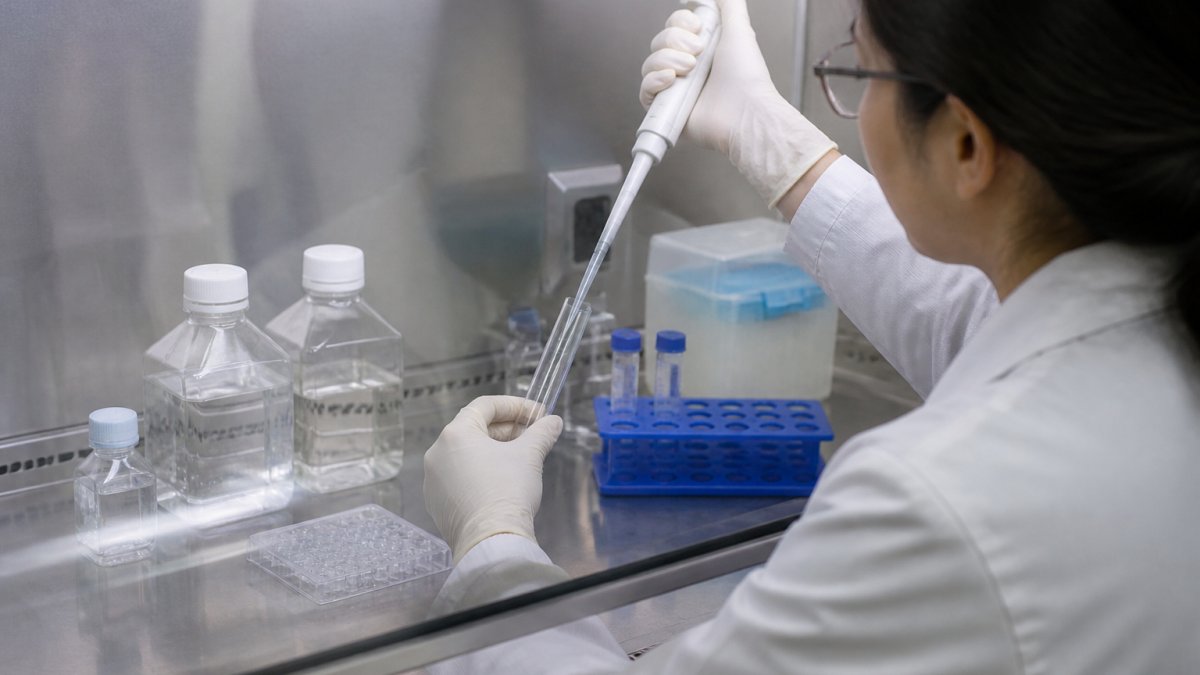
Step 2: Prepare with endotoxin-free materials. Use depyrogenated glassware, certified low-endotoxin water, and single-use plastic where possible.
Step 4: Test the sample at the right dilution. Too concentrated and inhibition hides the signal.
Step 5: Run positive and negative controls. No controls, no valid result.
Step 6: Document and archive. Record the assay, lot, dilution, controls, and raw reading.
That is the whole loop. Prevention upstream, measurement in the middle, documentation at the end.
Contamination does not announce itself. It shows up months later as data nobody can reproduce.
Get started with Globo Research Peptides and put documented, research-grade material behind your next study.
Frequently Asked Questions
Does high peptide purity mean a sample is endotoxin-free?
No. HPLC purity and endotoxin content are measured by completely different methods. A peptide can read ≥99% pure on HPLC and still carry significant endotoxin loads, because HPLC detects peptide mass, not bacterial cell wall fragments. Endotoxin testing requires a separate assay such as LAL or recombinant factor C. Always verify that your Certificate of Analysis reports an endotoxin result in EU/mg alongside the purity figure.
What does an endotoxin result in EU/mg mean?
EU stands for endotoxin units, a standardized measure of biological activity from lipopolysaccharide. Reporting per milligram normalizes the result to the peptide mass, so you can compare batches of different sizes. A low EU/mg value means less pyrogenic material per unit of peptide. Thresholds depend on your application: cell culture work typically demands tighter limits than non-cellular assays. Check the COA for the exact value and the assay method used to obtain it.
Can peptide solvents or buffers interfere with endotoxin testing?
Yes. Common solvents such as DMSO, acetonitrile, and certain detergents can inhibit or enhance the LAL reaction, producing false negatives or inflated results. High salt concentrations and extreme pH also interfere. Labs should run spike-and-recovery controls to measure inhibition or enhancement before trusting a result. If interference exceeds acceptable ranges, dilute the sample, neutralize the matrix, or switch to recombinant factor C, which tolerates some matrices better than LAL.
What should a peptide Certificate of Analysis report about endotoxin?
A complete COA should list the endotoxin result in EU/mg, the assay method (LAL or recombinant factor C), the testing laboratory, and the detection limit of the assay. It should also include the HPLC purity figure, batch or lot number, and date of analysis. If the endotoxin value is missing or listed only as "passes," request the raw data. Without a numeric result and method reference, you cannot verify whether the batch meets your study's requirements.