 ultimate-guide
Peptide Custom Synthesis Turnaround Times: 2026 Guide
Table of Contents
- Standard Peptide Custom Synthesis Turnaround Times
- Factors Affecting Peptide Synthesis Speed
- Peptide Synthesis Lead Time: From Order to Delivery
- How Purity Requirements and Quality Control Impact Turnaround
- Pricing Structures for Custom Synthesis Services
- Best Practices for Peptide Storage 2026: Preserving Your Custom Peptides
- Troubleshooting Delays and Failed Synthesis Runs
- Conclusion: Planning Your Research Around Synthesis Timelines
- Frequently Asked Questions
Last Updated: September 16, 2026
Standard Peptide Custom Synthesis Turnaround Times
Peptide custom synthesis turnaround times typically range from two to six weeks for standard sequences, with most routine orders shipping within 10 to 15 business days of sequence confirmation. This timeline can compress or stretch based on a handful of variables that researchers can actually control before they place an order.
Understanding what "custom synthesis" really means matters here. Custom synthesis is the production of a specific peptide sequence built to a researcher's exact specifications, rather than a catalog item pulled from existing stock. That distinction drives everything about how long your order takes.
Most delays trace back to one of three things: sequence complexity, purification requirements, or documentation needs. Get ahead of those three and you avoid the most common frustration in peptide procurement.
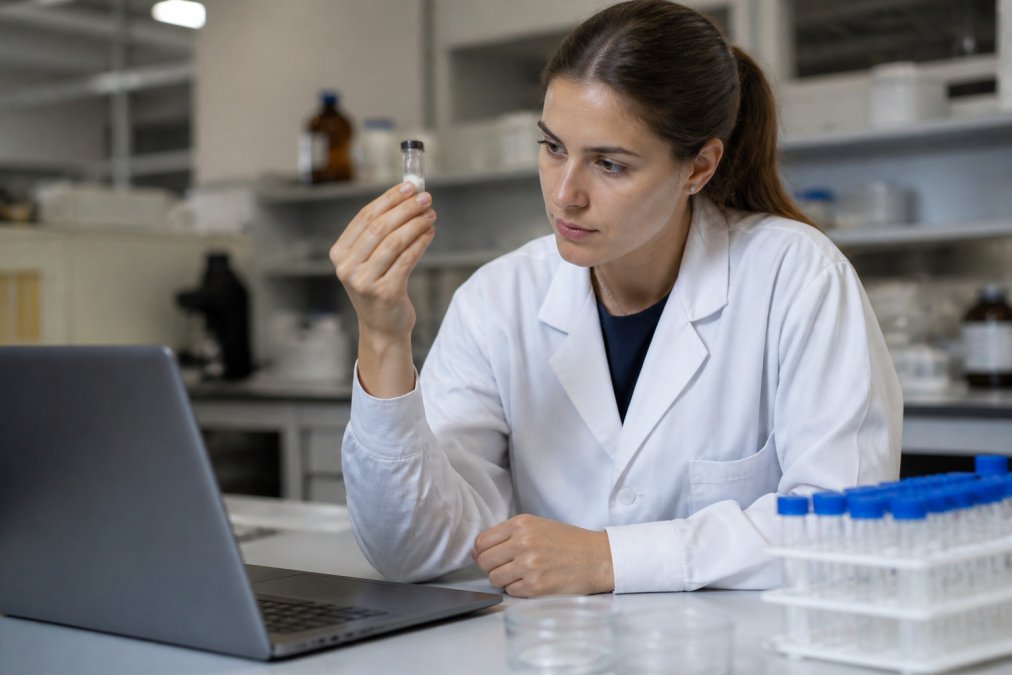
Typical Timelines for Common Peptide Lengths
Shorter peptides move faster. A sequence under 15 amino acids usually clears synthesis and purification in roughly one to two weeks. Mid-length sequences in the 15 to 30 residue range commonly take two to three weeks. Longer or highly modified sequences often push past four weeks, and difficult sequences can run longer still.
| Peptide Length | Typical Turnaround | Main Bottleneck |
|---|---|---|
| Under 15 residues | 1-2 weeks | Purification |
| 15-30 residues | 2-3 weeks | Coupling efficiency |
| 30-50 residues | 3-5 weeks | Sequence complexity |
| Modified or labeled | 4-6 weeks | Custom modification |
Expedited vs. Standard Synthesis Services
Expedited service compresses the queue, not the chemistry. A rushed order jumps ahead in the production schedule and often runs with tighter monitoring, but the underlying solid-phase peptide synthesis steps still take the time they take. Expect expedited options to shave several business days off a standard lead time rather than cut it in half.
The trade-off is cost and, sometimes, batch scheduling flexibility. If your timeline is genuinely flexible, standard service usually gives you better value.
Factors Affecting Peptide Synthesis Speed
Several variables determine how fast a custom sequence moves through production, and most of them are visible before you order.
- Sequence complexity: Repeating motifs, hydrophobic stretches, and difficult couplings slow each cycle.
- Peptide length: Every additional residue adds coupling and deprotection steps.
- Custom modification: Fluorescent tags, phosphorylation, and cyclization add separate reaction steps.
- Purity target: Higher purity means more purification passes.
- Order volume: Larger quantities take longer to synthesize and lyophilize.
A common mistake is assuming a short peptide is automatically fast. A 12-residue sequence packed with difficult couplings can take longer than a well-behaved 25-mer. Sequence complexity, not raw length, is often the real driver.
Peptide Synthesis Lead Time: From Order to Delivery
Peptide synthesis lead time is the total elapsed time from order placement to receipt of the finished, verified product. That window is not one block of time, it is a sequence of stages, and knowing how long each one runs is what lets you build a realistic study timeline instead of guessing.
A typical custom order moves through these stages:
| Stage | What Happens | Typical Duration |
|---|---|---|
| Sequence review and quote | Supplier checks feasibility, flags difficult motifs, confirms specifications | 1-2 business days |
| Synthesis | Stepwise coupling and deprotection on resin | 3-10 business days, driven by length and complexity |
| Cleavage and crude recovery | Peptide is cleaved from resin and precipitated | 1-2 business days |
| Purification | Preparative HPLC to reach the target purity | 2-5 business days, more for high purity |
| Quality control | Mass spectral analysis and HPLC verification against the certificate | 1-3 business days |
| Lyophilization and packaging | Drying to powder and preparing the shipment | 1-2 business days |
| Shipping | Transit to your facility | 1-5 business days, depending on service level |
The stages overlap in some labs and run strictly in sequence in others, which is why two suppliers can quote the same sequence and land two weeks apart. Ask which stages run in parallel and which are gated.
Here is where the "business days versus calendar days" confusion bites researchers hardest. A quoted 10-day lead time usually means 10 business days, which is two full calendar weeks. Add weekends and holidays and a "10-day" order can land on your bench 14 to 16 calendar days later. Always confirm which clock your supplier is using before you build a study timeline around a delivery date.
A practical way to convert a quote into a real date: take the quoted number, confirm whether it is business or calendar days, add the shipping transit time separately, then add a buffer for the QC stage, which is the one most likely to trigger a re-run.
One more distinction worth pinning down: lead time is not the same as turnaround time. Turnaround usually refers to the production window from sequence confirmation to a verified, released batch, while lead time includes everything from the moment you place the order to the moment the box arrives. When you compare quotes from different suppliers, make sure you are comparing the same measurement, a shorter "turnaround" that excludes shipping and QC can look faster on paper while delivering later in practice.
How Purity Requirements and Quality Control Impact Turnaround
Higher purity targets extend turnaround because purification is iterative. Crude peptide comes out of synthesis with impurities, and reaching 95% purity takes fewer HPLC passes than reaching 98% or higher. Each additional purification round adds time.
Pricing Structures for Custom Synthesis Services
Custom synthesis pricing depends on sequence length, purity level, quantity, and turnaround speed. There is no single flat rate, because a difficult 40-mer at high purity costs far more to produce than a short, simple sequence.
Most suppliers structure quotes around these variables:
- Length and complexity: Longer, harder sequences cost more.
- Purity tier: Higher purity carries a premium.
- Quantity: Larger amounts reduce cost per milligram.
- Turnaround: Expedited service adds a surcharge.
- Modifications: Custom labeling and conjugation add line-item costs.
Best Practices for Peptide Storage 2026: Preserving Your Custom Peptides
Once your custom peptide arrives, how you store it determines whether it stays usable for the length of your study. Lyophilized peptides are generally stable for extended periods when kept cold, dry, and protected from light.
- Store lyophilized powder at -20°C for long-term stability.
- Avoid repeated freeze-thaw cycles, which degrade the sequence.
- Aliquot reconstituted peptide to limit handling.
- Keep working solutions refrigerated and use them within their stability window.
- Protect from moisture; let vials reach room temperature before opening.
Troubleshooting Delays and Failed Synthesis Runs
Failed synthesis runs happen, and knowing why shortens the recovery. The most common causes are difficult sequences, incomplete coupling, and purification losses that drop yield below the ordered quantity, but the useful question is what each of those actually means for your timeline.
- Where do the raw amino acid building blocks come from, and are any of them on allocation or backorder?
- Is the synthesis done in-house or outsourced to a contract lab, and if outsourced, who controls the schedule?
- How much resin and reagent inventory does the lab hold, and how quickly can it restock a scarce building block?
- What is the lab's current queue depth, and how many concurrent custom orders is it running?
- How and when will you be notified if a run is at risk?
Conclusion: Planning Your Research Around Synthesis Timelines
The core challenge with peptide custom synthesis turnaround times is that the variables are knowable but rarely spelled out. Sequence complexity, purity targets, documentation, and the business-day versus calendar-day gap all shape your real delivery date, and planning around them separates a smooth study from a stalled one.
Frequently Asked Questions
What factors influence custom peptide synthesis turnaround times?
Turnaround times depend on peptide length, sequence complexity, required purity level, and the need for custom modifications. Longer sequences and difficult amino acid couplings require more synthesis cycles and purification steps. High-purity requirements (≥99%) add HPLC purification time. Order volume and current production queue also affect lead time. For standard peptides, turnaround times vary; complex or long sequences may take longer.
How long does standard peptide synthesis typically take?
Standard custom peptide synthesis for sequences up to 20 amino acids typically involves synthesis, cleavage, HPLC purification, lyophilization, and quality control analysis. Peptides longer or with challenging sequences can take longer. Expedited services can reduce timelines for an additional fee.
Does peptide purity level affect production turnaround time?
Yes, higher purity requirements increase turnaround time. Crude peptides can ship quickly but contain impurities. Purification via HPLC to achieve ≥95% or ≥99% purity adds 2-5 business days depending on sequence complexity. Each purification round requires analytical verification. For research requiring verified ≥99% purity with full Certificate of Analysis documentation, plan for the full standard timeline.
How can researchers expedite the peptide synthesis process?
To expedite synthesis, order peptides with standard lengths and avoid unusual modifications when possible. Choose expedited service if your timeline is tight. Provide clear sequence information and confirm specifications promptly to avoid back-and-forth. For repeat orders, establish a standing agreement. Always confirm the delivery schedule in writing, noting whether quoted days are business or calendar days.