 listicle
5 Top Storage Containers for Research Peptides
Last Updated: November 2, 2026
Quick Summary
The top 5 storage containers for research peptides are the 20-slot 3 mL vial case and 12-slot peptide case for refrigerator organization, the Tiny Peptide 3 mL box for freezer use, the Odo Packaging box for low-cost bulk organization, and the YETI LoadOut GoBox 1 for transport. Good peptide storage keeps vials organized and damage-free, but no container controls temperature.
- The 20-slot case holds twenty 3 mL vials in fixed positions for busy refrigerator shelves.
- The 12-slot peptide case suits smaller refrigerators and single-researcher working stocks.
- Confirm a freezer box is rated for your freezer's setpoint before committing a batch.
- Log freezer temperature at a set interval and keep the log with your batch records.
- Label every vial with compound, lot, and date to speed inventory checks.
Table of Contents
- Quick Comparison: 5 Storage Containers for Research Peptides
- How We Evaluated These Peptide Storage Containers
- 1. 20-Slot 3 mL Vial Case for Refrigerator Storage
- 2. 12-Slot Peptide Case for Fridge Organization
- 3. Tiny Peptide 3 mL Vial Storage Box for Freezer Use
- 4. Odo Packaging Peptide Storage Box for Bulk Vial Capacity
- 5. YETI LoadOut GoBox 1 for Portable and Travel Storage
- Best Practices for Peptide Storage 2026: Materials, Light, and Moisture
- Frequently Asked Questions
Quick Comparison: 5 Storage Containers for Research Peptides
Choosing the right container for top 5 storage containers for research peptides comes down to matching capacity, material, and temperature range to how your lab actually works. A refrigerator organizer solves a different problem than a portable travel case, and a bulk box solves a different problem than a freezer-ready vial holder. This guide compares five storage container options on the criteria that matter for research settings: vial fit, cold-zone compatibility, light protection, and how well each container keeps vials organized and damage-free.
Below, we break down what each container does well, where it falls short, and who it suits. We also separate two ideas that get blurred in most buying guides: container organization and actual peptide preservation. A case keeps vials tidy and protected. It does not control temperature, and no container can substitute for correct cold storage and handling.
| Container | Capacity | Best Zone | Best For |
|---|---|---|---|
| 20-Slot 3 mL Vial Case | 20 vials (3 mL) | Refrigerator | High-volume fridge organization |
| 12-Slot Peptide Case | 12 slots | Refrigerator | Compact, low-footprint setups |
| Tiny Peptide 3 mL Storage Box | Not specified | Freezer | Freezer-ready vial protection |
| Odo Packaging Storage Box | Not specified | Bench or cold room | Low-cost bulk organization |
| YETI LoadOut GoBox 1 | Gear case | Transport | Portable and travel storage |
How We Evaluated These Peptide Storage Containers
Storage containers can be assessed against five practical criteria: vial compatibility, temperature-zone suitability, material and durability, light and moisture protection, and organizational clarity such as slot count and labeling space. Below is what each criterion actually means in a research setting, so you can apply the same framework to a container that is not on this list.
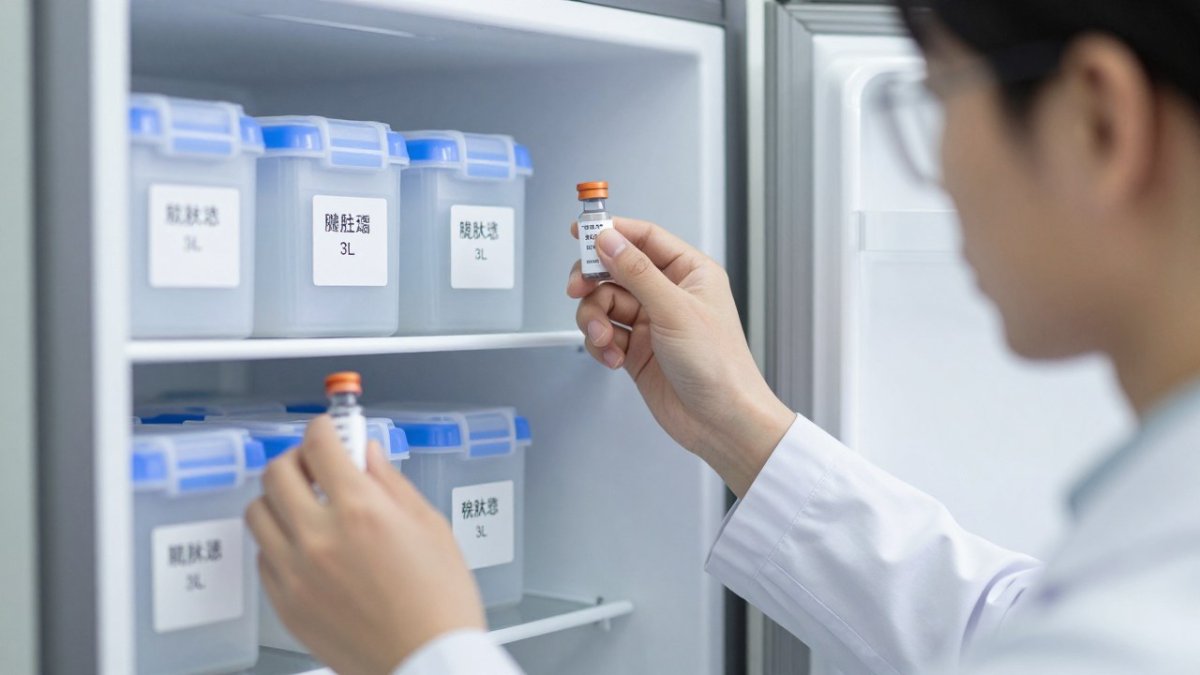
Vial compatibility. Slot count tells you capacity, not fit. Vial dimensions vary by manufacturer and by fill volume, so a case sized for a 3 mL vial may not seat a 5 mL or 10 mL vial securely. Before buying, measure the outside diameter and height of the vials you actually use, then compare those numbers to the case's published slot dimensions.
Temperature-zone suitability. A refrigerator organizer, a freezer box, and a transport shell are three different products. Refrigerator storage typically sits in the 2-8 °C range that most peptide suppliers specify for reconstituted or working stocks, while long-term dry storage often calls for freezer temperatures. The container does not set the temperature; the refrigerator or freezer does. What the container must do is tolerate the zone without cracking, warping, or becoming brittle.
Material and durability. Rigid plastic cases resist crushing and keep vials from rolling, while softer organizers cushion but offer less structural protection. Clear lids help with labeling and quick inventory checks; opaque walls block light better. We treat these as trade-offs, not absolutes.
Light and moisture protection. Many peptides are light-sensitive, and amber or opaque containers reduce exposure compared with clear boxes. Moisture control is separate: an airtight gasket or a sealed secondary bag limits humidity ingress, which matters in frost-free freezers that cycle air and in humid bench environments. A container with a loose lid offers organization but little moisture protection.
Organizational clarity. Fixed slots, labeling space, and a predictable layout make inventory checks faster and reduce handling. Handling is where damage and contamination usually happen, so a container that lets you retrieve one vial without disturbing the rest is worth more than a slightly larger box with a jumbled interior.
What we did not do. If you need validated storage conditions, follow the temperature range your peptide supplier specifies and confirm it with a calibrated thermometer or data logger in your own unit.
For readers who want to verify the purity and lot documentation of the compounds going into these containers, Globo Research Peptides provides a Certificate of Analysis for every batch.
1. 20-Slot 3 mL Vial Case for Refrigerator Storage
The 20-slot case is the strongest pick for a busy refrigerator shelf. It holds twenty 3 mL vials in fixed positions, which means no rolling, no tipping, and no hunting for a specific lot at the back of the fridge. Fixed slots also make labeling and inventory checks faster, since every vial has a predictable home.
Where it falls short: the listing does not publish material specifications or a price, so confirm both before ordering. It is also sized specifically for 3 mL vials, so a lab running 5 mL or 10 mL vials will need a different format. Best for: labs storing many 3 mL vials in one refrigerator. Skip if: your vial sizes are mixed.
2. 12-Slot Peptide Case for Fridge Organization
Compact and straightforward, the 12-slot case suits smaller refrigerators, shared shelving, or a single researcher's working stock. Twelve slots keep the footprint small enough to fit crowded shelves without displacing other cold storage.
The trade-off is capacity. A 12-slot case fills quickly if you run multiple studies in parallel. The listing does not specify dimensions or material, so measure your shelf space and vial diameter first. Best for: independent labs and small working stocks. Skip if: you need bulk capacity in one unit.
3. Tiny Peptide 3 mL Vial Storage Box for Freezer Use
Freezer storage puts different demands on a container than refrigerator storage. Vials need to stay upright and protected at low temperatures, and the container itself should tolerate freezer conditions without cracking. Frost-free freezers cycle air and humidity, which means a loose-lidded box offers organization but little moisture protection. Repeated open-and-shut cycles also stress the plastic, so a box that feels rigid at room temperature can become brittle over time.
Watch out: the listing does not specify capacity, material, or a low-temperature rating. Confirm the box is rated for your freezer's setpoint before committing a batch to it, and check that the lid seals well enough to limit frost and moisture ingress.
What the container does and does not do. A freezer box organizes and protects vials. It does not establish or verify storage temperature, and it cannot tell you whether a batch stayed within range during a power interruption or a door left ajar. That is a monitoring problem, not a container problem, and it is the part most buying guides skip.
Temperature monitoring in practice. Peptide suppliers often publish a storage range on the vial label or batch documentation, and that range is the one to follow. Log the temperature at a set interval and keep the log with your batch records. If your protocol calls for it, a min/max thermometer gives you a cheap check on whether the compartment swung outside range between readings.
Responding to an excursion. If the log shows a temperature outside the supplier's specified range, the response should follow your protocol rather than guesswork. A practical sequence is: record the time, duration, and peak temperature; quarantine the affected vials; check the supplier's documentation for handling guidance; and decide whether the batch is still usable for your application. Do not assume a short excursion is harmless, and do not assume it ruined the batch either.
Handling and contamination. Keep unused vials in the box and used working stock separate, clean the interior on a schedule, and retrieve one vial at a time so the rest stay undisturbed. Label every vial with compound, lot, and date so an inventory check does not require opening the box and handling every vial.
Best for: freezer-ready storage of 3 mL vials where you are already monitoring compartment temperature. Skip if: you need a documented temperature rating up front or you have no way to log freezer temperature.
4. Odo Packaging Peptide Storage Box for Bulk Vial Capacity
The catch: dimensions, capacity, and material are not published. At that price point, treat it as an organizational box rather than a protective case, and pair it with a rigid outer container if crush protection matters. Best for: low-cost bulk vial organization. Skip if: you need verified material specs.
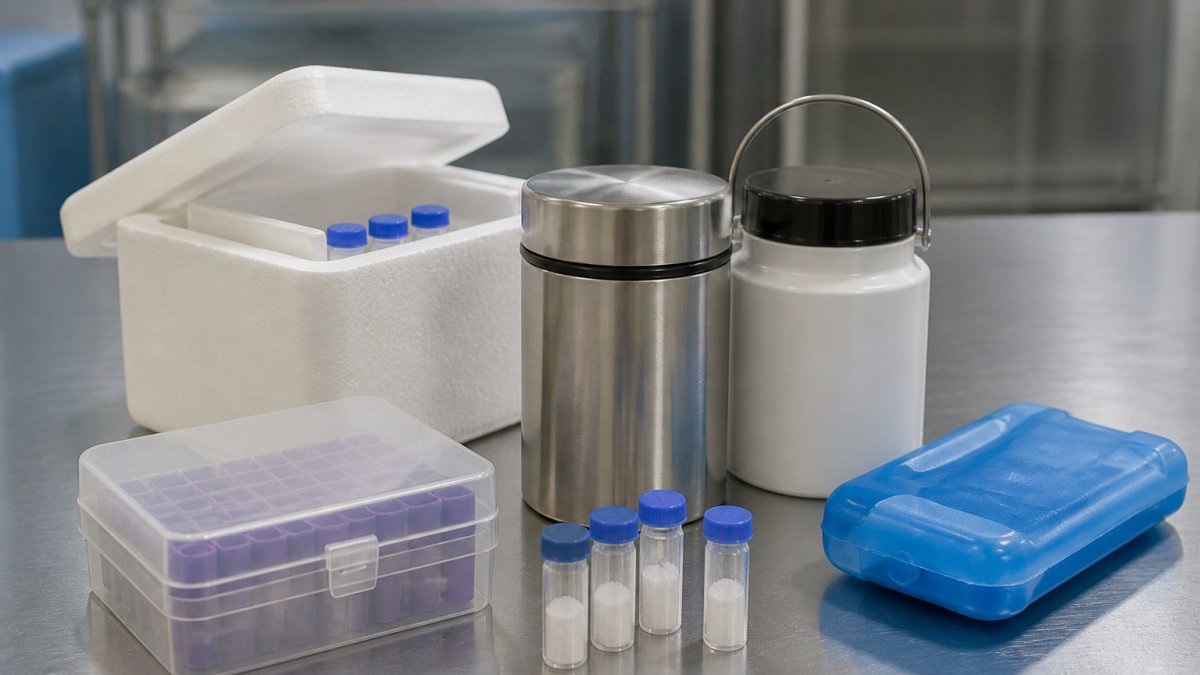
5. YETI LoadOut GoBox 1 for Portable and Travel Storage
Best for: portable transport between locations. Skip if: you need validated temperature control.
Best Practices for Peptide Storage 2026: Materials, Light, and Moisture
The container is one layer of protection. The other layers are temperature stability, light protection, and moisture control. For a deeper walkthrough of temperature, vial, and handling protocols, see our guide to best practices for peptide storage in 2026. If you are setting up a broader lab storage system, our 7 best practices for laboratory chemical storage covers segregation, labeling, and inspections.
- Keep unreconstituted and reconstituted peptides at the temperatures their documentation specifies.
- Choose opaque or amber-tinted containers where light exposure is a concern.
- Use airtight containers or sealed bags to limit moisture ingress.
- Label every vial with compound, lot, and date.
- Log temperature excursions and respond per your protocol.
For sourcing that ties storage into the full procurement workflow, our guide to sourcing research peptides covers COA verification and supplier vetting. And to understand why documentation matters for stored compounds, read our article on Certificate of Analysis documentation.
A storage container keeps vials organized and protected from damage. It does not preserve the peptide on its own. That distinction is the one most buying guides skip.
Storage containers solve an organizational problem; they do not replace the compound documentation that research protocols depend on. Globo Research Peptides supplies research-grade compounds with verified ≥99% HPLC purity and a full Certificate of Analysis for every batch, backed by third-party testing. Pair properly documented compounds with the storage setup your protocol requires.
Frequently Asked Questions
How should you store research peptides?
Unreconstituted research peptides belong in freezer storage at -20°C or colder, in a sealed, light-blocking container. Once reconstituted, most peptides move to refrigerator storage at 2-8°C and are used within weeks. Keep vials upright in a vial organizer so labels stay readable and glass never touches the freezer floor. A dedicated peptide storage case also prevents rolling and accidental breakage during routine cold storage handling.
What are the best materials for long-term peptide storage?
For the outer container, look for rigid, low-temperature resistant plastics such as PETG or polypropylene that stay intact at freezer temperatures. Avoid cardboard in damp cold storage and skip any case that lets light through. An airtight container with a gasket adds moisture protection that a simple open tray cannot provide.
How do temperature fluctuations affect peptide stability in storage containers?
Repeated freeze-thaw cycles and door-open temperature excursions are the main threats to peptide stability. A container that holds vials tightly, insulates slightly, and stays at the back of the shelf reduces how much the contents swing when the door opens. For long studies, pair the container with a validated temperature log so any excursion is documented and the affected batch can be assessed rather than assumed intact.
Are glass or plastic vials better for storing research-grade peptides?
Glass is generally preferred for research-grade peptides because it is inert, resists moisture vapor, and tolerates low temperatures without cracking. Plastic vials work for short-term or field use but some polymers can adsorb small peptides or leach trace compounds. Whichever vial you use, the outer storage container matters just as much: light protection, an airtight seal, and a snug slot count keep the vial itself from becoming the weak point.
How should peptides be organized to prevent cross-contamination?
Assign each vial a fixed slot in a labeled vial organizer and never return a vial to the wrong position. Keep reconstituted and unreconstituted peptides in separate containers, and use one pipette or syringe per vial. Wipe the case interior with an appropriate cleaner between batches, and choose a case with smooth, cleanable surfaces rather than fabric inserts that trap residue. Clear labeling plus a fixed slot map is the simplest contamination prevention you can build into peptide storage.