 blog
7 Best Practices for Laboratory Chemical Storage
Table of Contents
- Segregate Chemicals by Compatibility and Hazard Class
- Label All Containers Clearly and Completely
- Use Approved, Compatible Containers
- Maintain a Laboratory Chemical Inventory Template
- Store Flammable Liquid Storage in Laboratories Safely
- Implement a Chemical Storage Inspection Checklist
- Dispose of Expired and Unwanted Chemicals Properly
- Secure Storage Locations and Monitor Environmental Conditions
- Frequently Asked Questions
Last Updated: October 10, 2026
Segregate Chemicals by Compatibility and Hazard Class
Proper chemical segregation is the foundation of safe laboratory storage. Chemicals must never be stored together randomly. Incompatible substances can react violently if containers leak or spill. The first step is understanding which chemicals can coexist safely and which must be kept apart.
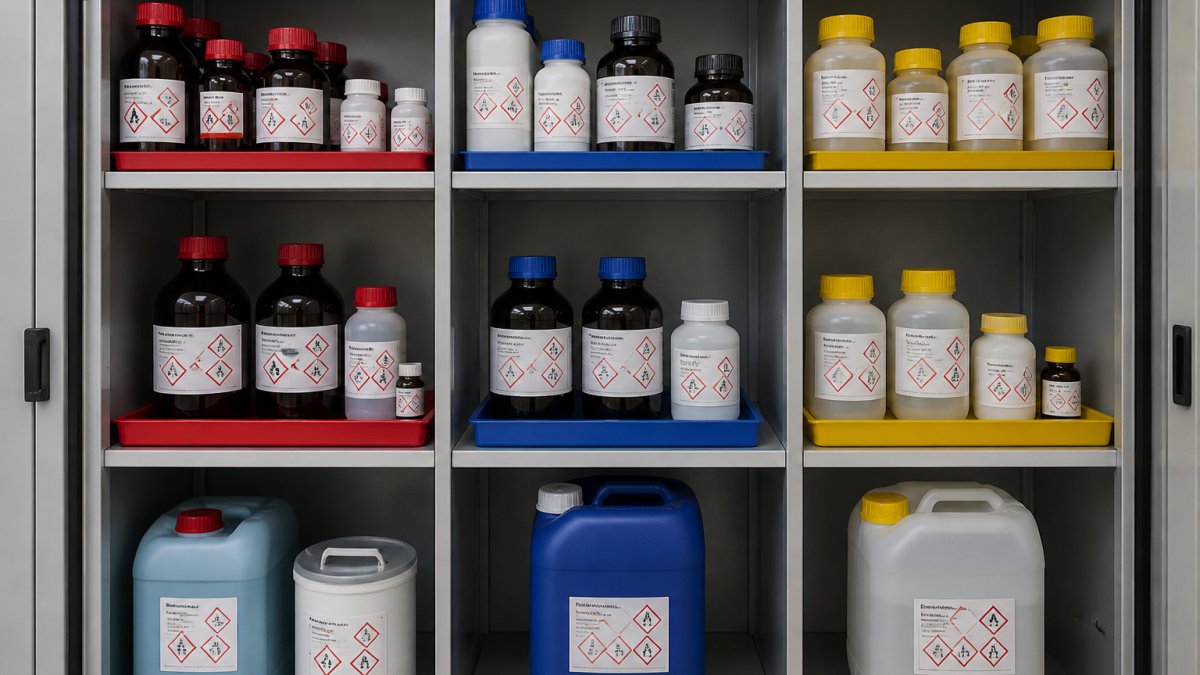
Most laboratories organize chemicals by hazard class: flammable liquids, oxidizers, corrosives, toxics, and reactives. Flammable liquids must stay away from oxidizers. Corrosives should be isolated from bases and reactive metals. This separation prevents dangerous chain reactions if containment fails. A chemical compatibility storage chart helps you map safe combinations before arranging your storage space.
Understanding chemical properties makes segregation practical. Flammable liquids have low flash points and ignite easily. Oxidizers accelerate combustion in other materials. Corrosives eat through many container types and react violently with certain substances. Reactive chemicals can explode or release toxic gases when mixed.
The chemical compatibility storage chart becomes your reference tool. It shows at a glance which substances belong together and which must stay separated. This visual guide prevents mistakes when staff are busy or unfamiliar with specific compounds.
Understanding Chemical Compatibility Storage Chart
A chemical compatibility storage chart maps safe and unsafe pairings across your inventory. The chart uses a grid format: chemicals listed vertically and horizontally, with cells marked safe or unsafe. This format lets anyone quickly check whether two substances can share shelf space.
Most compatibility charts follow hazard class organization. Flammable liquids occupy one section. Oxidizers occupy another. Corrosives get their own zone. Acids and bases stay separated. Reactive metals require isolated storage. Within each class, specific incompatibilities still apply. Some oxidizers react with certain flammables more aggressively than others.
Building your own chart takes time but pays dividends. Start with your Safety Data Sheets (SDS). Each SDS lists incompatible substances. Cross-reference your inventory against these incompatibilities. Mark unsafe pairings clearly. Share the completed chart with all lab staff so everyone follows the same rules.
Label All Containers Clearly and Completely
Every container must carry a hazard label that identifies its contents and dangers. Ambiguous labels create confusion and risk. Staff should know immediately what is inside and what precautions apply. Clear labeling prevents accidental mixing and ensures proper handling.
Labels must include the chemical name, hazard symbols, signal words, and hazard statements. The chemical name should match the SDS exactly so anyone can look up detailed information. Hazard symbols use pictograms: flames for flammables, corrosion symbols for acids and bases, exclamation marks for irritants. Signal words like "Danger" or "Warning" indicate severity. Hazard statements explain specific risks: "Causes severe skin burns," "May ignite spontaneously," "Toxic if swallowed."
Most jurisdictions require Globally Harmonized System (GHS) labels. GHS standardizes hazard communication across borders so chemists anywhere recognize the same symbols and language. Your labels should follow GHS format if you work in a regulated environment or share materials with other labs.
Labeling applies to secondary containers too. If you transfer a chemical from its original bottle into a smaller working container, that container needs a label. Do not assume staff will remember what they poured. Label it immediately and completely.
Use Approved, Compatible Containers
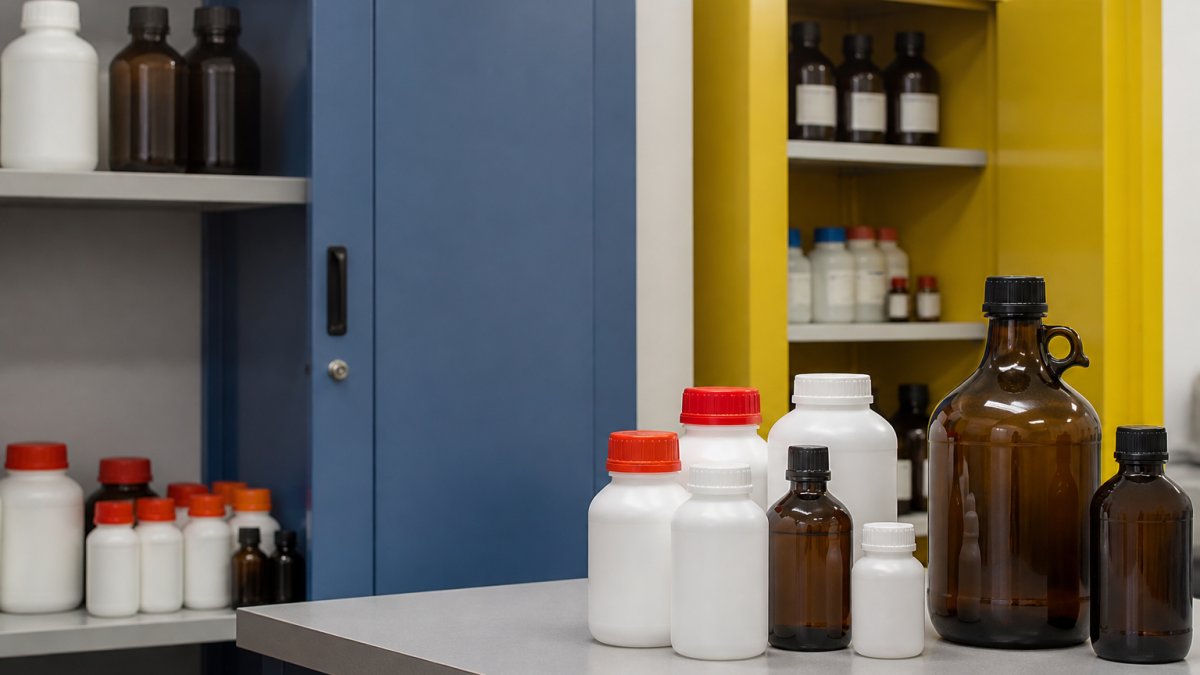
The container itself must withstand the chemical stored inside. Glass works for many substances but shatters easily. Plastic resists impact but dissolves in some solvents. Metal containers corrode in acidic or alkaline environments. Choosing the wrong material causes leaks, spills, and exposure.
Check the SDS for recommended container materials. Most chemicals list compatible and incompatible materials explicitly. Flammable liquids typically require metal or approved plastic containers with tight caps. Corrosives need glass or specialized plastic resistant to their specific chemistry. Oxidizers demand containers that will not react with them.
Container condition matters as much as material. Cracked or dented containers leak. Loose caps allow evaporation and contamination. Replace any container showing damage before storing it. Inspect containers regularly for signs of wear. A small leak today becomes a major spill tomorrow.
Approved containers come with proper closures: caps that seal tightly, vents that prevent pressure buildup, and materials that do not degrade. Generic jars and bottles do not meet these standards. Invest in containers designed for laboratory chemical storage.
Maintain a Laboratory Chemical Inventory Template
An organized inventory prevents duplicate purchases, catches expired materials, and tracks usage patterns. A laboratory chemical inventory template should record the chemical name, location, quantity on hand, purchase date, expiration date, and responsible person. This information helps you know what you have, where it is, and when it needs replacement.
Digital spreadsheets work well for medium-sized labs. Columns for each data point keep information organized. Sorting by expiration date highlights materials approaching their end of life. Filtering by location helps staff find what they need without searching. Updates should happen whenever materials arrive or are used.
Larger labs benefit from chemical management software. These systems track inventory in real time, generate alerts for low stock and approaching expiration dates, and produce compliance reports. They integrate with purchasing systems so you never run out unexpectedly.
Regular inventory audits catch discrepancies. Monthly or quarterly reviews confirm that physical stock matches your records. Audits also reveal which chemicals are used regularly and which sit unused. Unused materials become disposal liabilities. Knowing your actual usage helps you order smarter quantities.
| Inventory Element | Purpose | Update Frequency |
|---|---|---|
| Chemical name and CAS number | Precise identification and SDS lookup | Upon receipt |
| Current quantity and units | Stock level tracking | Weekly or with each use |
| Storage location | Quick retrieval and segregation verification | Upon receipt and movement |
| Purchase and expiration dates | Rotation and compliance | Upon receipt |
| Responsible person | Accountability and training verification | Upon receipt |
Store Flammable Liquid Storage in Laboratories Safely
Flammable liquids demand special attention. They ignite at low temperatures and burn rapidly. Improper storage of flammable liquids in laboratories creates fire hazard. These materials require dedicated cabinets, proper ventilation, and distance from ignition sources.
Flammable liquid storage in laboratories uses fire-rated cabinets designed to contain spills and resist heat. These cabinets have double walls, self-closing doors, and absorbent material on the floor.
Quantity limits apply to flammable liquids. Most labs can store only a limited amount in work areas. Excess quantities must go to a separate flammable storage room with enhanced fire suppression. Check local fire codes for your jurisdiction's specific limits.
Ventilation matters for flammable liquids. Vapors accumulate in low spots and can ignite if they contact a spark or flame. Good air circulation disperses vapors before they concentrate. Fume hoods work well for small quantities.
Keep flammable liquids away from heat sources, sparks, and open flames. No smoking, hot work, or electrical equipment that might spark should operate near flammable storage. Maintain clear pathways so staff can exit quickly if a fire starts.
Implement a Chemical Storage Inspection Checklist
Regular inspections catch problems before they become emergencies. A chemical storage inspection checklist standardizes what you look for and ensures consistency across your lab. Inspections should happen monthly or quarterly, depending on your storage volume and usage rate.
Your checklist should cover container condition, label legibility, hazard segregation, spill containment, ventilation function, and environmental conditions. Look for leaks, cracks, corrosion, or missing caps. Verify that labels remain readable and accurate. Confirm that incompatible chemicals are properly separated. Check that spill kits are accessible and stocked. Ensure ventilation systems are running and unobstructed. Monitor temperature and humidity if your storage area has environmental controls.
Document findings and assign responsibility for corrections. If you find a damaged container, note it, remove it from service, and schedule disposal. If labels are fading, replace them. If ventilation is blocked, clear it. Tracking corrections ensures follow-through and creates a record of your diligence.
Train all staff on the inspection process. They should know what constitutes a problem and how to report it. Make reporting easy and non-punitive so people flag issues immediately rather than hoping someone else notices.
Dispose of Expired and Unwanted Chemicals Properly
Expired chemicals lose potency and may degrade into hazardous byproducts. Unwanted materials take up valuable storage space and create liability. Proper disposal prevents environmental contamination and ensures compliance with regulations.
Never pour chemicals down the drain or into trash. Most chemicals require specialized disposal. Flammable liquids go to incineration facilities. Corrosives and oxidizers need chemical neutralization. Toxic substances require secure landfills. Hazardous waste contractors handle these materials safely and document compliance.
Gather expired and unwanted materials in a designated accumulation area. Containers must remain closed and properly labeled. Keep the accumulation area clean and organized so hazardous waste contractors can work efficiently. Most jurisdictions allow temporary storage for limited periods.
Hazardous waste disposal costs money, but it is cheaper than environmental fines or cleanup. Budget for disposal as part of your operating costs. Plan ahead so you do not accumulate excess materials that require emergency disposal at premium rates.
Document all disposals. Keep receipts and certificates showing that materials were handled properly. This documentation protects you if questions arise later about what happened to specific chemicals.
Secure Storage Locations and Monitor Environmental Conditions
The storage location itself affects chemical stability and safety. Secure storage means limiting access to trained personnel only. Environmental monitoring means tracking temperature and humidity to keep chemicals stable.
Restrict access to chemical storage areas. Lock doors and require key cards or codes for entry. Log who enters and when. This prevents untrained people from handling hazardous materials and creates accountability.
Temperature stability preserves chemical integrity. Most chemicals perform best at room temperature, around 68-72 degrees Fahrenheit. Excessive heat accelerates degradation. Cold temperatures can cause precipitation or phase separation.
Humidity control prevents corrosion and moisture absorption. Some chemicals absorb water from humid air and lose potency. Others react with moisture and become hazardous.
Keep storage areas away from high shelves and cabinet tops where people might place items carelessly. Chemicals should sit at eye level or below for safe retrieval.
Maintain clear passageways and emergency exits. Never block doorways with storage containers. Staff must be able to exit quickly if an emergency occurs. Keep spill kits and emergency equipment accessible.
Proper laboratory chemical storage protects your team, preserves your research integrity, and keeps your facility compliant with safety regulations. Implementing these practices creates the foundation for consistent, reproducible results. ORDER NOW with Globo Research Peptides and receive high-purity, research-grade peptides backed by full Certificate of Analysis documentation.
Frequently Asked Questions
What are the basic rules for storing chemicals in a laboratory?
The fundamentals of laboratory chemical storage include segregating incompatible chemicals by hazard class, using approved containers, labeling everything clearly, maintaining an up-to-date inventory, storing materials at appropriate temperatures, securing storage areas, and conducting regular inspections. Each practice reinforces the others to prevent spills, reactions, and contamination that could compromise your research or create safety hazards.
How should incompatible chemicals be stored?
Incompatible chemicals must be physically separated to prevent accidental contact or reaction. Acids and bases should be stored in different cabinets or sections, oxidizers away from flammable materials, and reactive chemicals isolated from other substances. A chemical compatibility storage chart helps identify which substances cannot coexist. Use separate secondary containment trays for different chemical classes, and maintain clear spacing and barriers between incompatible groups.
How often should laboratory chemical storage areas be inspected?
Establish a routine inspection schedule using a chemical storage inspection checklist, monthly inspections are standard practice for most laboratories. Check container integrity, verify labels are legible and accurate, confirm chemicals remain in designated locations, look for signs of leakage or degradation, and ensure secondary containment is clean and functional. Document all findings and address any issues immediately to maintain compliance and safety standards.
What should you do with expired or unidentified laboratory chemicals?
Never store expired or unidentified chemicals alongside active inventory. Segregate them in a designated disposal area away from your working storage, clearly mark them as hazardous waste, and consult your facility's chemical disposal protocol or contact a licensed hazardous waste disposal service. Do not attempt to dispose of chemicals through standard waste streams, improper disposal violates environmental regulations and creates safety risks.