 ultimate-guide
Best Practices for Peptide Storage in 2026
Table of Contents
- Why Peptide Storage Conditions Determine Research Outcomes
- Peptide Degradation Factors: What Breaks Down Your Samples
- Lyophilized vs. Reconstituted: Core Peptide Storage Rules
- Best Storage Vials for Peptides: Materials and Preparation
- Reconstituted Peptide Shelf Life: Stability in Solution
- Freeze-Thaw Cycles and Aliquoting Best Practices
- Shipping and Transit Storage: Protecting Samples in Motion
- Final Checklist for 2026 Peptide Storage Protocols
- Frequently Asked Questions
Last Updated: September 6, 2026
Why Peptide Storage Conditions Determine Research Outcomes
Peptide storage is the single most controllable variable between receiving a high-purity compound and watching it degrade into useless fragments. The best practices for peptide storage 2026 demand more than tossing vials in a freezer; they require understanding the chemistry of degradation and building protocols that protect your investment in expensive research materials.
Most researchers lose more peptide to poor handling than to any inherent instability in the compound itself. Moisture, temperature fluctuation, light exposure, and microbial contamination each attack peptides through different mechanisms. A peptide that arrives at ≥99% purity can drop below usable thresholds within weeks if stored improperly after reconstitution (peer-reviewed research).
At Globo Research Peptides, we supply compounds verified at ≥99% HPLC purity with full Certificate of Analysis documentation for every batch. But the responsibility for maintaining that integrity shifts to you the moment the vial leaves our facility. This guide covers the storage protocols that preserve sample integrity from arrival through final use, based on established laboratory standards and the physical chemistry of peptide degradation.
What separates successful storage from failed experiments is a systematic approach. Below, we'll walk through the degradation factors you must control, the rules for lyophilized versus reconstituted material, and the equipment choices that prevent costly losses.
Peptide Degradation Factors: What Breaks Down Your Samples
Peptide degradation factors fall into five categories: hydrolysis, oxidation, deamidation, microbial growth, and physical loss through adsorption. Each attacks the peptide backbone or side chains through a distinct chemical pathway.
Hydrolysis is the primary threat for reconstituted peptides. Water cleaves peptide bonds, and the reaction accelerates with heat and extreme pH. Oxidation targets cysteine, methionine, and tryptophan residues when exposed to atmospheric oxygen. Deamidation converts asparagine and glutamine residues, altering charge and structure. Microbial growth introduces proteases that digest your peptide. Adsorption onto plastic or glass surfaces silently reduces concentration, particularly at low peptide amounts.
The stability of a peptide in solution depends heavily on its amino acid sequence. Peptides rich in methionine or cysteine require stricter oxygen exclusion. Those with multiple charged residues may aggregate or precipitate at certain pH levels. This is why generic storage advice often fails: your specific sequence determines which degradation pathway poses the greatest risk.
Sequence-specific vulnerability explains why some peptides tolerate room-temperature handling while others degrade within hours. Check the Certificate of Analysis and any stability data provided by your supplier before designing your storage protocol. When documentation is thin, default to the most conservative conditions: desiccated, frozen, protected from light.
Lyophilized vs. Reconstituted: Core Peptide Storage Rules
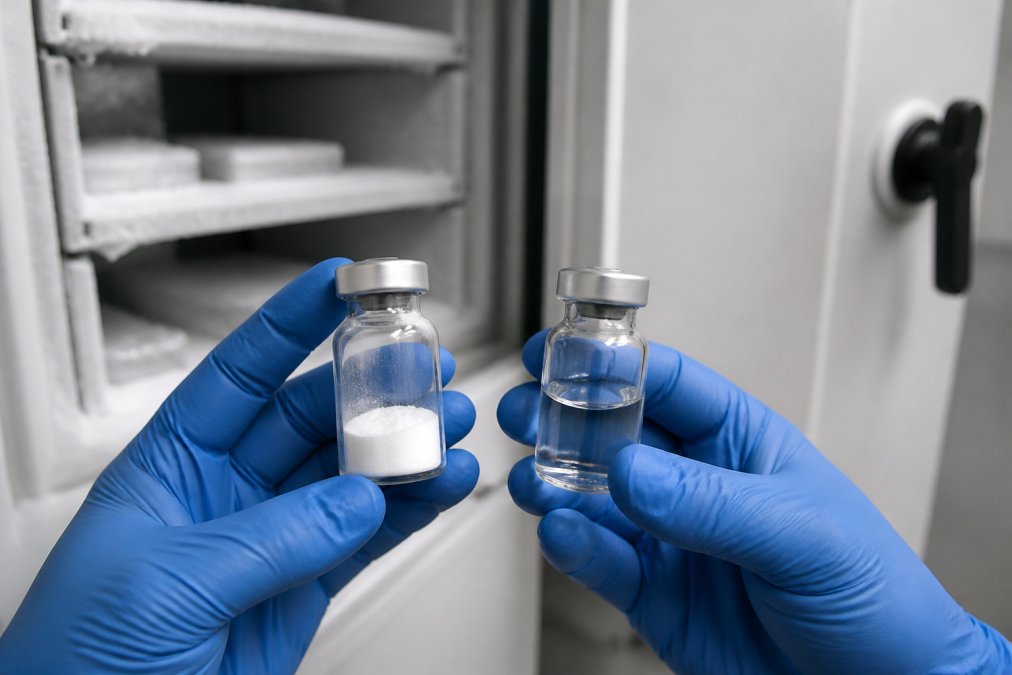
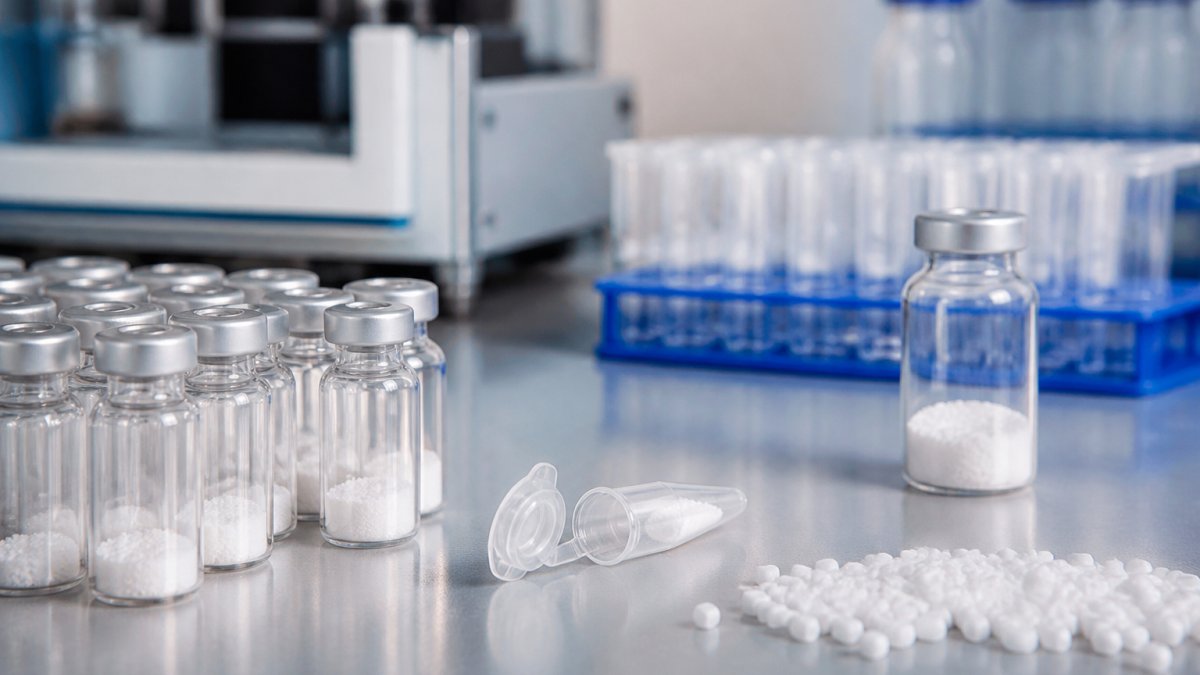
Lyophilized peptides are inherently more stable than their reconstituted counterparts. The freeze-dried powder removes water, the medium required for hydrolysis and microbial growth. Keep lyophilized peptides desiccated and protected from light, and most will remain stable for extended periods even at ambient temperature, though refrigeration at 2-8°C or freezing at -20°C extends shelf-life further.
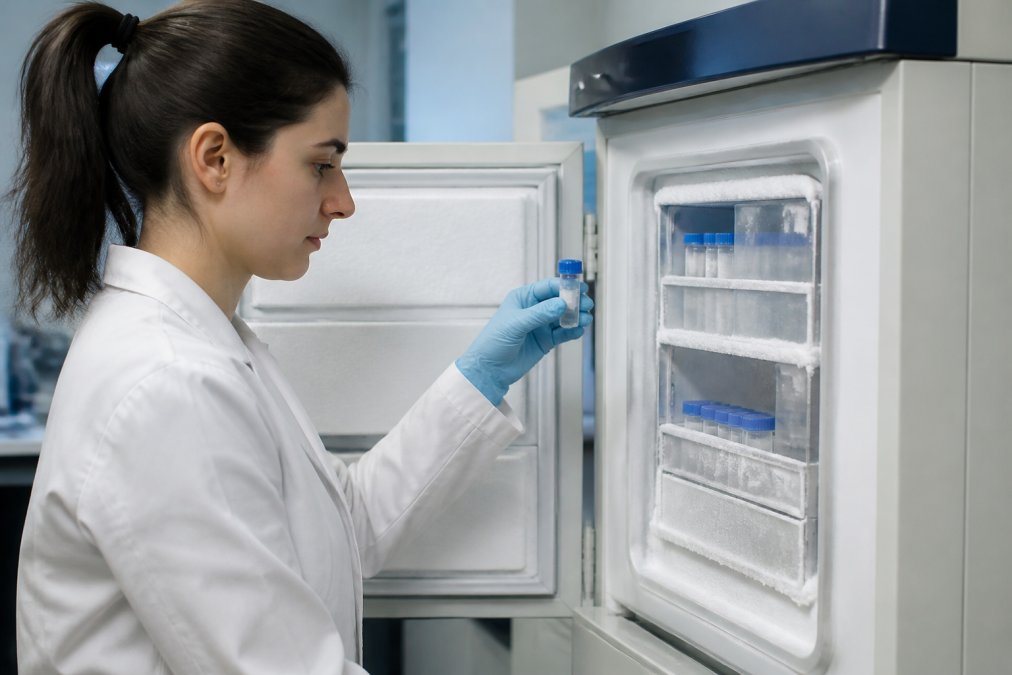
Reconstituted peptides enter a different stability regime. Once dissolved in buffer, hydrolysis begins immediately. The clock starts ticking the moment solvent touches powder. Storage temperature becomes critical: refrigeration at 2-8°C slows degradation for short-term use, while -20°C or -80°C freezing is appropriate for longer storage, provided the buffer composition supports freezing without damaging the peptide.
The buffer you choose for reconstitution matters as much as the temperature. Sterile water or dilute acetic acid suits many peptides, but solubility varies by sequence. Peptides with basic residues dissolve well in slightly acidic solutions. Those with acidic residues may require a mild basic buffer or the addition of a small amount of organic solvent. Always consult solubility data before reconstituting.
Never reconstitute more peptide than you will use in a defined period. The stability of most peptides in solution spans days to weeks under refrigeration, not months. Plan experiments around fresh reconstitution whenever possible.
Best Storage Vials for Peptides: Materials and Preparation
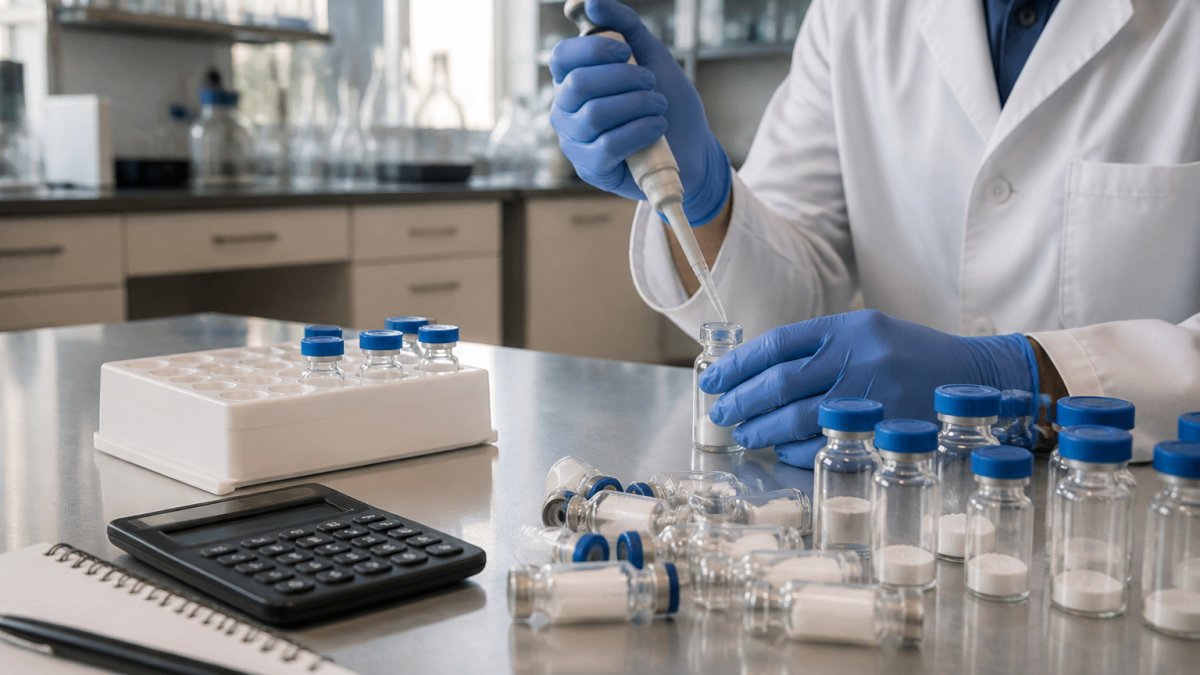
The best storage vials for peptides minimize adsorption and maintain a sterile, moisture-free environment. Low-binding polypropylene microcentrifuge tubes are the standard choice for reconstituted aliquots. Glass vials with silicone-lined caps suit lyophilized powder storage, provided the vial is baked or autoclaved to eliminate moisture and contaminants before use.
Adsorption is the silent killer in peptide handling. At concentrations below 100 µM, peptides stick readily to untreated plastic and glass surfaces (PubMed). Low-retention tubes, often siliconized or made from specialized polymers, reduce this loss. For valuable or scarce peptides, the extra cost of low-binding tubes pays for itself in recovered material.
Vial preparation follows a strict sequence. For lyophilized powder, allow the vial to reach room temperature before opening to prevent moisture condensation on the cold powder. For reconstituted aliquots, use sterile technique: wipe the septum with ethanol, use a sterile needle and syringe, and never touch the inside of the vial or cap.
Label every vial with peptide name, lot number, concentration, reconstitution date, and storage conditions. This documentation prevents the confusion that leads to using degraded material or mixing samples.
| Vial Type | Best For | Key Advantage | Watch Out For |
|---|---|---|---|
| Low-binding polypropylene | Reconstituted aliquots | Minimizes adsorption loss | Higher cost per tube |
| Borosilicate glass | Lyophilized powder | Impermeable to moisture and oxygen | Fragile; requires careful handling |
| Amber glass or wrapped | Light-sensitive peptides | Blocks UV degradation | Cannot visually inspect contents |
| Screw-cap with O-ring | Long-term freezer storage | Prevents evaporation and contamination | Ensure cap seal integrity before freezing |
Reconstituted Peptide Shelf Life: Stability in Solution
Reconstituted peptide shelf life depends on sequence, buffer, temperature, and contamination control. Most peptides remain stable for days to weeks at 2-8°C in a compatible buffer, provided sterile technique prevents microbial introduction (the NIH). Freezing at -20°C extends stability to months for many sequences, but not all peptides tolerate freezing without loss.
The freeze-thaw transition presents its own hazards. Ice crystal formation can concentrate solutes, shift pH, and damage peptide structure. Repeated freeze-thaw cycles accelerate degradation. Each cycle introduces additional stress, so minimizing cycles is a core principle of peptide handling.
Buffer composition influences freeze stability. Glycerol or other cryoprotectants can prevent damage for some peptides. However, these additives may interfere with downstream assays. Test your experimental system to confirm that cryoprotectants do not affect results before using them routinely.
Some peptides precipitate upon thawing. If you see visible particles or cloudiness after thawing a frozen aliquot, gentle mixing or brief centrifugation may redissolve the material. If precipitation persists, the peptide may have aggregated irreversibly. Document this observation and consider whether fresh reconstitution is warranted.
Freeze-Thaw Cycles and Aliquoting Best Practices
Freeze-thaw cycles degrade peptides through ice crystal formation, solute concentration, and pH shifts during freezing. The solution: aliquot your reconstituted peptide into single-use volumes before freezing. Each aliquot undergoes exactly one freeze-thaw cycle, preserving the integrity of the remaining material.
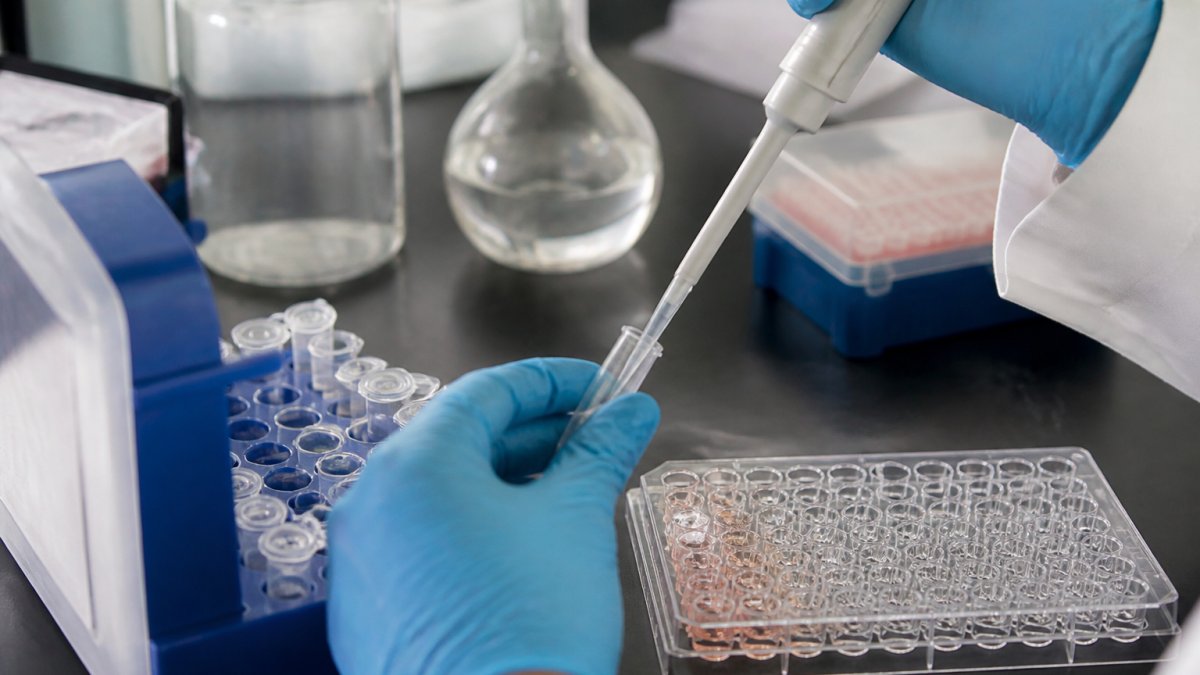
Aliquoting follows a simple protocol. First, determine the volume needed for a single experiment or a defined set of experiments. Second, pipette that volume into individual low-binding tubes using sterile technique. Third, freeze the aliquots immediately and consistently, ideally by placing tubes in a freezer pre-cooled to -20°C or -80°C.
Thawing requires equal care. Remove only the number of aliquots needed for immediate use. Thaw rapidly at room temperature or in a water bath at 25°C, then transfer to ice. Avoid repeated warming and cooling of the same aliquot. Never refreeze a thawed aliquot unless your data confirms the peptide tolerates it.
The number of freeze-thaw cycles a peptide survives varies by sequence. Some peptides tolerate five or more cycles with minimal loss. Others degrade measurably after a single cycle. Without stability data for your specific peptide, treat every cycle as potentially damaging and design your aliquoting strategy accordingly.
- Determine single-use volume before reconstitution
- Use low-binding tubes for all aliquots
- Freeze aliquots immediately after dispensing
- Thaw rapidly and use promptly
- Never refreeze thawed material without validation
Shipping and Transit Storage: Protecting Samples in Motion
Shipping and transit storage introduces uncontrolled temperature, vibration, and light exposure. Peptides in transit face conditions that would never occur in your laboratory. Planning for the journey protects samples before they reach your freezer.
Lyophilized peptides tolerate ambient shipping conditions reasonably well, provided they remain sealed and desiccated. The powder is stable, and short periods at ambient temperature cause minimal degradation. Reconstituted peptides, by contrast, require cold chain shipping with gel packs or dry ice, depending on the required temperature and transit duration.
Insulated containers with temperature data loggers provide documentation of conditions during transit. If your peptide requires strict cold chain handling, request temperature monitoring from your supplier and verify the recorded conditions upon arrival. Discrepancies between required and actual temperatures may indicate compromised material.
Inspect every shipment immediately upon receipt. Confirm the vial seal is intact, the desiccant is present and active, and the Certificate of Analysis matches the lot number. Photograph any damage before contacting the supplier. This documentation protects your experiment timeline and your ability to obtain replacement material.
Upon arrival, transfer peptides to their long-term storage conditions without delay. Allow lyophilized vials to equilibrate to room temperature in a desiccator before opening. Reconstituted samples go directly to the refrigerator or freezer, depending on your protocol.
Final Checklist for 2026 Peptide Storage Protocols
The best practices for peptide storage 2026 converge on a few non-negotiable principles: control moisture, control temperature, control light, and control contamination. A disciplined storage protocol preserves the purity your supplier verified and ensures your experimental results reflect your science, not your storage failures.
Review your current storage practices against this checklist:
- Lyophilized peptides stored desiccated, protected from light, at recommended temperature
- Reconstitution buffer matched to peptide solubility requirements
- Reconstituted peptides aliquoted into single-use volumes immediately
- Low-binding vials used for all peptide solutions
- Freeze-thaw cycles minimized through aliquoting strategy
- Sterile technique used for all vial openings and transfers
- Storage temperature monitored and documented
- Light-sensitive peptides stored in amber vials or wrapped containers
- All vials labeled with peptide, lot, date, and concentration
- Shipping conditions verified with temperature data loggers when required
- Certificate of Analysis reviewed for sequence-specific stability notes
Peptide degradation factors are well understood, and the protocols to control them are established. The gap between knowledge and practice is where samples are lost. A few minutes of careful aliquoting and labeling saves weeks of failed experiments and the cost of replacement material.
Proper storage is the foundation of reproducible peptide research. At Globo Research Peptides, we support your work with compounds verified at ≥99% HPLC purity, full Certificate of Analysis documentation for every batch, and rigorous third-party testing that confirms what you receive. Our in-stock inventory ships immediately, and our special-order fulfillment program sources the specialized compounds your studies require. Get started with Globo Research Peptides and ensure your next experiment begins with material you can trust.
Frequently Asked Questions
How long can lyophilized peptides remain stable at room temperature?
Lyophilized peptides are generally most stable when stored frozen at -20°C, but brief exposure to ambient temperature during handling is usually tolerated. Leaving them at room temperature for extended periods accelerates degradation through hydrolysis and oxidation. Most suppliers recommend limiting room temperature exposure to under a few hours total. For long-term peptide storage, return vials to the freezer immediately after use to maintain sample integrity.
How long can you store peptides before reconstituting?
Lyophilized peptides stored at -20°C or below can remain stable for months or even years, depending on the specific sequence and storage conditions. The peptide powder is most stable in a dry, desiccated state away from light and moisture. Always check the Certificate of Analysis from your supplier for batch-specific stability data. For best practices for peptide storage, maintain a consistent freezer temperature and avoid repeated temperature fluctuations.
What is the correct way to store lyophilized vs. reconstituted peptides?
Lyophilized peptides should be stored as a dry powder in a sealed vial with a desiccant, protected from light, ideally at -20°C or lower. Reconstituted peptides are less stable and should be aliquoted into sterile vials to avoid repeated freeze-thaw cycles. Store working aliquots at -20°C and avoid refreezing a thawed aliquot. For short-term use, a refrigerated aliquot at 2-8°C may suffice for a few days, depending on the peptide.
How does temperature fluctuation affect peptide stability?
Temperature fluctuation is a primary peptide degradation factor. Repeated cycles of freezing and thawing cause mechanical stress on the peptide structure, promoting aggregation and precipitation. Each cycle can reduce the concentration of the active peptide in solution. To minimize damage, divide your reconstituted peptide into single-use aliquots before freezing. This practice prevents the need to freeze and thaw the entire stock, preserving the stability of the remaining aliquots.
What are the best storage vials for peptides?
The best storage vials for peptides are made of low-binding polypropylene or borosilicate glass. These materials minimize non-specific peptide adsorption to the vial surface, which can reduce your effective concentration. Always use sterile vials and sterile technique when handling. Avoid using standard polystyrene labware for storage. For long-term storage of lyophilized peptides, ensure the vial has an airtight seal with a secure cap to prevent moisture absorption.