 blog
Alternatives to Standard HPLC for Peptide Purity Analysis
Table of Contents
- Why Standard HPLC Is Not Always the Best Choice for Peptide Purity Analysis
- UPLC vs HPLC for Peptide Purity: Resolution, Run Time, and Throughput
- LC-MS/MS Peptide Analysis: Adding Mass Confirmation to Purity Testing
- Mass Spectrometry Peptide Purity Testing: What It Measures and What It Misses
- Capillary Electrophoresis for Peptide Analysis: A Complementary Separation Technique
- How to Choose a Method for Peptide Purity Analysis: A Decision Framework
- Method Validation, Sample Preparation, and What a Certificate of Analysis Should Tell You
- Frequently Asked Questions
Last Updated: October 15, 2026
Why Standard HPLC Is Not Always the Best Choice for Peptide Purity Analysis
Peptide purity analysis by standard high-performance liquid chromatography (HPLC) remains the backbone of most quality control labs. It separates compounds in a sample and reports how much of the target peptide is present versus related substances. But HPLC has real limits, and treating it as the only valid method can hide problems that matter for research.
At Globo Research Peptides, we rely on verified ≥99% HPLC purity and full Certificate of Analysis documentation for every batch. That said, we think researchers should understand what HPLC does well and where it falls short, because the method you choose shapes the number you report.
Standard HPLC struggles with three things. It can co-elute impurities that share similar retention times. It reports a purity percentage without confirming that the main peak is actually your peptide. And it can miss degradation products that don't absorb well at the chosen wavelength.
That's the gap this article covers. Below, we compare the main alternatives to standard HPLC for peptide purity analysis, explain what each method actually measures, and give you a decision framework for choosing between them.
UPLC vs HPLC for Peptide Purity: Resolution, Run Time, and Throughput
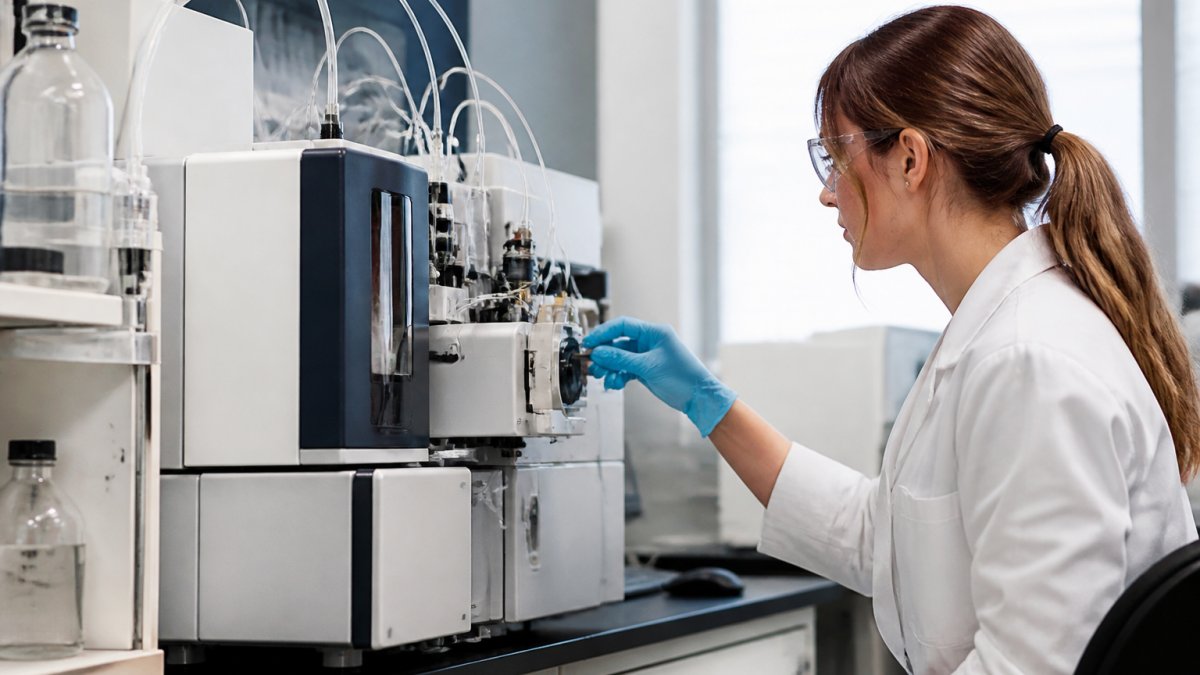
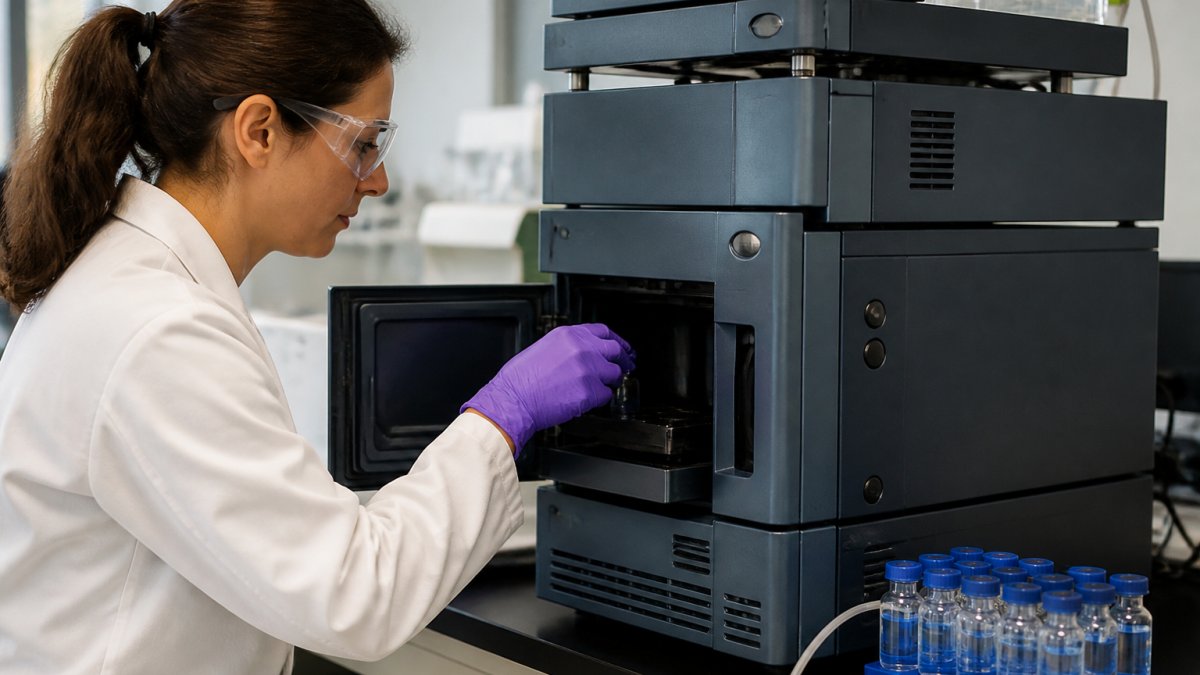
Ultra-performance liquid chromatography (UPLC) uses smaller particle columns and higher pressure than standard HPLC. The result is sharper peaks, better resolution, and shorter run times for the same separation.
In practice, this matters most for complex samples. A peptide with several closely related impurities may show overlapping peaks on HPLC that separate cleanly on UPLC. Better resolution means the reported purity percentage is more likely to reflect the true impurity profile rather than an averaged peak area.
Run time is the other headline difference. UPLC methods often complete in a fraction of the time an equivalent HPLC method requires, which raises throughput for labs processing many samples. That speed comes with trade-offs: higher backpressure, tighter tolerances for sample preparation, and instruments that cost more to buy and maintain.
| Factor | Standard HPLC | UPLC |
|---|---|---|
| Resolution | Moderate | Higher |
| Run time | Longer | Shorter |
| Throughput | Lower | Higher |
| Instrument cost | Lower | Higher |
| Method transfer | Easier | Needs revalidation |
The catch most guides skip: switching from HPLC to UPLC is not a simple instrument swap. You must revalidate the method, since retention times, resolution, and detection limits all shift.
LC-MS/MS Peptide Analysis: Adding Mass Confirmation to Purity Testing
LC-MS/MS couples liquid chromatography with tandem mass spectrometry. The chromatography separates components; the mass spectrometer identifies them by mass-to-charge ratio and fragmentation pattern.
This combination answers a question HPLC alone cannot: is the main peak actually the peptide you ordered? A purity percentage tells you how much of the sample elutes as one peak. Mass confirmation tells you what that peak is.
For peptide identity and sequence verification, LC-MS/MS is the strongest routine tool available. It detects related substances, confirms molecular weight, and can quantify specific impurities with high sensitivity and specificity. The trade-offs are cost, instrument complexity, and the expertise required to interpret spectra.
Mass Spectrometry Peptide Purity Testing: What It Measures and What It Misses
Mass spectrometry peptide purity testing measures the mass of components in a sample and estimates relative abundance. It is highly sensitive and can detect trace impurities that chromatography might miss.
What it misses is equally important. Mass spectrometry does not separate isomers or compounds with identical mass, and it does not directly measure chromatographic purity. Quantitation also depends on ionization efficiency, which varies between compounds. A peptide that ionizes poorly can appear less abundant than it actually is.
This is why mass spectrometry works best as a complement to a separation method, not a replacement. Used together, chromatography provides the separation and mass spectrometry provides the identity and structural confirmation.
Capillary Electrophoresis for Peptide Analysis: A Complementary Separation Technique
Capillary electrophoresis (CE) separates peptides in a narrow fused-silica capillary filled with buffer, driven by an applied voltage rather than a pumped mobile phase. Because the separation mechanism depends on charge-to-size ratio instead of hydrophobic interaction with a stationary phase, CE resolves species that reversed-phase HPLC tends to co-elute, particularly charge variants, deamidated forms, and closely related sequence analogs.
The mode matters as much as the technique. The variants most relevant to peptide work are:
- Capillary zone electrophoresis (CZE): the workhorse mode for purity and charge-variant profiling. Peptides separate by their intrinsic electrophoretic mobility in a simple buffer.
- Micellar electrokinetic chromatography (MEKC): adds a surfactant above its critical micelle concentration, introducing a hydrophobic partitioning dimension. Useful for neutral or hydrophobic peptides that CZE cannot resolve.
- Capillary isoelectric focusing (cIEF): separates by isoelectric point, which makes it a natural fit for detecting deamidation and other modifications that shift a peptide's net charge.
CE's practical advantages are real: sample consumption is in the nanoliter range, solvent use is minimal, and run times are typically short. The trade-offs are equally real. UV detection in a short optical path limits concentration sensitivity compared with HPLC, reproducibility depends heavily on capillary conditioning and buffer freshness, and fewer contract labs maintain validated CE methods, so finding a comparable result across suppliers is harder than it is for HPLC.
Where CE earns its place is as an orthogonal method. HPLC and CE separate by fundamentally different mechanisms, so agreement between the two is far stronger evidence of purity than two chromatographic runs on the same column chemistry. A common pattern in peptide characterization is reversed-phase HPLC for the primary purity number, CE for charge-variant confirmation, and mass spectrometry for identity, three independent lines of evidence rather than one number reported three ways.
How to Choose a Method for Peptide Purity Analysis: A Decision Framework
The right method follows from the analytical question, not from instrument prestige. Purity, identity, impurity profiling, and quantity are four different questions, and the peptide's own liability profile, whether it aggregates, oxidizes, deamidates, or forms sequence variants, determines which separation chemistry can even see the problem.
Start by naming the impurity you are trying to detect, then pick the mechanism that resolves it:
- Reversed-phase HPLC (RP-HPLC): the default for a routine purity percentage. Separates by hydrophobicity; best for overall related-substance profiling of most synthetic peptides.
- Reversed-phase UPLC: same mechanism, smaller particles and higher pressure. Choose it when resolution or throughput is the limiting factor, not as a default upgrade.
- Ion-exchange chromatography (IEX): separates by net charge. This is the method of choice for charge variants, deamidated species, truncated sequences with altered charge, and oxidation products that shift pI. RP-HPLC often co-elutes these with the parent peak; IEX resolves them.
- Size-exclusion chromatography (SEC): separates by hydrodynamic size. Use it when aggregation or oligomerization is the concern, since aggregates can elute as a single peak on RP-HPLC and inflate the apparent purity.
- LC-MS/MS: adds mass-based identity and structural confirmation. Choose it whenever the question is 'is this the right peptide,' not just 'how much of one peak is there.'
- Capillary electrophoresis (CE/CZE/cIEF): an orthogonal charge-based separation. Choose it when you need independent confirmation of a chromatographic result or when sample volume is limited.
A short decision path:
- Routine purity percentage, no known liabilities: RP-HPLC is sufficient and cost-effective.
- Resolution or throughput is limiting: move to UPLC and revalidate.
- Charge variants or deamidation suspected: add IEX or cIEF.
- Aggregation suspected: add SEC.
- Identity must be confirmed: add LC-MS/MS.
- Result must be independently corroborated: add CE as an orthogonal separation.
Two failure modes are worth naming. The first is treating methods as interchangeable, a 98% RP-HPLC purity number and a 98% SEC purity number are not the same claim, because they measure different things. The second is chasing the most advanced instrument when the real gap is method validation. A validated RP-HPLC method with documented accuracy, precision, specificity, detection limit, and quantitation limit answers a research question defensibly; an unvalidated UPLC method with sharper peaks does not.
FDA guidance on analytical method validation sets out the acceptance criteria that regulated work should meet, including accuracy, precision, specificity, detection limit, and quantitation limit.
Method Validation, Sample Preparation, and What a Certificate of Analysis Should Tell You
Method validation is what separates a defensible result from a rough estimate. A validated analytical method has documented accuracy, precision, specificity, detection limit, and quantitation limit, and it produces reproducible results across runs and operators.
Sample preparation matters just as much. Poorly prepared samples introduce variability that no instrument can correct. Consistent dissolution, filtration, and injection conditions are the foundation of a reliable purity percentage.
When you read a Certificate of Analysis, look for the method used, the purity percentage, the identity confirmation, and the testing laboratory. A COA that reports a purity number without naming the method or confirming identity tells you very little.
USP standards for peptide analysis provides reference material and method expectations that many labs use as a baseline for comparison.
Choosing among the alternatives to standard HPLC for peptide purity analysis comes down to what your study actually requires: routine purity, sharper resolution, identity confirmation, or an orthogonal check. Globo Research Peptides supports that work with verified ≥99% HPLC purity, rigorous third-party testing, and full Certificate of Analysis documentation for every batch, plus a special-order fulfillment program for compounds that are harder to source. Order now and get research-grade peptides with the documentation your project depends on.
Frequently Asked Questions
How does UPLC compare with HPLC for peptide purity analysis?
UPLC uses smaller particles and higher pressure to separate peptides faster and with sharper peaks than standard HPLC. This improves resolution between closely related impurities and shortens run times, which matters when you are screening many samples. The trade-off is higher instrument cost and narrower columns that can clog if samples are not filtered properly. Many labs run UPLC when throughput and resolution are the priority and keep HPLC for routine work where the method is already validated.
Can mass spectrometry determine peptide purity?
Mass spectrometry confirms peptide identity and detects mass-related impurities, but it does not replace a separation method for purity percentage. A mass spectrometer can show that the expected molecular weight is present while missing non-UV-active impurities or isomers with the same mass. Mass spectrometry peptide purity testing works best when paired with liquid chromatography, so the separation resolves components and the detector confirms what each peak actually is.
What is the difference between peptide identity testing and purity testing?
Identity testing confirms that the peptide in the vial matches the sequence you ordered, usually by mass spectrometry or amino acid analysis. Purity testing measures how much of the sample is the target peptide versus related substances, degradation products, and counterions, typically by HPLC or UPLC with UV detection. A sample can be 99% pure by peak area yet still be the wrong peptide if identity testing was not performed, so both checks belong on a complete Certificate of Analysis.
Can capillary electrophoresis be used to analyze peptide purity?
Yes. Capillary electrophoresis separates peptides by charge and size in a narrow capillary filled with buffer, and it resolves some closely related impurities that reversed-phase chromatography struggles with. It uses very small sample volumes and produces sharp peaks, but it is less common in routine peptide labs and method development takes more effort. It is most useful as an orthogonal technique when a chromatographic result needs independent confirmation.