 how-to
Troubleshoot Peptide Solubility in Aqueous Buffers
Table of Contents
- Why Peptides Resist Aqueous Buffers: Sequence and Charge First
- Peptide Reconstitution Troubleshooting: A Step-by-Step Workflow
- How pH Affects Peptide Solubility and How to Adjust It Safely
- Solubilizing Hydrophobic Peptides with Cosolvents and Buffers
- Peptide Aggregation in Aqueous Solution vs. Incomplete Dissolution
- Buffer Compatibility, Assay Constraints, and Post-Dissolution Stability
- Frequently Asked Questions
Last Updated: October 17, 2026
Why Peptides Resist Aqueous Buffers: Sequence and Charge First
Peptide solubility in aqueous buffers comes down to one thing: whether the peptide would rather interact with water or with itself. When labs talk about failed reconstitutions, the answer almost always traces back to sequence, not technique.
A peptide is a short chain of amino acids linked by peptide bonds, and its behavior in water depends on which residues face outward. Hydrophilic residues pull water in. Hydrophobic residues push it away.
Reading Hydrophobic Residue Content and Net Charge
Count the hydrophobic residues first. Leucine, isoleucine, valine, phenylalanine, tryptophan, and methionine all resist water.
Net charge matters just as much. Acidic residues (aspartate, glutamate) and basic residues (lysine, arginine, histidine) give the peptide a charge at a given pH.
Run the sequence through a property calculator before you open a vial. Note the isoelectric point, the hydrophobic fraction, and any aggregation-prone stretches.
Peptide Reconstitution Troubleshooting: A Step-by-Step Workflow
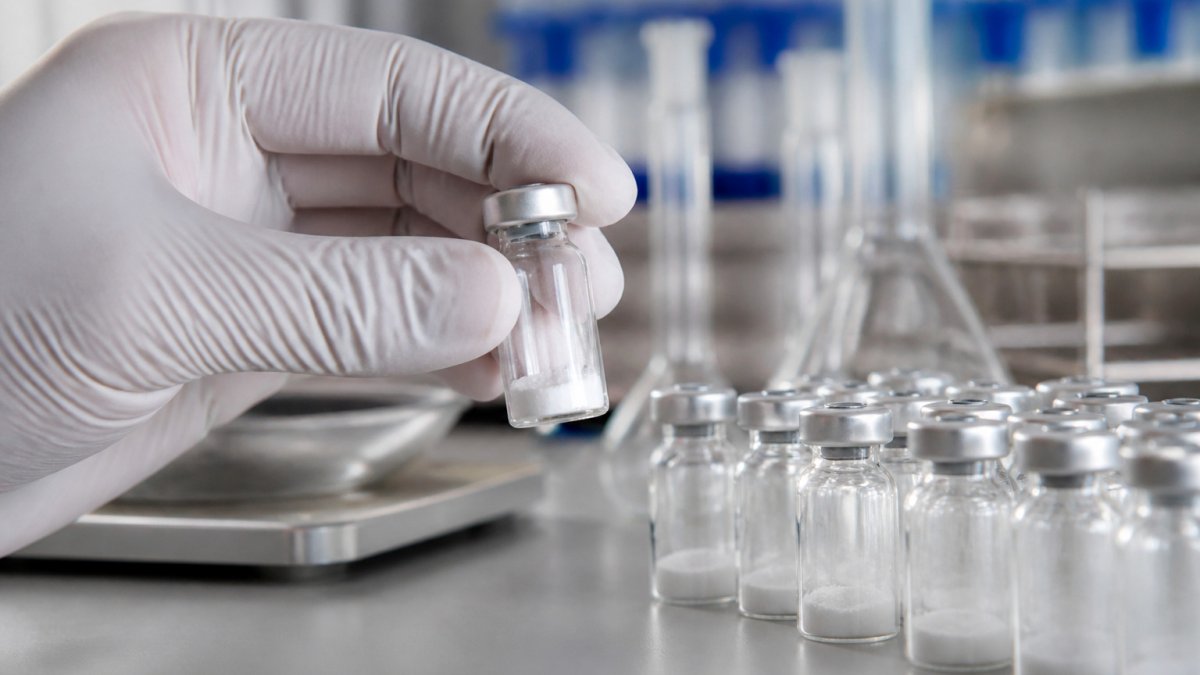
Peptide reconstitution troubleshooting works best as a controlled process with measurable endpoints, not a guessing game. Follow these steps in order and stop as soon as you hit clarity.
- Check the vial. Confirm identity, lot, and Certificate of Analysis before opening anything.
- Warm to room temperature. Let the sealed vial sit for 20-30 minutes. Cold vials condense moisture.
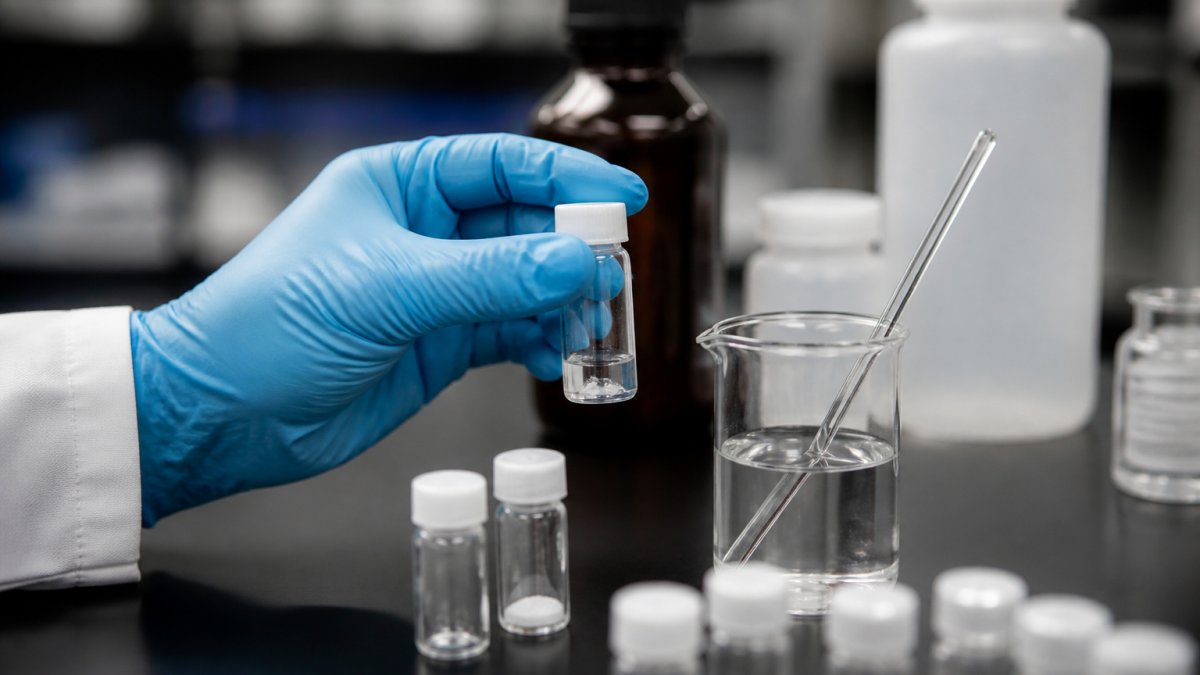
- Run a small-scale test. Dissolve a fraction of the material in a small volume first.
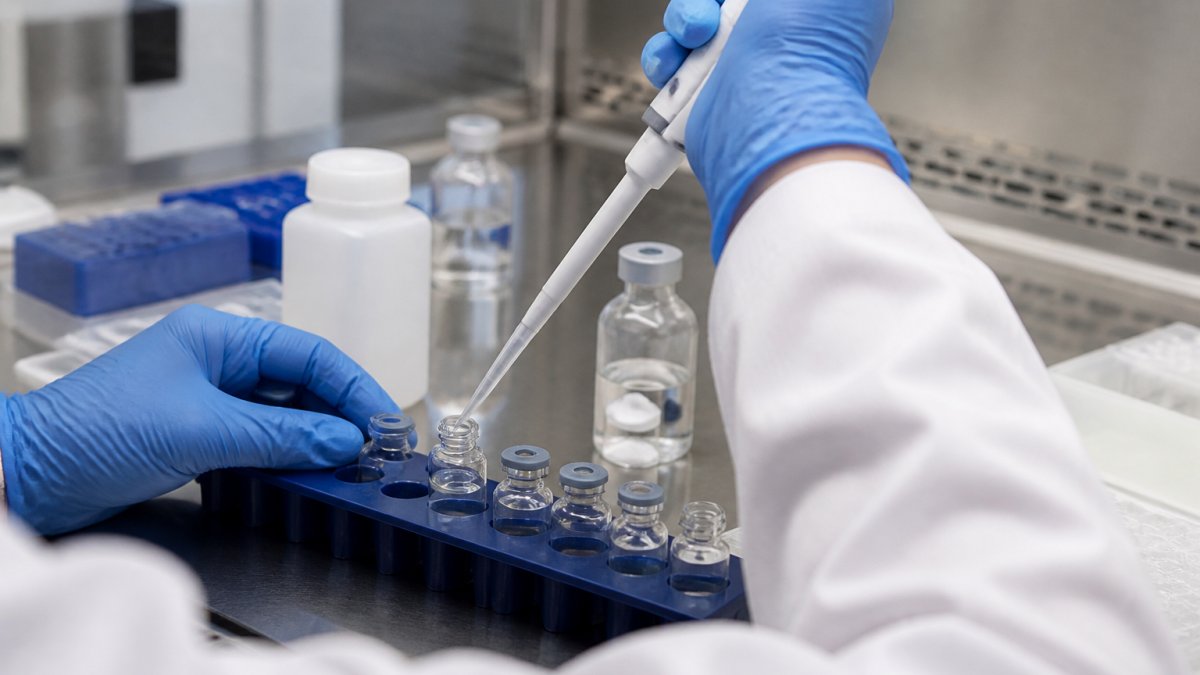
- Add solvent gradually. Add buffer in small increments, not all at once.
- Mix gently. Swirl or tap. Skip harsh vortexing.
- Inspect against a dark background. Look for clarity, not just absence of chunks.
- Record the endpoint. Note the minimum solvent volume that produced a clear solution.
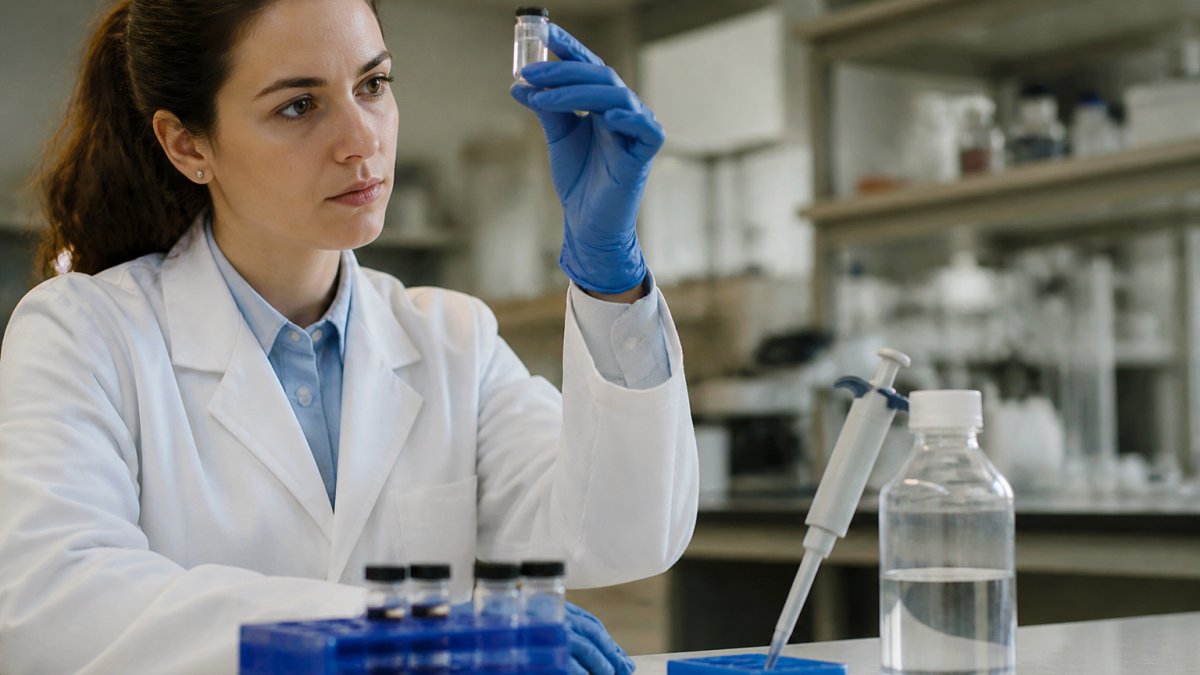
Small-Scale Tests, Gradual Addition, and Gentle Mixing
A small-scale test uses a fraction of your material to find the working solvent before you commit the rest.
Gradual addition prevents local concentration spikes that trigger precipitation. Gentle mixing, meaning swirling or slow pipetting, keeps the peptide from shearing and foaming.
Vortexing is the most common mistake we see. It creates foam, exposes more hydrophobic surface, and pushes peptides toward aggregation.
How pH Affects Peptide Solubility and How to Adjust It Safely
How pH affects peptide solubility comes down to charge. Moving pH away from a peptide's isoelectric point (pI) increases net charge, and more charge means better dissolution. The practical problem is that the pH that dissolves a peptide is often not the pH your assay or buffer system requires, so the real skill is adjusting pH reversibly and then returning to the target buffer without triggering precipitation.
Why the pI Is a Starting Point, Not a Destination
At the pI, a peptide carries zero net charge and peptide-peptide interactions dominate. Moving one to two pH units away from the pI typically restores enough electrostatic repulsion to keep the peptide in solution.
A common pattern is a peptide with a calculated pI near 6.5 that dissolves readily at pH 4 or pH 9 but precipitates at pH 7.4.
A Reversible pH-Adjustment Workflow
Work in small volumes and keep a record of every addition so you can retrace your steps.
- Start with a small-scale aliquot. Use a fraction of your material in a clear tube so you can see turbidity against a dark background.
- Measure the starting pH. Use a calibrated micro electrode or pH paper rated for the range you expect. Record it.
- Add dilute acid or base dropwise. Use 0.1 M HCl or 0.1 M NaOH rather than concentrated stock. Add one drop, swirl gently, and re-measure.
- Stop at the first clear point. Note the pH and the volume added. This is your working pH.
- Hold at the working pH briefly. If the solution clouds again within a few minutes, you are near the edge of the window, move one more step away from the pI.
- Return toward the target buffer pH in small increments. Add buffer or dilute acid/base dropwise and watch for cloudiness at each step.
- Record the return path. If turbidity appears during the return trip, you have found the practical pH boundary. Back off one step and note the limit.
Returning to the Target Buffer Without Precipitation
The return trip is where most pH-adjustment protocols fail. A peptide that dissolved at pH 4 may precipitate as you titrate back to pH 7.4 because it passes through its pI on the way. Two strategies help:
- Dilute into buffer rather than titrating the peptide solution. Prepare the peptide at the working pH, then add it slowly to a larger volume of target buffer with gentle mixing. The peptide experiences the target pH at low concentration, which reduces the chance of nucleation.
- Use a buffer with capacity near the target pH. A buffer whose pKa is within one unit of the target pH resists pH drift during the return trip and reduces the number of additions needed.
If turbidity appears during the return trip and does not clear with gentle mixing, do not force it. Either accept a lower working concentration, choose a different buffer pH within the peptide's window, or switch to a cosolvent strategy (see the cosolvent section).
Measurable Endpoints for pH Troubleshooting
Define success before you start so you can compare interventions reproducibly:
- Visual clarity against a dark background at the target concentration
- Turbidity measured by absorbance at 600 nm if a spectrophotometer is available, a reading near the blank indicates clarity
- Recovery after dilution, dilute an aliquot tenfold in target buffer and check whether clarity holds
Record these endpoints for each attempt. A log of working pH, final pH, concentration, and clarity turns pH troubleshooting from trial and error into a repeatable process.
Solubilizing Hydrophobic Peptides with Cosolvents and Buffers
Solubilizing hydrophobic peptides usually requires a cosolvent. Dimethyl sulfoxide (DMSO) is the workhorse, but it comes with assay constraints.
Common cosolvent options:
- DMSO for stock solutions, kept at the lowest workable percentage
- Acetonitrile for reverse-phase compatible work
- Small amounts of organic solvent added before aqueous buffer
Ammonium bicarbonate and ammonium hydroxide help with peptides that need a volatile buffer.
Add the organic solvent first when the peptide is strongly hydrophobic. Then dilute into aqueous buffer slowly.
Check your assay's tolerance for cosolvents before you commit. Many cell-based assays tolerate only low DMSO percentages, and some analytical methods dislike organic carryover.
Peptide Aggregation in Aqueous Solution vs. Incomplete Dissolution
Peptide aggregation in aqueous solution looks a lot like incomplete dissolution, and telling them apart changes your next move. The two failure modes have different mechanisms, different responses to intervention, and different implications for your assay, so a quick visual check is not enough.
What Is Actually Happening in Each Case
Incomplete dissolution means the peptide has not fully entered solution. Lyophilized peptide can form a dense pellet or film that wets slowly, and hydrophobic regions may resist hydration even when the bulk material is wet.
Aggregation means peptide molecules have associated with each other in solution.
Degradation means the peptide has been chemically modified, deamidation, oxidation, hydrolysis, or truncation. The molecule is no longer what you started with, and no solvent trick will restore it.
Diagnostic Signs and Analytical Checks
| Signal | Incomplete Dissolution | Aggregation | Degradation |
|---|---|---|---|
| Appearance | Visible particles, cloudy, pellet visible | Slight haze to visible turbidity; may clear briefly with dilution | Color shift, off-odor, or no visible change |
| Response to gentle mixing | Improves with time | Worsens with agitation | No change |
| Response to dilution | Clears and stays clear | May clear briefly, then returns | No change |
| Response to pH shift | Often clears | Unpredictable; may worsen near pI | No change |
| Response to warming | Often improves | May worsen | No change |
| Analytical check | Pellets dissolve on extended mixing | Dynamic light scattering shows larger species; SEC shows higher-molecular-weight peak | Mass spectrometry or HPLC shows modified or truncated species |
A dilution test is the fastest first check. Dilute an aliquot tenfold in target buffer and observe. If the haze disappears and stays gone, you had incomplete dissolution. If it returns within minutes, you are looking at aggregation. If nothing changes, suspect degradation and confirm by analytical methods.
A Controlled Troubleshooting Workflow with Measurable Endpoints
Work through these checks in order and record the result at each step:
- Visual inspection against a dark background. Note clarity, particles, and color.
- Gentle mixing for 5-10 minutes. Swirl or tap; do not vortex. Re-inspect.
- Dilution test. Dilute tenfold in target buffer and re-inspect after 5 minutes.
- pH nudge. Adjust one unit away from the pI and re-inspect.
- Warming. Warm gently to 30-37 °C for a few minutes and re-inspect. Do not exceed temperatures the peptide tolerates.
- Analytical confirmation. If the failure mode is still unclear, run SEC-HPLC for aggregation or mass spectrometry for degradation.
Record the outcome of each step. A log of appearance, dilution response, pH response, and warming response gives you a reproducible fingerprint for each failure mode and makes future troubleshooting faster.
Why the Distinction Matters Downstream
If you mistake aggregation for incomplete dissolution, you may add more solvent and dilute the aggregate without removing it, the assay then sees a mixture of monomer and aggregate, which can skew binding, activity, or cell-based results. If you mistake degradation for either, you may waste material trying to dissolve a peptide that is no longer intact. Confirm the failure mode before you commit more material.
Buffer Compatibility, Assay Constraints, and Post-Dissolution Stability
Buffer compatibility decides whether a dissolved peptide stays dissolved. Phosphate buffers suit many peptides but can interfere with certain metal-dependent assays.
Check three things before you commit:
- Does the buffer pH sit at least one unit from the peptide's isoelectric point?
- Does the ionic strength support charge repulsion without salting out the peptide?
- Does the buffer interfere with your detection method?
Post-dissolution stability depends on storage. Aliquot immediately after dissolution. Freeze at the coldest temperature your peptide tolerates, and avoid repeated freeze-thaw cycles.
For high-concentration formulations, work in small volumes and keep the solution cold during handling. If you see turbidity return after thawing, do not vortex it back into solution.
Frequently Asked Questions
How can I tell whether a peptide is insoluble or just dissolving slowly?
Give it time and gentle handling before declaring failure. After adding solvent gradually and mixing without vortexing, let the vial rest at room temperature and inspect it against a light source. Slow dissolution usually shows a shrinking pellet with increasing clarity over minutes to hours. True insolubility leaves visible particles or persistent turbidity after reasonable mixing, and the pellet does not shrink. Record the time, volume, and appearance at each check so you can compare runs and decide whether to adjust pH or add a cosolvent.
How does pH affect peptide solubility and what should I try first?
pH changes the net charge on ionizable side chains, which shifts peptide-water interactions and peptide-peptide interactions. Move the buffer pH at least one unit away from the peptide's isoelectric point so molecules carry a net charge and repel each other. For acidic peptides, raise pH above the pKa of the acidic residues; for basic peptides, lower it. Adjust in small increments, check clarity after each step, and confirm the final pH is compatible with your downstream assay before committing the full batch.
Can organic cosolvents improve peptide solubility in aqueous solutions?
Yes, for hydrophobic peptides. DMSO is the common first choice, added in small increments to the aqueous buffer rather than the reverse. Keep the final organic fraction as low as the assay tolerates, since high DMSO can interfere with cell-based work and protein binding. Other options include acetonitrile and small amounts of acetic acid or ammonium hydroxide for charge adjustment. Test at small scale first, record the minimum cosolvent volume that achieves clarity, and verify the peptide stays soluble after dilution into your final assay buffer.
How do I distinguish aggregation from incomplete dissolution or degradation?
Each failure mode looks different. Incomplete dissolution leaves visible particles that settle and shrink with more mixing. Aggregation produces a clear-to-opaque shift, often after a delay or a temperature change, with no visible particles at first and turbidity that returns after filtration. Degradation shows up as a purity drop on HPLC plus a mass shift, not just cloudiness. Run visual inspection, centrifugation, and HPLC on a small aliquot, and compare against the Certificate of Analysis from the batch to separate handling problems from compound problems.
Peptide solubility problems rarely come from a single cause. They come from sequence, charge, pH, and handling all pulling in different directions at once. The labs that solve them fastest are the ones that test small, add slowly, and measure every step. When you need starting material you can trust, Globo Research Peptides supplies research-grade peptides with verified purity and complete documentation for every batch. Order now and give your next reconstitution a clean baseline.