 how-to
How to Order Small Quantities of Research Peptides
Table of Contents
- Understanding Your Research Peptide Needs
- Evaluating Suppliers for Small-Quantity Orders
- How to Verify Peptide Purity Before Ordering
- Peptide Certificate of Analysis Requirements
- Placing Your Order and Managing Delivery
- Research Peptide Storage Guidelines
- Troubleshooting Common Procurement Challenges
- Frequently Asked Questions
Last Updated: September 26, 2026
Understanding Your Research Peptide Needs
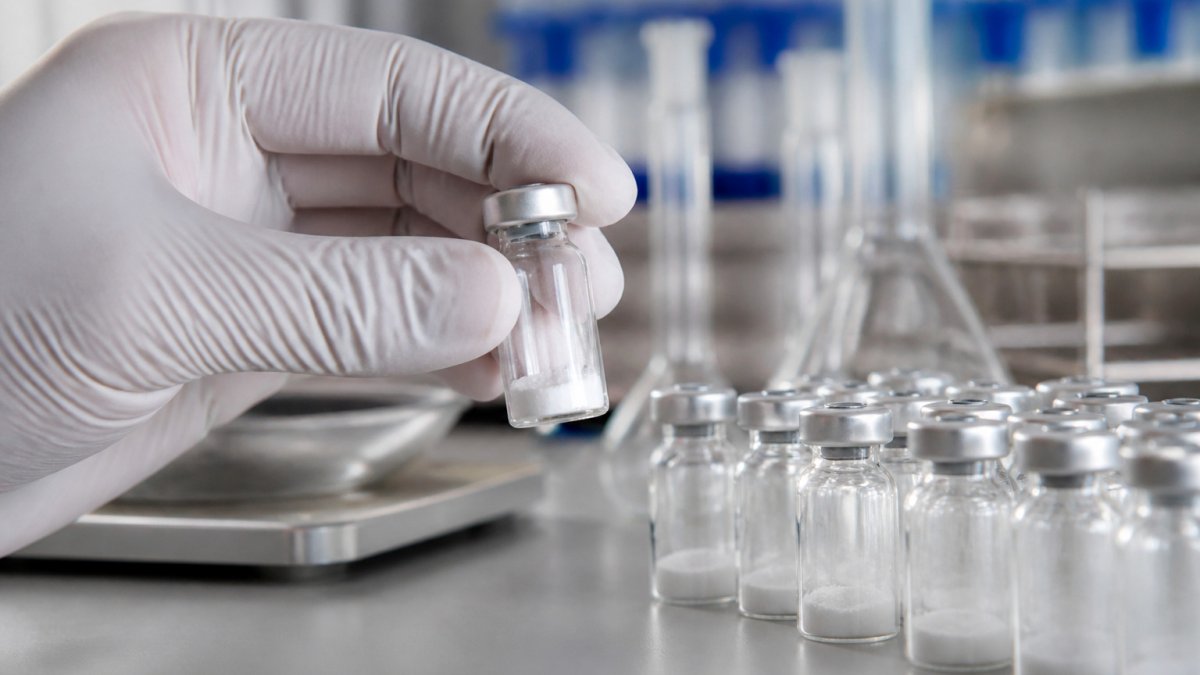
Before you order research peptides, clarify what your study actually requires. The specifics of your research determine everything downstream: which supplier to approach, what purity standards matter, whether you need custom synthesis, and how much you're willing to spend on small quantities.
To order research peptides effectively, start by documenting your exact requirements. What amino acid sequence do you need? What molecular weight range is acceptable? Will you use this in receptor binding studies, pharmacokinetic profiling, or cell-based assays? Different applications demand different quality thresholds. A preliminary screening study might tolerate 95% purity. A published research protocol almost certainly won't.
Next, assess your timeline and budget constraints. Small-quantity orders often carry premium pricing compared to bulk purchases, so knowing your financial limits upfront prevents frustration later. Similarly, understanding whether you need the peptide in two weeks or two months shapes which supplier can actually serve you. Custom synthesis takes longer than pulling from existing inventory, but the turnaround time varies significantly across vendors.
At Globo Research Peptides, we work with researchers across academic labs, biotechnology firms, and contract research organizations who need high-purity compounds for specialized studies.
Document whether you're ordering a catalog peptide or requesting custom synthesis. Catalog peptides, those already in stock, ship immediately or within days. Custom orders require synthesis time, which typically ranges from one to four weeks depending on complexity and current demand. This distinction alone often determines which supplier you should approach first.
Evaluating Suppliers for Small-Quantity Orders
Not all peptide suppliers handle small quantities equally. Some impose minimum order volumes that make small-scale research prohibitively expensive. Others accept small orders but deliver inconsistent quality or incomplete documentation. The right supplier for your situation balances accessibility, quality, and transparency.
Start by checking whether a supplier actually accepts small-quantity orders. Some vendors focus exclusively on bulk clients and view small orders as administrative overhead. Their pricing reflects this bias, you'll pay a significant premium, or they'll turn you away. Globo Research Peptides supports small-quantity procurement.
Evaluate the supplier's inventory depth. A vendor with hundreds of catalog peptides ready for immediate dispatch serves your needs faster than one requiring custom synthesis for every order. Specialty peptides, neuropeptide receptor ligands, obscure epitope sequences, or novel biologically active compounds, often require custom synthesis regardless of supplier, but common research-grade peptides should be in stock.
Examine their quality assurance processes. Ask specifically: How is purity verified? What analytical testing does every batch undergo? Who performs the testing, internal labs or third-party accredited facilities? Suppliers using rigorous HPLC purification and mass spectrometry validation provide higher confidence than those offering vague assurances. Request sample Certificates of Analysis before ordering to assess the documentation standard.
Check their responsiveness to technical questions. A supplier who can discuss your specific application, suggest appropriate purity grades, and advise on storage conditions demonstrates real expertise. Vendors who treat all inquiries as commodity transactions rarely understand the nuances of research-grade peptide procurement.
Review their special-order fulfillment program. If you occasionally need compounds outside their catalog, what's their process? Do they maintain relationships with synthesis partners? Can they handle rush orders?
How to Verify Peptide Purity Before Ordering
Purity claims without verification are marketing language. Legitimate suppliers provide analytical proof. Understanding how to read and interpret that proof protects your research.
Peptide Certificate of Analysis Requirements
Essential COA Components
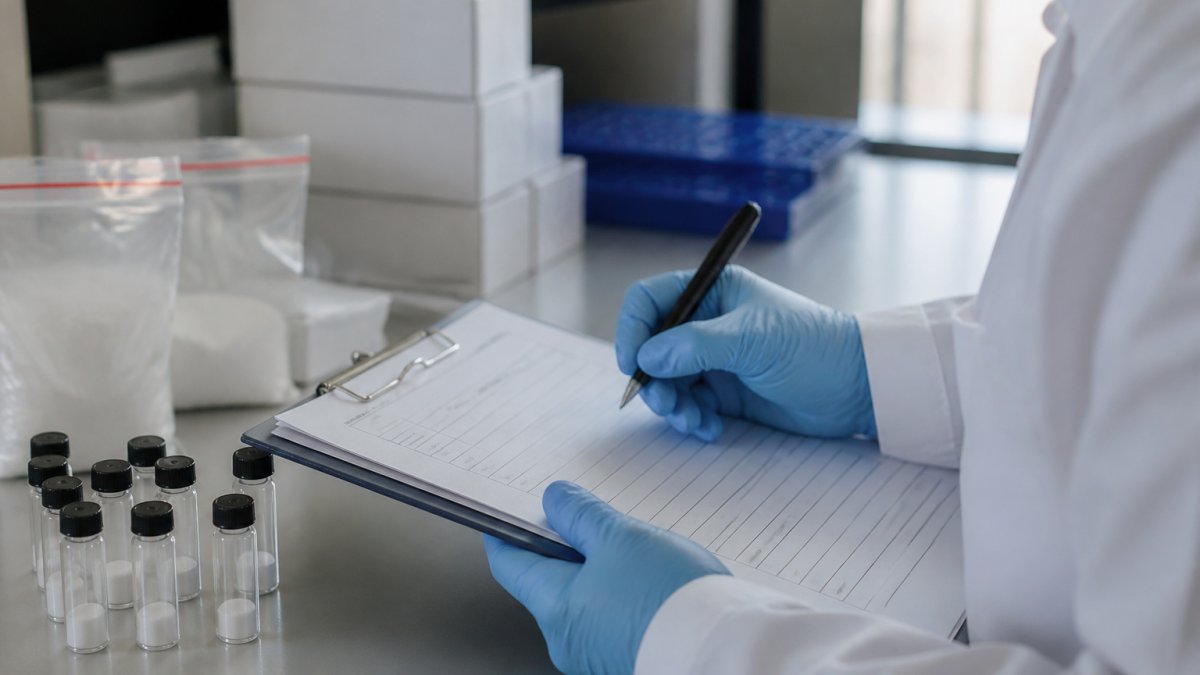
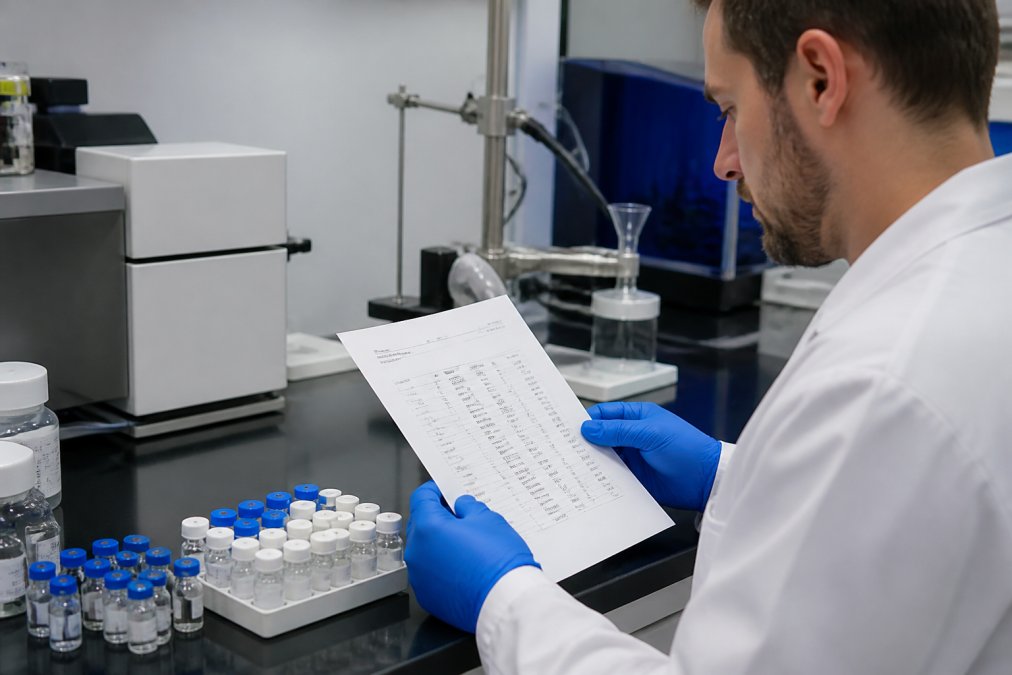
Your Certificate of Analysis must include the peptide sequence, molecular weight, lot number, synthesis date, and expiration date. These basics establish what you ordered and when it was made. Missing any of these creates ambiguity about which batch you're referencing if issues arise later or if you need to troubleshoot unexpected results months into a study.
Interpreting HPLC Purity Data
Request the actual HPLC chromatogram, not just the summary purity percentage. The chromatogram is a graph showing peaks over time; the tallest peak represents your peptide, and smaller peaks represent impurities. A clean chromatogram with one dominant peak at the expected retention time indicates high quality. Multiple peaks of similar height, an unexpectedly broad primary peak, or peaks appearing at unexpected retention times suggest synthesis or purification issues.
Specialized Testing Data
Endotoxin testing is non-negotiable if your research involves cell-based assays, animal studies, or any biological activity assessment. Endotoxins (bacterial lipopolysaccharides) can interfere with cell signaling, cytokine production, and immune responses even at trace levels below 1 EU/mg. The COA should state endotoxin levels in EU/mg or similar units. For cell culture work, you typically want <0.1 EU/mg; for animal studies, regulatory requirements vary but often demand <1 EU/mg.
Using the COA to Make Go/No-Go Decisions
Request the COA before shipment, not after. This allows you to review the data and confirm it meets your requirements before the peptide arrives. If there's a discrepancy, purity lower than promised, mass spectrometry data that doesn't match, missing analytical tests, you can address it immediately and request a replacement batch or credit. Once the peptide arrives and you open the vial, the supplier's obligation often ends; you've accepted the material.
Archiving and Traceability
Keep the COA with your peptide vial and in your lab records. When you eventually use the peptide, reference the lot number and COA in your experimental notebook. If results are unexpected or if you need to troubleshoot, the COA provides a baseline for comparison. If you order the same peptide again months later from the same supplier, compare the new COA to the previous one.
Placing Your Order and Managing Delivery
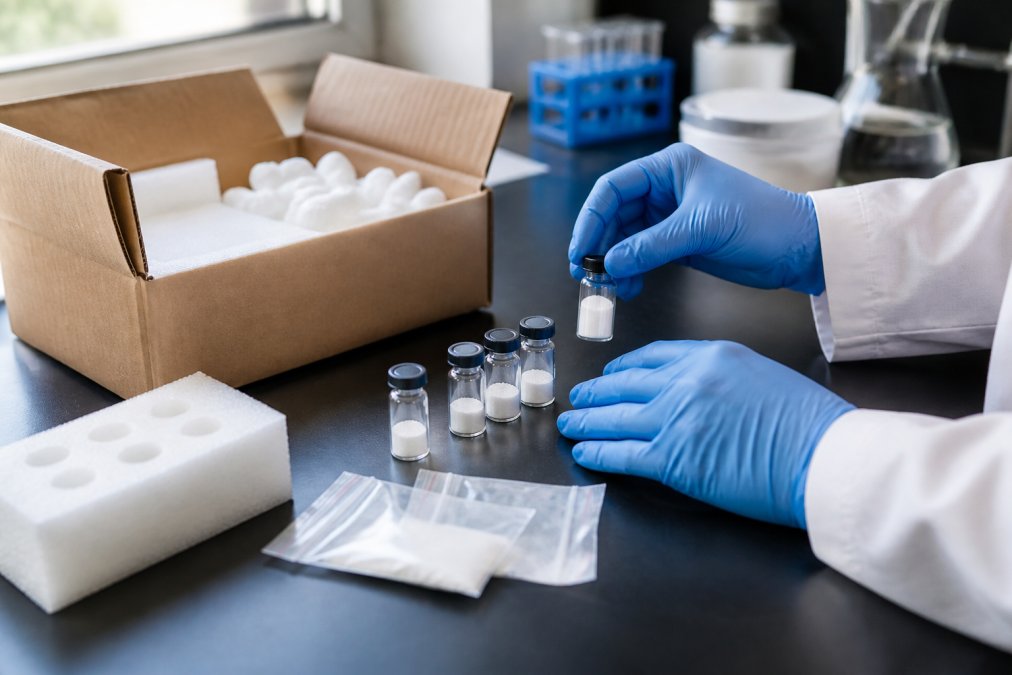
Ordering research peptides involves more steps than a typical e-commerce transaction. Understanding the workflow prevents delays and misunderstandings.
Research Peptide Storage Guidelines
How you store research peptides directly impacts their stability, usability, and research reproducibility. Improper storage degrades the material through oxidation, hydrolysis, and aggregation, processes that may not be visible to the naked eye but will compromise your results. Understanding the mechanisms of peptide degradation and how to prevent them is as important as understanding the chemistry of your assay.
Mechanisms of Peptide Degradation
Peptides degrade through several pathways, each accelerated by specific environmental factors. Oxidation occurs when peptides containing methionine or cysteine residues are exposed to oxygen. Oxidized methionine becomes methionine sulfoxide, which can alter peptide charge, hydrophobicity, and biological activity. Oxidized cysteine can form inappropriate disulfide bonds with other peptides or with itself, leading to aggregation. Hydrolysis happens when peptides are exposed to water and heat; the peptide backbone breaks at peptide bonds, producing truncated fragments.
Lyophilized Peptide Storage
Lyophilized (freeze-dried) peptides are most stable at -20°C in a standard laboratory freezer. At this temperature, most peptides remain viable for 12-24 months or longer, depending on the specific sequence and storage conditions. Peptides rich in hydrophobic amino acids (leucine, phenylalanine, tryptophan) tend to be more stable than highly charged or hydrophilic sequences. Peptides containing methionine or cysteine degrade faster unless stored under inert gas or with antioxidants.
Solution-Phase Peptide Storage
Solution-phase peptides (dissolved in water, buffer, or organic solvent) are inherently less stable than lyophilized material because the peptide is in constant contact with solvent, dissolved oxygen, and any ions or impurities in the solution. Most aqueous peptide solutions remain stable for 2-4 weeks at 4°C if kept sterile and protected from light. Longer-term storage requires -20°C or colder.
Detecting Degradation Before It Ruins Experiments
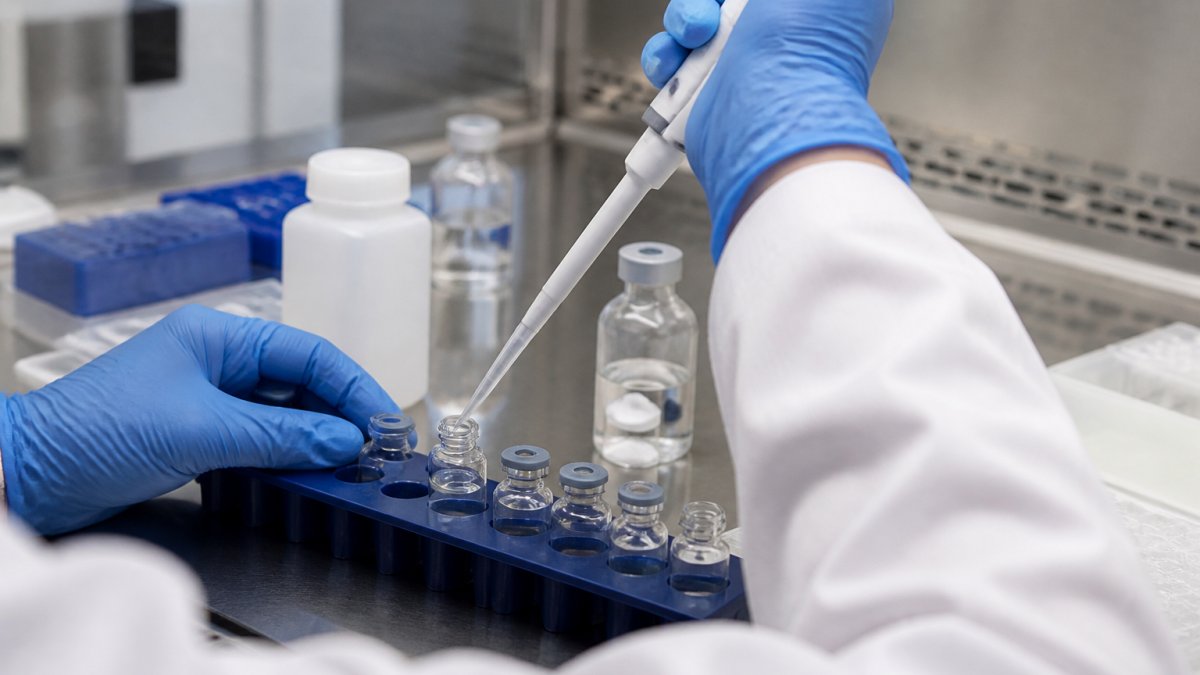
Before using stored peptides in critical experiments, run a quality check if the material has been stored for more than 6 months or if storage conditions were suboptimal. Reconstitute a small amount (if lyophilized) and analyze it by HPLC or mass spectrometry to confirm the peptide hasn't degraded significantly. This verification is particularly important for peptides stored for more than 6 months or for studies where reproducibility is essential.
Documentation and Traceability
Document storage conditions and dates in your lab records. When you eventually use the peptide, note how long it had been stored and under what conditions. This information helps you assess whether storage-related degradation might explain unexpected results. If you run an experiment and get unexpected results, one of the first questions to ask is: "How long had this peptide been stored, and under what conditions?" If it had been stored for 18 months at -20°C with multiple freeze-thaw cycles, degradation is a plausible explanation.
Troubleshooting Common Procurement Challenges
Even with careful planning, procurement issues arise. Knowing how to address them prevents research delays.
| Challenge | Typical Cause | Resolution | Prevention |
|---|---|---|---|
| Low purity result | Synthesis or purification issue | Request replacement batch; document discrepancy | Verify COA before using material |
| Delayed delivery | Custom synthesis backlog | Contact supplier for revised timeline | Confirm turnaround time upfront |
| Incomplete COA | Supplier documentation gap | Request missing analytical data | Request sample COA before ordering |
| Solubility problems | Peptide-specific constraint | Try alternative solvents; consult supplier | Ask about solubility during evaluation |
| Aggregation in storage | Improper storage or freeze-thaw | Discard; prepare fresh aliquots | Store in small portions; avoid repeated thawing |
Frequently Asked Questions
Is it legal to order research peptides for laboratory use?
Yes, ordering research-grade peptides for legitimate laboratory research, drug discovery, and academic studies is legal in the United States. Suppliers like Globo Research Peptides sell compounds specifically designated for research purposes. Always verify that your intended use complies with institutional guidelines and that your facility has appropriate regulatory oversight. Research peptides are distinct from pharmaceutical products and are not approved for human consumption.
What should I look for in a peptide certificate of analysis?
A complete certificate of analysis must include the peptide's molecular weight, amino acid sequence verification, HPLC purity percentage (ideally ≥99%), mass spectrometry confirmation, batch number, and testing date. The COA should match your order specifications exactly. Incomplete or vague documentation is a red flag, Globo Research Peptides provides full COA transparency for every batch.
How do I verify the purity of research peptides before using them?
Start by reviewing the supplier's Certificate of Analysis for HPLC purification data and mass spectrometry results. Request analytical testing documentation that confirms the amino acid sequence and molecular weight. Ask suppliers about their third-party testing protocols and whether they offer re-testing options.
What are the advantages of ordering small quantities instead of bulk?
Small-quantity orders reduce storage costs, minimize waste if a peptide proves unsuitable for your research, and allow you to test multiple compounds without large upfront investment. Small-batch procurement also reduces the risk of expired or degraded stock. For labs with limited budgets or those running specialized studies on obscure peptides, small-quantity sourcing provides flexibility. However, verify that your supplier doesn't impose excessive minimum order fees or extended turnaround times for small orders.