 how-to
Identifying Peptide Contamination in Lab Studies
Table of Contents
- Common Types of Peptide Contamination and Their Sources
- Visual Signs of Contamination in Lyophilized Peptide Powder
- HPLC Testing for Peptides: Reading the Chromatographic Profile
- How to Read a Peptide Certificate of Analysis
- Is 98% Purity Good for Peptides? Understanding the Purity Threshold
- Preventing Contamination During Reconstitution and Storage
- In-House vs. Third-Party Verification: Workflow and Cost Considerations
- Frequently Asked Questions
Last Updated: September 25, 2026
Common Types of Peptide Contamination and Their Sources
Peptide contamination falls into two groups: synthesis byproducts and storage degradation products.
Synthesis Byproducts: Deletion and Truncation Sequences
Deletion sequences happen when the peptide chain misses one or more amino acids during synthesis; truncation sequences are shorter chains that stopped growing early. Both share a similar structure with your target peptide, making them hard to separate.
Common sources include:
- Incomplete coupling reactions during chain assembly
- Incomplete deprotection steps
- Side reactions with protecting groups
A high purity label does not rule out deletion sequences, even small amounts can interfere with receptor binding studies.
Oxidation, Deamidation, and Other Degradation Products
Degradation products form after synthesis, usually during storage or handling:
- Cysteine oxidation, which creates disulfide-linked homodimers and heterodimers
- Deamidation, which changes the peptide's charge and molecular weight
- Hydrolysis, which breaks the peptide bond itself
These changes alter retention time and chromatographic profile, and affect assay behavior.
Visual Signs of Contamination in Lyophilized Peptide Powder
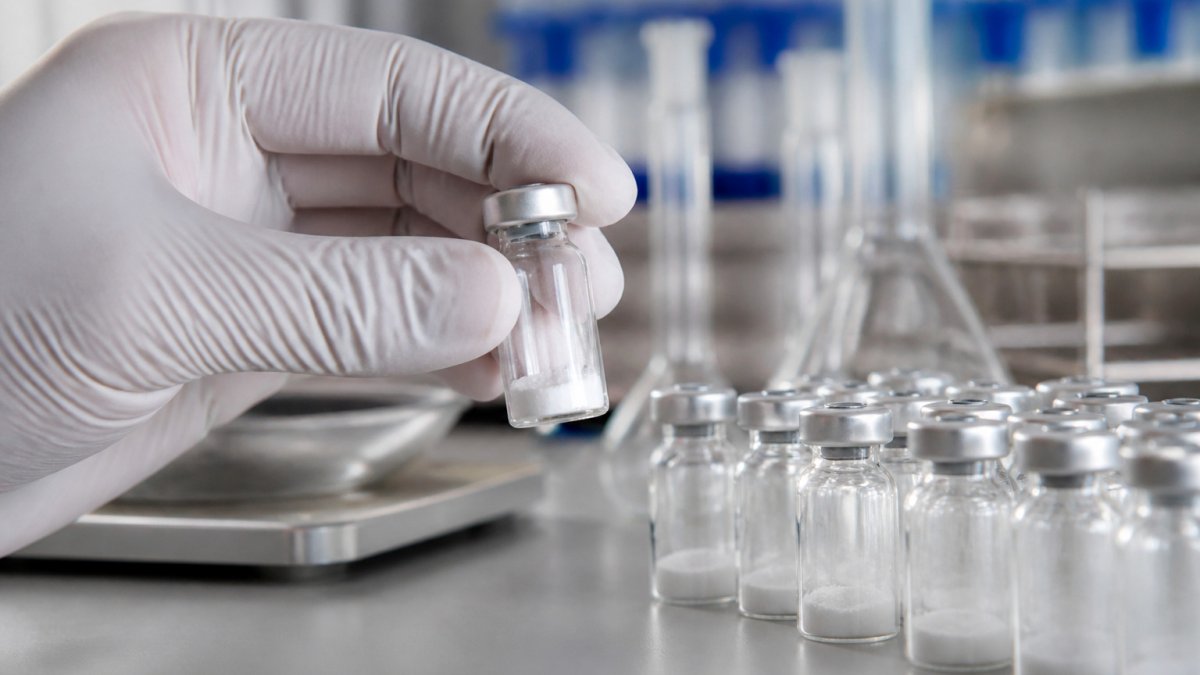
A visual check is fast, free, and catches obvious problems before any test, a useful first screen, not a substitute for analytical testing.
What to look for in lyophilized powder:
- Discoloration: yellowing, browning, or dark spots suggest oxidation
- Clumping or melting: a sign of moisture exposure
- Uneven texture: cracks, shrinkage, or a collapsed cake can point to freeze-drying problems
- Particulate matter: visible specks or fibers mean sample contamination
HPLC Testing for Peptides: Reading the Chromatographic Profile
High-performance liquid chromatography (HPLC) is the standard method for measuring peptide purity, separating the target peptide from impurities based on partitioning between a mobile phase and a stationary phase (usually a C18 reversed-phase column).
Retention Time, Peak Shape, and Impurity Quantification
Retention time is how long a compound takes to travel through the column. Your target peptide should appear within ±0.2 minutes of the reference standard across runs. If it shifts, something changed. Possible causes include:
- Column degradation or a different lot of stationary phase
- Mobile phase pH drift or buffer preparation error
- A degradation product with a similar structure co-eluting with the main peak
- Column temperature fluctuation (most peptide methods run at 25-30°C)
System Suitability: The Checks Before You Trust a Number
A purity result is only as good as the system that produced it. Most validated methods require a system suitability check before injection:
- Injection precision: five replicate injections of a standard should give a relative standard deviation (RSD) of 2% or less on peak area
- Theoretical plates (N): a measure of column efficiency; peptide methods typically expect N above 5,000 for the main peak
- Tailing factor (T): between 0.9 and 1.5 for the main peak
- Resolution: at least 1.5 between the main peak and the nearest impurity peak
- Blank injection: no interfering peaks at the retention time of interest
Detection Limits and What "Not Detected" Actually Means
A chromatogram only shows what the detector can see. UV at 214 nm has a practical limit of detection (LOD) around 0.05-0.1% area for most peptides and a limit of quantification (LOQ) around 0.1-0.2%. A COA reporting "99.2% purity" really means "99.2% of the UV-absorbing area at 214 nm, with no single impurity above roughly 0.1%."
Translating the Chromatogram into a Go/No-Go Decision
The practical read:
- Single sharp main peak, no shoulders, tailing factor in range, Rs ≥ 1.5: proceed. The sample is analytically clean by UV.
- Main peak with a small shoulder or a second peak above 0.5%: identify the impurity before using the peptide in a quantitative assay. A 0.5% deletion sequence that binds your target receptor can shift an IC50.
- Broad or split main peak: likely degradation or column issue. Re-run on a fresh column before drawing conclusions.
- Retention time shifted more than 0.5 minutes from the reference: do not compare purity across runs. Something in the method changed.
The chromatogram is a fingerprint, not a verdict. Read it against the method parameters, system suitability results, and mass spec data together.
How to Read a Peptide Certificate of Analysis
A Certificate of Analysis (COA) proves what is in your vial. Reading it correctly is a core skill for any lab working with research-grade peptides, and where most researchers stop short, checking that fields exist rather than whether the numbers are internally consistent.
Every COA should show these items:
| COA Section | What It Tells You | Red Flag If Missing |
|---|---|---|
| HPLC chromatogram | Purity percentage and profile | No graph, no method details, or no integration table |
| Mass spectrometry result | Molecular weight confirmation | No spectrum, no observed vs. theoretical mass |
| Sequence verification | Correct amino acid order | No method stated (MS/MS, Edman, or peptide mapping) |
| Heavy metal analysis | Safety and purity check | Absent entirely, or reported as "pass" with no method |
| Counterion / TFA content | Assay interference risk | Not reported when TFA is the counterion |
| Water content (Karl Fischer) | Net peptide mass | Not reported, so purity is on a wet basis |
| Batch number and date | Traceability | No batch ID, or a date that predates the analysis method |
Mass Spectrometry, Sequence Verification, and Heavy Metal Analysis
Mass spectrometry confirms the molecular weight. The COA should show both the theoretical mass (calculated from the sequence) and the observed mass (measured), within the instrument's mass accuracy, typically under 0.1% for a well-calibrated instrument.
The Cross-Checks Most Researchers Skip
A COA is a set of numbers that should agree with each other. When they do not, one of them is wrong.
What a COA Cannot Tell You
A COA cannot tell you whether the peptide will work in your assay, whether a trace impurity at 0.3% is biologically active, or whether the peptide degrades during your specific reconstitution and storage protocol. It tells you what was in the vial at testing time; everything after is on your handling. Treat it as a starting point for your own verification workflow, not a substitute for it.
Is 98% Purity Good for Peptides? Understanding the Purity Threshold
For most research applications, 98% purity is acceptable, but "acceptable" is not "ideal," and the right threshold depends on your study.
Here is how purity levels compare:
- 95-97%: fine for rough screening, not for quantitative analysis
- 98%: acceptable for many in vitro studies
- 99% or higher: preferred for receptor binding, pharmacokinetic work, and any study where impurities could skew data
Preventing Contamination During Reconstitution and Storage
Reconstitution is where many samples get ruined: the peptide was clean in the vial, then handling introduces the problem.
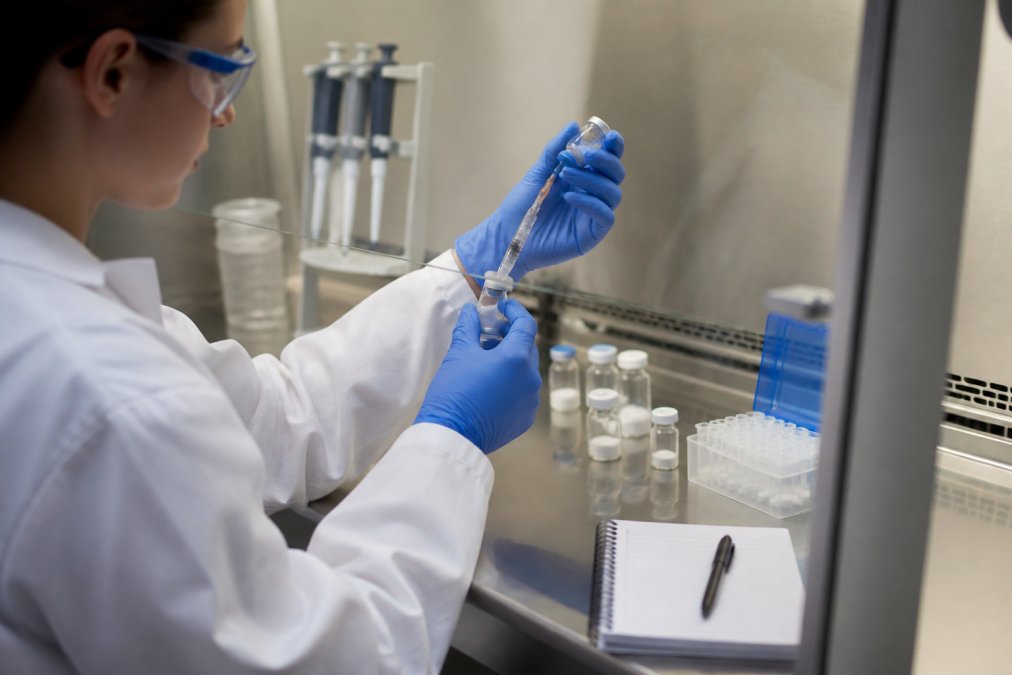
Follow these steps to protect sample integrity:
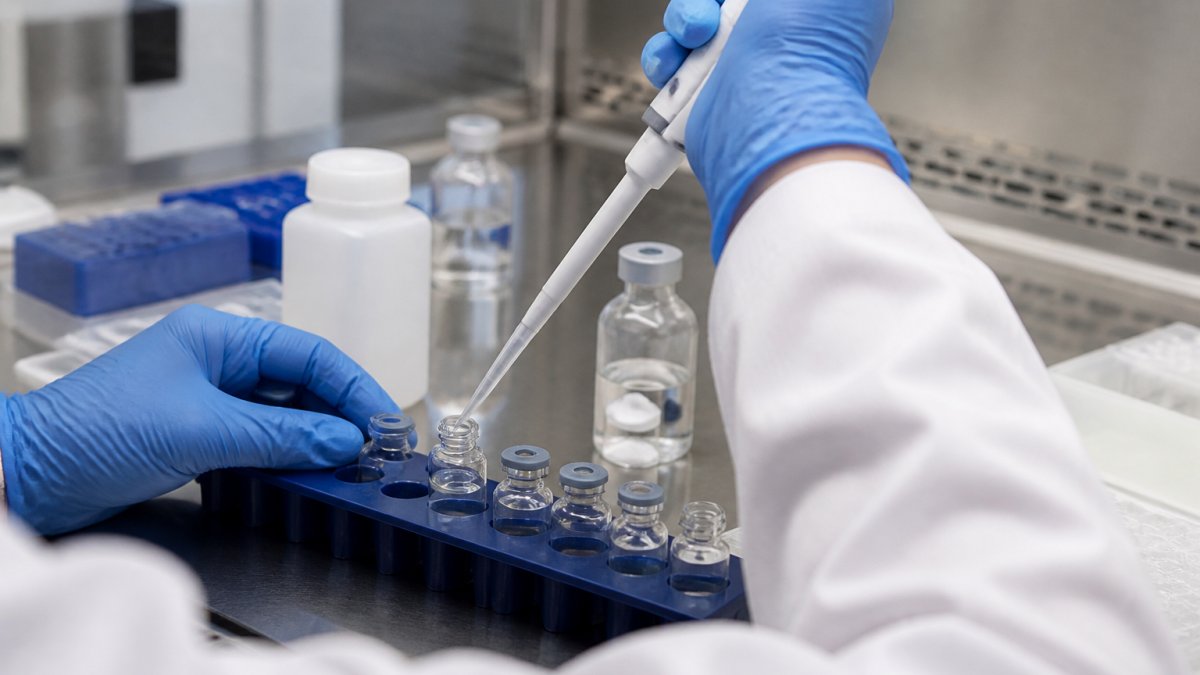
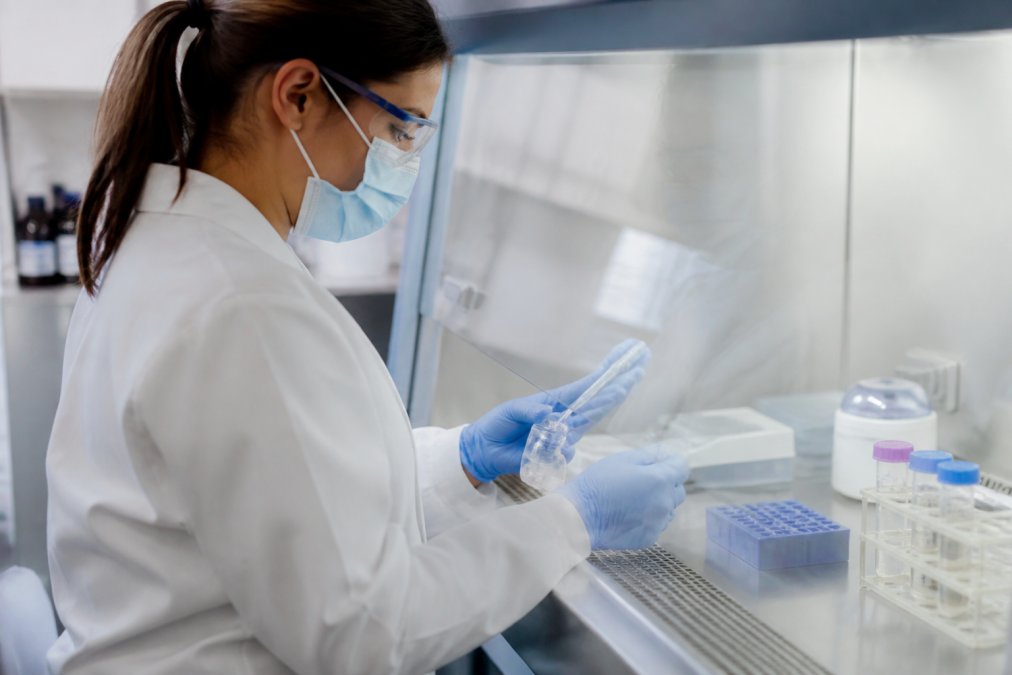
- Work in a laminar flow hood or clean bench
- Wipe the vial septum with 70% ethanol and let it dry
- Use sterile, appropriate-grade solvent for reconstitution
- Add solvent down the vial wall, not directly onto the powder
- Swirl gently. Do not vortex or shake hard
- Aliquot into single-use portions before freezing
- Store at -20°C or lower, protected from light
In-House vs. Third-Party Verification: Workflow and Cost Considerations
Should your lab run its own testing or send samples out? Both have a place; the choice depends on volume, budget, and equipment.
In-house verification works well when you have:
- A working HPLC system and trained staff
- High sample volume that justifies the setup cost
- A need for fast turnaround on routine checks
Third-party verification makes sense when you need:
- Independent confirmation for a publication or audit
- Access to mass spectrometry you do not own
- An unbiased result for a client project
Frequently Asked Questions
What are the most common types of peptide contaminants?
The most common peptide contaminants are synthesis byproducts such as deletion sequences, truncated peptides, and homodimers or heterodimers formed during peptide synthesis. Oxidation products, particularly cysteine oxidation and methionine oxidation, are also frequent. Residual trifluoroacetic acid from purification, endotoxin levels, and heavy metal analysis failures represent additional contamination categories that quality control testing should catch before a batch reaches your lab.
How does HPLC detect impurities in synthetic peptides?
HPLC testing for peptides separates components in a sample based on their interaction with a stationary phase. Each peptide and impurity produces a distinct peak with a specific retention time. The area under each peak reveals the relative quantity of that component. Analytical purity is calculated by dividing the main peak area by the total peak area. Impurity quantification at levels as low as 0.1% is achievable with modern ultraviolet absorbance detection at 214 nm.
Why is mass spectrometry critical for identifying peptide contamination?
Mass spectrometry confirms the molecular weight of the target peptide and detects structural variants that HPLC alone cannot distinguish. A peptide with a deletion sequence may elute at a similar retention time to the target, but mass spectrometry will reveal the mass difference. Sequence verification through tandem mass spectrometry provides definitive identification. Without mass spectrometry data on your certificate of analysis, you cannot confirm that the peptide bond structure matches the intended sequence.
What are the risks of using peptides with low purity in research?
Low-purity peptides introduce variables that undermine experimental reproducibility. Impurities can trigger off-target biological responses, interfere with receptor binding assays, and produce misleading pharmacokinetic profiles. Endotoxin contamination can activate immune responses in cell culture, while heavy metal residues may inhibit enzymatic activity. For studies requiring analytical validation, using compounds below 98% purity makes it difficult to attribute observed effects to the peptide itself rather than to contaminants.