 how-to
How to Order Custom Research Peptides
Table of Contents
- Understanding What You Need Before Ordering
- How to Order Custom Research Peptides: Step-by-Step Process
- How to Read a Peptide Certificate of Analysis
- Custom Peptide Synthesis Lead Times and Delivery Options
- Peptide Modification Services and Custom Options
- Quality Assurance and Analytical Validation
- Common Mistakes to Avoid When Ordering Custom Peptides
- Frequently Asked Questions
Last Updated: September 18, 2026
Understanding What You Need Before Ordering
Before you order custom research peptides, define exactly what you're looking for. Vague specifications lead to delays and failed batches.
Start by writing out your exact amino acid sequence using standard single-letter or three-letter notation. Next, determine your purity requirements. Globo Research Peptides delivers verified ≥99% HPLC purity for every batch, ensuring consistent, reliable compounds for your research.
Consider modifications you might need: fluorescent labeling, biotinylation, acetylation, or phosphorylation. Custom modifications increase synthesis complexity and timeline, so decide these upfront. Finally, estimate your quantity needs realistically, small quantities cost more per milligram, but don't over-order if you're testing a new compound.
How to Order Custom Research Peptides: Step-by-Step Process
Ordering custom research peptides follows a straightforward path that yields exactly what you need.
Step 1: Define Your Peptide Specifications
Write your exact amino acid sequence in standard notation. Be precise, a single error cascades through the entire synthesis.
Specify your desired purity level. Research-grade peptides typically range from 85% to 99%+ purity. Globo Research Peptides guarantees ≥99% HPLC purity on all custom orders.
List any modifications you need:
- N-terminal acetylation
- C-terminal amidation
- Fluorescent labeling (FITC, Alexa Fluor, etc.)
- Biotinylation
- Phosphorylation
- Other custom chemical modifications
State your required quantity in milligrams based on realistic research needs.

Step 2: Request a Quote and Review Pricing
Contact Globo Research Peptides with your specifications: amino acid sequence, desired modifications, purity level, and quantity. The team will generate a custom quote.
Review pricing carefully. Costs depend on sequence length, modification complexity, quantity, and turnaround time. Express delivery costs more than standard synthesis. Ask about bulk discounts if ordering multiple peptides. Verify that quoted purity meets your actual needs and that the Certificate of Analysis includes required testing methods.
Step 3: Confirm Quality Standards and Testing
Confirm the analytical validation methods. Globo Research Peptides uses high-performance liquid chromatography (HPLC) and mass spectrometry (MS) for verification.
Ask what the Certificate of Analysis will include:
- HPLC chromatogram showing purity percentage
- Mass spectrometry data confirming molecular weight
- Sequence verification
- Solubility testing results (if applicable)
- Batch identification number for traceability
Confirm testing is performed by accredited third-party laboratories. This independent verification adds credibility to your research data and satisfies regulatory requirements if your work eventually supports clinical applications.
Step 4: Place Your Order
Submit your finalized specifications through Globo Research Peptides's ordering portal or direct communication. Include amino acid sequence, desired modifications, purity requirement, quantity in milligrams, delivery timeline preference, and billing information.
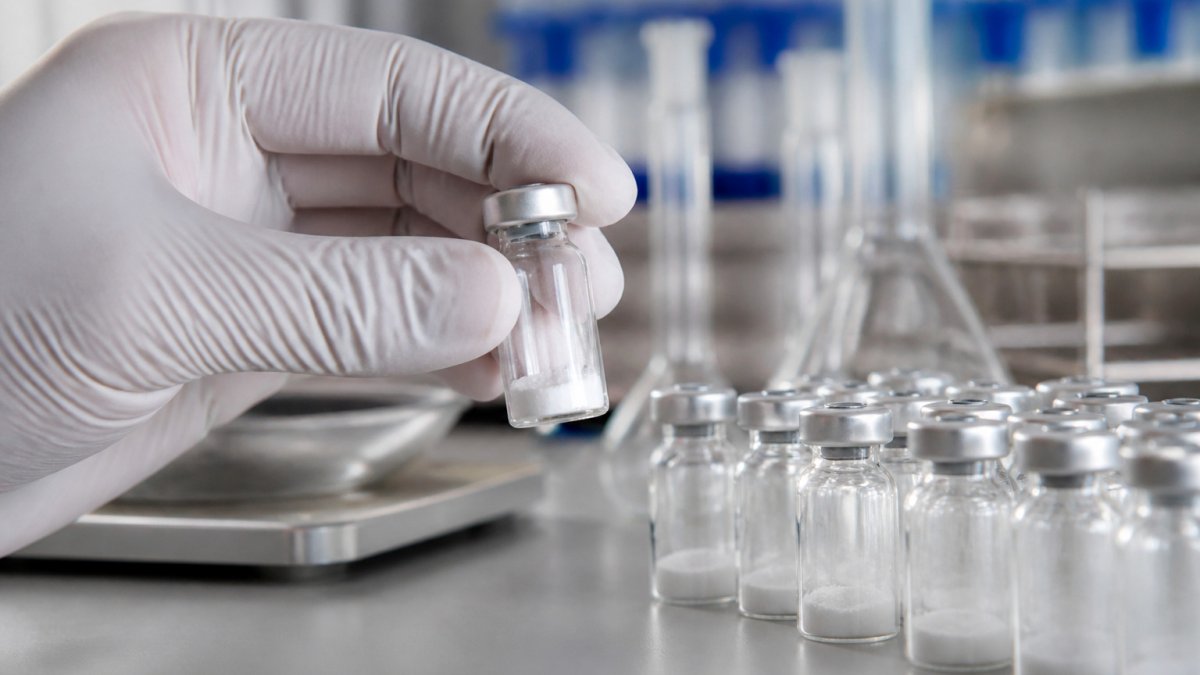
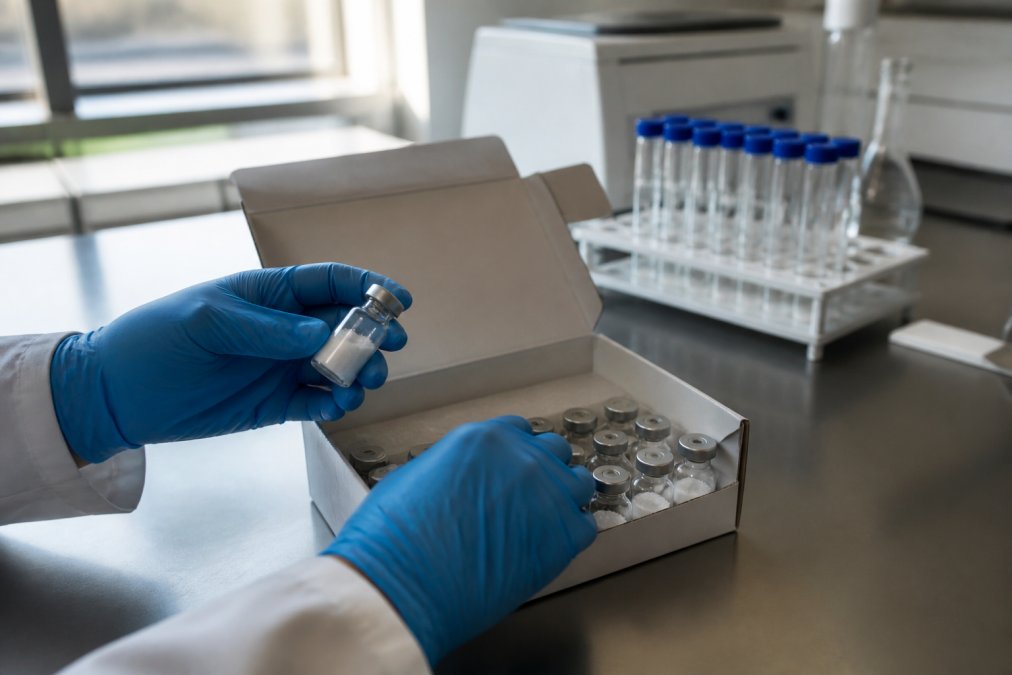
Once confirmed, solid-phase peptide synthesis begins at the C-terminal and builds toward the N-terminal. After synthesis completes, the peptide undergoes lyophilization (freeze-drying), which preserves the compound and enables long-term storage. The final product arrives as a white or off-white powder.
How to Read a Peptide Certificate of Analysis
Your Certificate of Analysis (COA) documents what testing was performed and what results were obtained. Understanding it matters for your research integrity.
The COA begins with batch identification, a unique number linking your peptide to specific synthesis conditions and testing data. Look for the HPLC purity percentage. Globo Research Peptides guarantees ≥99% purity, meaning at least 99% of the material is your desired peptide.
Check the mass spectrometry data, which confirms molecular weight matches your expected sequence. Review the HPLC chromatogram image, your target peptide should dominate, with minor peaks representing impurities. Verify the testing date occurred after synthesis completion and confirm the testing laboratory name and accreditation status.
Custom Peptide Synthesis Lead Times and Delivery Options
Synthesis timeline depends on peptide length and modification complexity.
Globo Research Peptides offers multiple delivery options. In-stock inventory for common peptides ships within 24 hours.
Plan your ordering timeline around your experimental schedule. Budget for standard delivery when possible to reduce costs.
Peptide Modification Services and Custom Options
Modifications expand what your peptide can do, but each increases synthesis complexity, extends timelines, and raises costs.
Fluorescent Labeling
Fluorescent labeling adds a fluorophore enabling detection via fluorescence microscopy, flow cytometry, or plate readers. Common fluorophores include FITC, Alexa Fluor 488, and Alexa Fluor 647.
Biotinylation
Biotinylation adds biotin enabling strong binding to streptavidin-coated surfaces, essential for epitope mapping, ELISA development, and affinity purification.
Terminal Modifications: Acetylation and Amidation
N-terminal acetylation protects the amino terminus and mimics natural protein modifications. C-terminal amidation increases peptide stability and mimics naturally occurring peptides. Both add minimal cost and time. These modifications are especially valuable for cell-based assays or in vivo studies where unmodified termini may be degraded by proteases.
Phosphorylation
Phosphorylation adds a phosphate group to serine, threonine, or tyrosine residues, critical for studying protein kinase interactions and signaling pathways. This modification is chemically complex. Multiple phosphorylation sites increase difficulty exponentially and may fail due to steric hindrance.
Synthesis Method Considerations
Most custom peptide synthesis uses solid-phase peptide synthesis (SPPS) with standard Fmoc chemistry, suitable for peptides up to 50 amino acids.
Modification Decision Checklist
Before requesting a quote, ask:
- Is this modification essential for my assay, or is it "nice to have"?
- Can I validate my assay with an unmodified peptide first?
- Does my sequence contain residues that might interfere with this modification?
- Am I ordering enough quantity to justify the added synthesis cost?
- Does my timeline allow for the added synthesis days?
Globo Research Peptides handles all standard modifications. Discuss your specific research goals with the team before finalizing your order.
Quality Assurance and Analytical Validation
Quality assurance begins before synthesis starts and continues through delivery. Understanding the difference between research-grade and GMP-grade quality standards is essential, especially if your peptide may eventually support regulatory submissions or clinical applications.
Pre-Synthesis Quality Review
Globo Research Peptides reviews every specification for feasibility before synthesis begins. The team flags potential synthesis challenges upfront: sequences prone to aggregation, residues that couple poorly, or modifications that may interfere with one another. This early assessment prevents failed batches.
Research Use Only (RUO) vs. GMP-Grade Peptides
RUO peptides are manufactured for laboratory research only and are not intended for clinical, diagnostic, or therapeutic use. RUO peptides are subject to fewer regulatory requirements and lower documentation standards.
GMP-grade peptides are manufactured under strict regulatory oversight and are suitable for use in clinical trials, diagnostic assays, or therapeutic development. GMP synthesis requires pharmaceutical-grade reagents, validated protocols, environmental monitoring, comprehensive analytical testing, full traceability, and third-party audits.
When to Choose RUO
Choose RUO peptides for academic research, assay development, preliminary efficacy testing, proof-of-concept experiments, and internal tool development. RUO peptides are appropriate for the vast majority of research applications.
When to Choose GMP-Grade
Choose GMP-grade peptides if your work will support an Investigational New Drug (IND) application, clinical trial materials, diagnostic kits, patent submissions, or regulatory approval. If uncertain whether your peptide will eventually require GMP status, discuss this with your regulatory affairs team early.
Post-Synthesis Analytical Validation
After synthesis completes, rigorous analytical validation begins. HPLC separates compounds and quantifies purity. Mass spectrometry measures exact molecular weight and confirms identity. Together, these methods verify that your peptide matches your specification.
For RUO peptides, HPLC and MS data are provided in a Certificate of Analysis.
Solubility Testing and Practical Usability
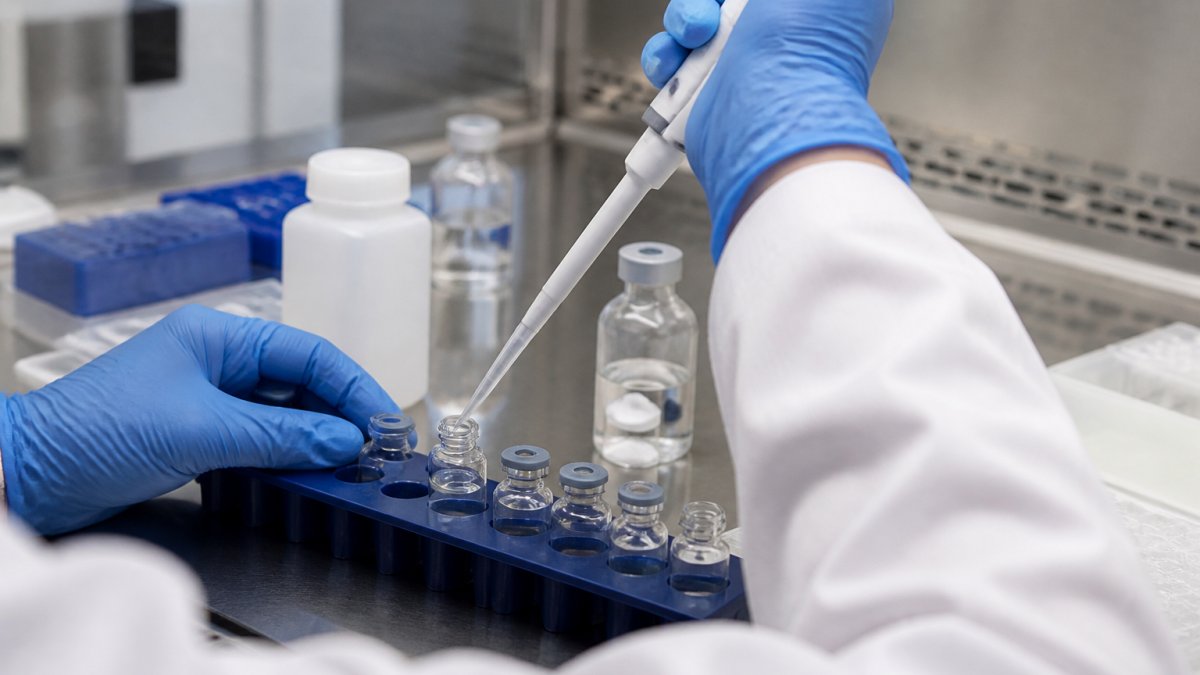
Solubility testing confirms your peptide dissolves in relevant solvents. Some peptides are hydrophobic and require organic solvents or detergent-containing buffers.
Molecular Weight Verification and Identity Confirmation
Common Mistakes to Avoid When Ordering Custom Peptides
Mistake #1: Incomplete sequence specification. Write your sequence clearly using standard notation. Double-check every amino acid.
| Common Mistake | What Goes Wrong | How to Avoid It |
|---|---|---|
| Incomplete sequence | Synthesis fails or produces wrong peptide | Write sequence clearly, double-check every amino acid |
| Low purity tolerance | Research data becomes unreliable | Specify ≥99% HPLC purity upfront |
| Forgotten modifications | Mid-project delays or resynthesis required | Decide all modifications before ordering |
| Ignoring COA details | Missing critical quality information | Review HPLC, MS data, and testing date carefully |
| Over-ordering | Wasted material and unnecessary cost | Order only what your research actually needs |
| Cheapest quote only | Compromised quality or incomplete documentation | Compare full specifications, not just price |
| Last-minute ordering | Premium rush fees | Plan synthesis timeline in advance |
Frequently Asked Questions
What information do I need to provide when I order custom research peptides?
You'll need to specify the amino acid sequence, desired purity level (typically ≥99% HPLC), molecular weight requirements, and any custom modifications such as acetylation, amidation, or fluorescent labeling. Include your intended application (drug discovery, protein interaction studies, epitope mapping), desired scale, and any special solubility or stability requirements. Providing this information upfront ensures accurate quotes and faster synthesis turnaround.
How do I verify the authenticity of a peptide supplier's purity claims?
Request the Certificate of Analysis (CoA) before ordering. A legitimate CoA should include HPLC chromatography results showing peak purity percentage, mass spectrometry (MS) confirmation of molecular weight, and the testing date. Third-party accredited laboratory testing adds credibility. Cross-check that the supplier provides consistent documentation for every batch and maintains transparency about their analytical validation methods.
What should I expect in terms of custom peptide synthesis lead times?
Confirm turnaround time during the quote request phase, and clarify what happens if specifications aren't met within the promised timeline.
What peptide modifications are available and how do they affect my order?
Common modifications include N-terminal and C-terminal modifications (acetylation, amidation), fluorescent labels, biotin tags, and custom linkers. Each modification affects synthesis complexity, cost, and lead time. Discuss your specific research application with the supplier to determine which modifications support your epitope mapping, receptor binding studies, or other research goals.