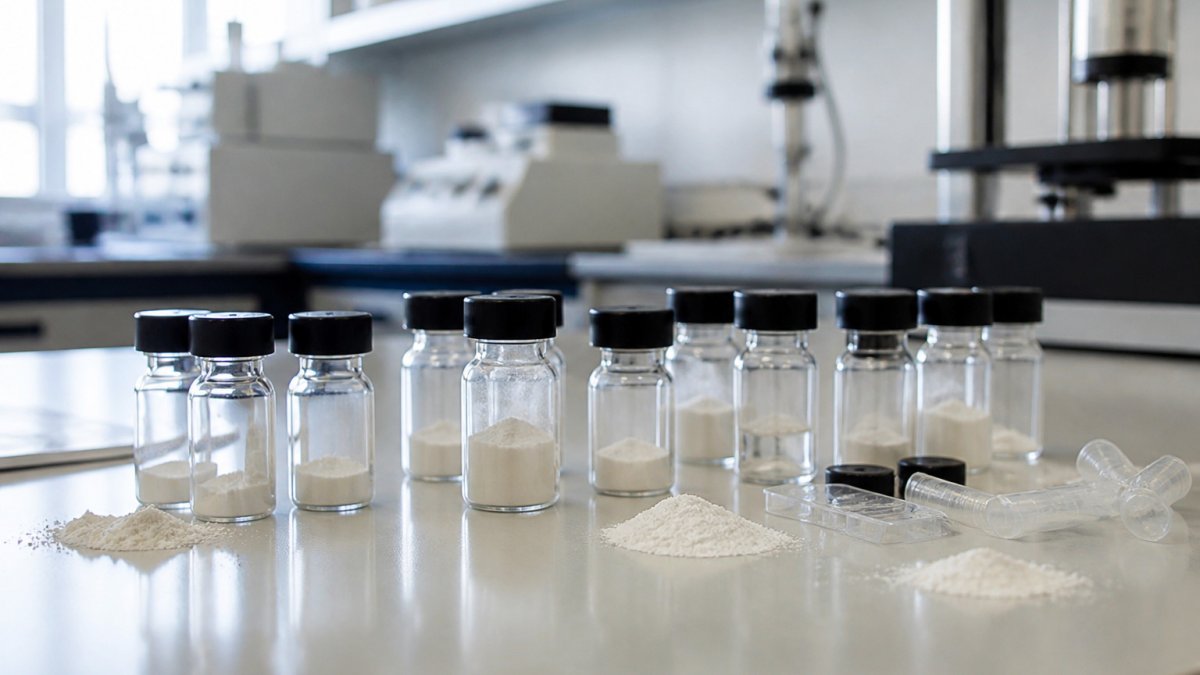
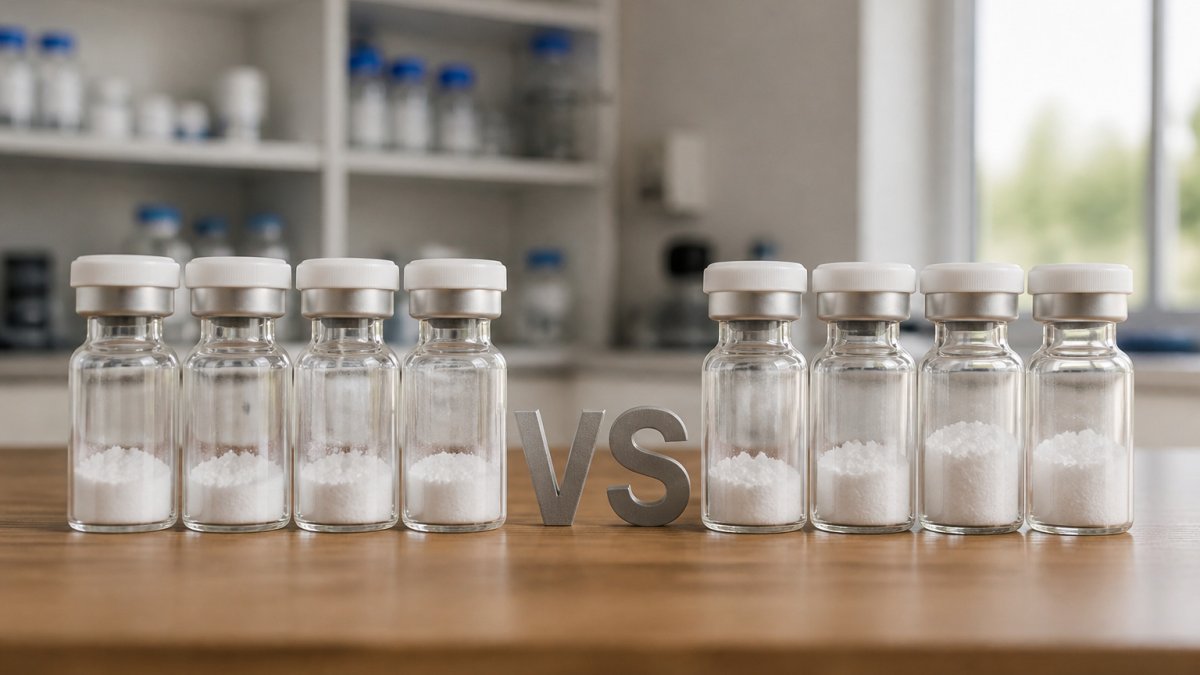
 comparison
Who Makes the Highest Quality Peptides in 2026?
Table of Contents
- What Defines the Highest Quality Peptides in 2026
- How Peptide Purity Testing Separates Real Suppliers From Resellers
- What a Peptide Certificate of Analysis Should Actually Contain
- Globo Research Peptides: Verified Purity With Full Batch Documentation
- What Research Peptide Supplier Reviews Reveal About Quality Claims
- Comparing the Best Research Peptide Suppliers by Supplier Type
- Regulatory Boundaries Every Peptide Buyer Should Understand
- Conclusion: How to Choose a Peptide Supplier You Can Trust
- Frequently Asked Questions
Last Updated: October 6, 2026
What Defines the Highest Quality Peptides in 2026
The highest quality peptides are defined by verified purity, complete batch documentation, and manufacturing transparency, not by marketing claims. At Globo Research Peptides, purity starts at ≥99% as confirmed by HPLC analysis, and every batch ships with a full Certificate of Analysis.
Purity is where most buyers start, and rightly so. A peptide that reads 95% pure on a label may behave very differently in a receptor binding assay than one verified at 99%.
Purity Is Not the Only Measure
Three factors matter as much as the purity number itself: identity confirmation, batch consistency, and documentation quality. A supplier can report 99% purity by HPLC and still ship a compound that fails mass spectrometry identity checks.
Batch consistency matters for longitudinal studies. If your first batch performs well and the second does not, your results become noise. Ask whether the supplier tests every batch or spot-checks production runs.
How Peptide Purity Testing Separates Real Suppliers From Resellers
Peptide purity testing separates real manufacturers from resellers because only a supplier with laboratory relationships can produce batch-specific analytical data on demand. Resellers typically forward a generic certificate or recycle documentation across products.

The testing workflow itself is straightforward. A sample is dissolved, run through HPLC to measure purity, then analyzed by mass spectrometry to confirm molecular weight.
A common mistake is accepting a certificate without checking whether the batch number matches your vial. According to FDA guidance on analytical method validation, analytical procedures must be validated for their intended use, which is why a certificate tied to a specific lot carries more weight than a generic one.
What a Peptide Certificate of Analysis Should Actually Contain
A valid Certificate of Analysis should contain the compound name, batch or lot number, test method, purity result, identity confirmation, and the date of analysis. If any of those elements is missing, the document cannot support your study records.
Here is what to check:
- Compound name and sequence matching your order exactly
- Batch or lot number that matches the vial label
- HPLC purity result with the chromatogram or a method reference
- Mass spectrometry identity data confirming molecular weight
- Testing laboratory name and whether it is third-party
- Analysis date recent enough to reflect current stock
Red Flags in Analytical Documentation
Vague or recycled documentation is the clearest warning sign. Watch for certificates with no lot number, purity stated without a method, or the same document reused across multiple products. Any of these suggests the supplier is not testing what it ships.
Globo Research Peptides: Verified Purity With Full Batch Documentation
Globo Research Peptides supplies research-grade peptides with verified ≥99% HPLC purity and a full Certificate of Analysis for every batch.
What sets the process apart is batch-level traceability. Every certificate ties to a specific lot, so the document in your records matches the vial on your bench.
The catalog covers common research compounds, and a special-order fulfillment program handles less common sequences when they are not in stock. In-stock inventory dispatches immediately, which matters when a study cannot wait on a synthesis queue.
| Feature | Globo Research Peptides | Typical Reseller | Custom Synthesis Lab | GMP Manufacturer |
|---|---|---|---|---|
| Verified purity | ≥99% HPLC | Claimed, often unverified | Project-dependent | Pharmaceutical grade |
| Batch-specific COA | Every batch | Often generic | Per order | Per lot |
| Third-party testing | Accredited labs | Rarely disclosed | Varies | Standard practice |
| Custom orders | Special-order program | No | Yes | Yes |
| Best for | Research labs needing documented purity | Price-focused buyers | Novel sequences | Clinical development |
What Research Peptide Supplier Reviews Reveal About Quality Claims
Research peptide supplier reviews reveal that most complaints trace back to documentation, not product performance. Buyers report incomplete certificates, purity claims that do not match third-party results, and slow responses when they request batch data.
Reviews are useful, but treat them as a starting point. A supplier with glowing reviews and no accessible analytical documentation is still a risk.
When you evaluate a supplier, request a sample certificate before ordering. A supplier confident in its testing will send one without hesitation.
Comparing the Best Research Peptide Suppliers by Supplier Type
The best research peptide supplier for your lab depends on whether you need catalog compounds, custom sequences, or pharmaceutical-grade material. These are different businesses with different quality systems, and comparing them on price alone misses the point. A fair comparison starts by matching the supplier type to the job, not by ranking every vendor on one list.
The Four Supplier Types You Will Actually Encounter
Research-chemical catalog vendors stock common research peptides and ship quickly.
Custom synthesis labs produce sequences to your specification, including modified residues, labeled analogs, and non-natural amino acids. Turnaround depends on sequence length, hydrophobicity, and purification difficulty.
GMP/API manufacturers produce peptide active pharmaceutical ingredients under regulated quality systems. They serve companies and institutions moving toward clinical development.
Contract development and manufacturing organizations (CDMOs) sit between custom synthesis and GMP manufacturing.
How to Compare Suppliers That Serve the Same Need
The mistake most buyers make is comparing a catalog vendor's price against a GMP manufacturer's price. They are not selling the same thing. Compare within a category:
| Comparison axis | What to ask | Why it matters |
|---|---|---|
| Scope of testing | Is every lot tested, or are runs spot-checked? | Spot-checking means your vial may not have been tested. |
| Identity confirmation | Is mass spectrometry run on the same lot as the HPLC? | Purity without identity can still be the wrong molecule. |
| Documentation depth | COA only, or COA plus batch record and stability data? | Batch records support audit and reproducibility. |
| Storage and shipping | Are cold-chain and desiccant controls documented? | Peptides degrade with heat and moisture exposure. |
| Custom capability | Can they handle modified or labeled sequences? | Determines whether you need a second vendor. |
| Regulatory posture | Do they describe products as research-use only? | Signals whether they understand their own lane. |
Where Each Type Fits
Catalog suppliers fit standard receptor-binding, enzyme-activity, and cell-culture work where you need documented purity on a predictable timeline.
Custom synthesis labs fit novel or modified sequences. GenScript's custom peptide synthesis services and Biosynth's peptide manufacturing capabilities serve researchers who need sequences that catalog vendors do not stock.
GMP manufacturers fit programs heading toward clinical or commercial use. Bachem's peptide API manufacturing serves companies and institutions that need regulated quality systems.
Regulatory Boundaries Every Peptide Buyer Should Understand
Research peptides are sold for laboratory use, not for human or veterinary consumption, and that boundary shapes everything about how they are marketed and documented. Suppliers who blur the line between research compounds and regulated drugs create legal exposure for themselves and confusion for buyers. Most competitor pages skip this entirely, they list suppliers without explaining what the labels actually mean.
What "Research-Use Only" Actually Signals
A research-use-only (RUO) designation is a labeling posture, not a regulatory approval. It tells you the supplier intends the material for laboratory investigation and is not representing it as a drug, dietary supplement, or food.
When a supplier markets a research peptide with therapeutic claims, weight loss, recovery, anti-aging, it is signaling one of two things: it does not understand its own regulatory position, or it is willing to make claims it cannot support. Either is a reason to look elsewhere.
The Frameworks That Draw the Lines
Four regulatory touchpoints matter for peptide buyers:
- FDA drug approval pathway. Human drugs require an investigational new drug application, clinical trials, and a new drug application before marketing. RUO peptides sit outside this pathway entirely.
- Compounding rules under section 503A and 503B. These govern when a licensed pharmacy or outsourcing facility may compound a drug. They do not authorize research-chemical vendors to sell peptides for human use.
- Dietary supplement framework under DSHEA. A peptide sold as a supplement must meet the definition of a dietary ingredient. Most research peptides do not, and suppliers who imply supplement status are misrepresenting the product.
- FTC advertising enforcement. Even where the FDA has not acted, the FTC can pursue deceptive health claims. A supplier making therapeutic claims for an RUO product is exposed on this front as well.
FDA's framework for drug approval and compounding
What Supplier Claims Do Not Establish
A certificate of analysis, a purity percentage, or a third-party test result does not make a peptide approved, safe, or suitable for human use. Those documents establish analytical identity and purity, nothing more.
For procurement teams, the practical takeaway is simple: buy from suppliers who describe their products as research-use materials, provide analytical documentation, and make no medical claims. That posture signals a supplier operating within its lane.
A Quick Boundary Checklist
Before you buy, confirm the supplier:
- Labels products as research-use only
- Makes no therapeutic or dosing claims
- Provides batch-specific analytical documentation
- Does not imply supplement or drug status
- Discloses testing methods and laboratories
If any of those fail, the supplier is either confused about its regulatory position or counting on you not to check.
Conclusion: How to Choose a Peptide Supplier You Can Trust
Choosing a supplier you can trust comes down to documentation you can verify and a supplier willing to show its work. Request a batch-specific certificate before you order. Confirm the testing method. Check that the lot number on the document matches your vial.
Finding a supplier who will hand over that documentation without resistance is harder than it should be.
Frequently Asked Questions
What purity level should research peptides have?
Most research applications call for peptides at 95% purity or higher, and demanding work such as receptor binding assays often requires 98% or above. Globo Research Peptides verifies ≥99% HPLC purity on every batch. Purity below 95% introduces impurities that can skew experimental results, so always check the Certificate of Analysis before committing a compound to a study. The right threshold depends on your assay sensitivity.
What should a peptide Certificate of Analysis include?
A complete peptide Certificate of Analysis should list the compound name, batch or lot number, molecular weight, HPLC purity percentage, the analytical method used, and the testing date. Reputable suppliers also include mass spectrometry confirmation and the name of the third-party laboratory that performed the testing. Globo Research Peptides provides full COA documentation for every batch, which lets you verify identity and purity before your study begins.
How can you tell whether a peptide supplier is reputable?
Check whether the supplier publishes batch-specific COAs from accredited third-party labs, not just a generic purity claim on the product page. Look for documented HPLC and mass spectrometry results, clear contact information, and consistent batch-to-batch documentation. Research peptide supplier reviews can help, but independent analytical documentation matters more than marketing language. A supplier that cannot produce a verifiable COA on request is a supplier worth avoiding.
Are research peptides the same as FDA-approved medicines?
No. Research peptides are sold strictly for laboratory and research use, not for human consumption. FDA-approved peptide drugs go through clinical trials, GMP manufacturing, and regulatory review that research-grade compounds do not undergo. Suppliers like Globo Research Peptides label products for research use only and provide the analytical documentation researchers need. If a vendor markets peptides as supplements or treatments, that is a regulatory red flag.
How do you verify a peptide supplier's batch testing?
Request the COA for the specific batch you are ordering and confirm it lists HPLC purity, mass spectrometry data, and the testing laboratory's name. You can also ask whether the supplier uses accredited third-party labs rather than in-house testing alone. Globo Research Peptides relies on rigorous third-party testing by accredited laboratories and includes full documentation with every batch, so you can trace exactly how each compound was verified.